

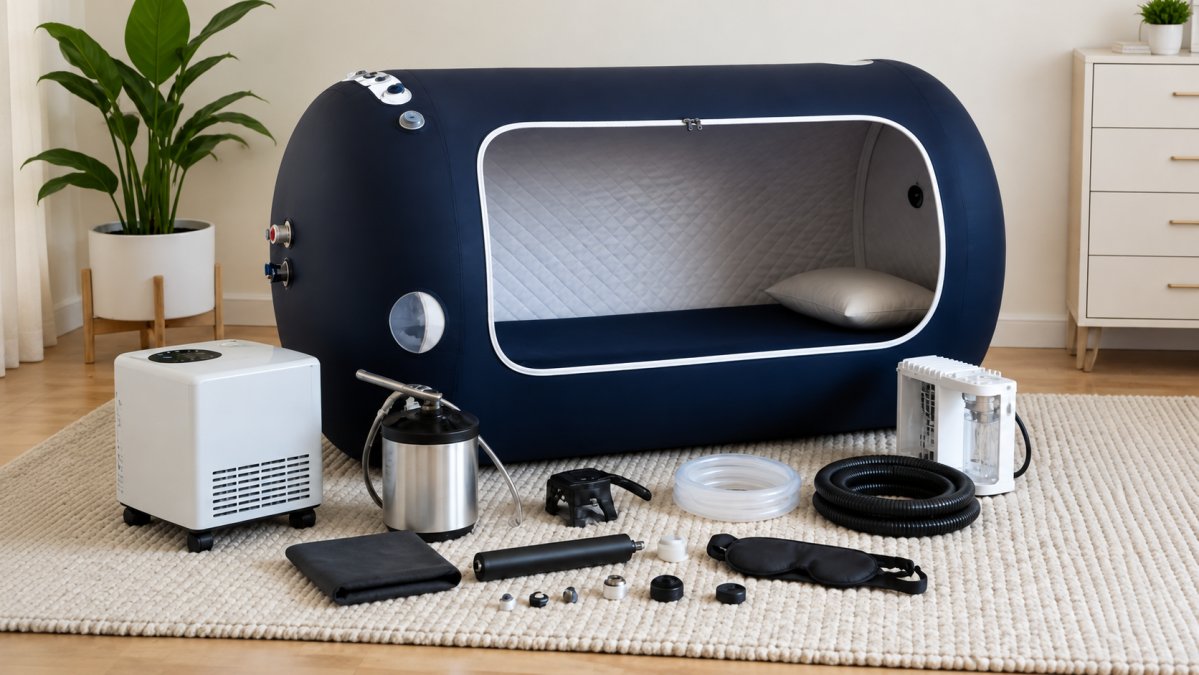
Best Home Hyperbaric Chamber Features 2026
Table of Contents
- Hyperbaric Chamber Features That Matter Most in 2026
- Comparison Chart: Top Home Hyperbaric Chambers
- Hard-Shell vs Soft-Shell Hyperbaric Chambers: Key Differences
- Understanding ATA Ratings and Oxygen Delivery
- Safety Features and FDA-Cleared Home Hyperbaric Chambers
- Hyperbaric Oxygen Therapy Benefits for Recovery
- Installation, Space, and Maintenance Requirements
- Conclusion: Choosing Your Ideal Chamber
- Frequently Asked Questions
Last Updated: September 9, 2026
Hyperbaric Chamber Features That Matter Most in 2026
When evaluating the best home hyperbaric chamber features 2026 has to offer, buyers are looking beyond raw pressure specs toward usability, safety engineering, and long-term ownership costs. This guide from Vital Fit Home breaks down what separates a sound investment from a costly mistake, with a focus on the hyperbaric chamber features that directly impact your safety and results.
Hyperbaric oxygen therapy is the practice of breathing near-pure oxygen inside a pressurized chamber, typically between 1.3 and 2.0 atmospheres absolute (ATA) (PubMed). The physiological premise is straightforward: increased atmospheric pressure allows your blood plasma to carry more oxygen to tissues, supporting recovery and cellular function. However, the equipment delivering that therapy varies dramatically in construction quality, safety systems, and practical usability.

A chamber that is difficult to enter, noisy to operate, or complicated to maintain will sit unused. The real evaluation criteria involve daily usability, safety certifications, and the total cost of ownership over several years.
Below, we will walk through the critical decision points, compare the main chamber types, and give you a practical framework for choosing the right system for your home and wellness goals. By the end, you will know exactly which features justify their price and which ones you can safely skip.
Comparison Chart: Top Home Hyperbaric Chambers
To make an informed choice, you need to see how the primary chamber categories stack up against each other. The table below summarizes the key differences across the main options available through Vital Fit Home, ranging from portable soft-shell units to clinical-grade hard-shell systems.
Chamber Model |
Type |
Max Pressure |
Starting Price |
Best For |
|---|---|---|---|---|
Oxyprime 1 |
Soft-Shell Lying |
1.5 ATA |
$7,499.00 |
First-time buyers, portability |
Soft-Shell Lying |
1.5 ATA |
$7,899.00 |
Home users wanting intelligent controls |
|
OLV-RZT01 |
Soft-Shell Lying/Sitting |
1.5 ATA |
$8,499.00 |
Users wanting position flexibility |
OLV-RD02 |
Soft-Shell Egg (2-person) |
1.5 ATA |
$8,999.00 |
Couples or spacious sessions |
Oxyprime 4 |
Hard-Shell Lying |
2.0 ATA |
$24,999.00 |
Serious recovery, higher pressure |
OLV-YTD02 |
Hard-Shell Composite |
2.0 ATA |
$24,999.00 |
Durability with lighter weight |
Oxyprime 5 |
Hard-Shell Seated |
2.0 ATA |
$47,995.00 |
Clinical-style comfort at home |
Oxyprime 6 |
Hard-Shell Multiplace |
2.0 ATA |
$129,000.00 |
Maximum capacity, professional use |
The price gap between soft-shell and hard-shell systems is substantial, and it reflects more than just materials. Higher ATA ratings, integrated air conditioning, and advanced pressure regulation systems all factor into the cost. Your choice should align with your recovery goals, available space, and budget.

Hard-Shell vs Soft-Shell Hyperbaric Chambers: Key Differences
The most fundamental decision when selecting a chamber is the construction type. Hard-shell vs soft-shell hyperbaric chambers represent two distinct approaches to pressurization, each with clear trade-offs in performance, convenience, and cost.
Soft-shell chambers use flexible TPU material with thermal welded seams, zipped closed, and inflated by a compressor. They are portable, fold down for storage, and typically operate at 1.3 to 1.5 ATA. Their lighter weight means easier setup, but the lower pressure ceiling limits the oxygen saturation you can achieve compared to rigid systems.
Hard-shell chambers are constructed from materials like aluminum alloy, stainless steel, or advanced composites. They support higher pressures up to 2.0 ATA, which some users find delivers more noticeable recovery benefits. These units are permanent installations requiring dedicated floor space, and they include integrated air conditioning and more sophisticated pressure monitoring systems.
For most first-time buyers, a soft-shell chamber offers the most practical entry point. The Oxyprime 1 provides up to 1.5 ATA in a portable lying format at $7,499.00, making it an accessible option for testing whether home HBOT fits your routine. If you are converting a dedicated room and want a permanent fixture with higher pressure capability, the hard-shell route becomes more compelling.
Understanding ATA Ratings and Oxygen Delivery
ATA, or atmospheres absolute, is the unit measuring the pressure inside the chamber relative to sea-level atmospheric pressure. At 1.0 ATA, you are at normal sea-level pressure. At 2.0 ATA, the pressure inside the chamber is double that, which significantly increases the amount of oxygen your blood can carry (peer-reviewed research).
Most home hyperbaric chambers operate between 1.3 and 2.0 ATA. Many soft-shell devices operate at 1.5 ATA or lower, which is considered mild hyperbaric therapy. The oxygen delivery system matters just as much as the pressure rating. A high-output oxygen concentrator must deliver consistent oxygen purity throughout the session, and the chamber needs proper air filtration to remove exhaled carbon dioxide.
When comparing chambers, look beyond the maximum ATA rating. Consider how the unit regulates pressure during the session. Intelligent touchscreen control systems, like those on the OLV-RT01, maintain steady pressure and allow you to adjust settings without leaving the chamber. Interior controls and clear pressure monitoring displays are essential for a comfortable experience.
The pressure delivery profile also affects session comfort. A chamber that ramps pressure gradually is more comfortable than one that spikes quickly. Look for units with adjustable pressure release valves and emergency depressurization capabilities as standard safety features.
Safety Features and FDA-Cleared Home Hyperbaric Chambers
Safety should drive your purchasing decision more than any other factor. Home hyperbaric chambers have undergone review for their intended use, which provides a baseline of assurance about device safety and effectiveness (the FDA). However, clearance status is just the starting point for evaluating a chamber's safety engineering.
Critical safety features to verify include multiple pressure relief valves, emergency depressurization controls accessible from inside the chamber, and thermal welded seams on soft-shell models that prevent leaks under stress. The sealing mechanism must be strong enough to maintain pressure integrity across hundreds of sessions without degradation.
Fire safety is another consideration. Inside a pressurized oxygen-enriched environment, the chamber must be constructed from materials that resist ignition. Hard-shell chambers with metal construction offer inherent fire resistance, while soft-shell TPU chambers should meet applicable flammability standards.
You should also consider operational safety, which involves proper training on use and maintenance. Most manufacturers provide detailed protocols for cleaning, inspection, and pressure testing. Following these schedules prevents the gradual degradation of seals and valves that leads to performance issues.
Hyperbaric Oxygen Therapy Benefits for Recovery
The growing interest in hyperbaric oxygen therapy benefits for recovery has driven much of the home market's expansion. The therapy's appeal lies in its non-invasive approach to supporting the body's natural healing processes.
A typical session lasts 60 to 90 minutes. During this time, the increased pressure allows oxygen to dissolve more readily into the bloodstream, reaching tissues that standard circulation might not fully penetrate. This mechanism supports cellular repair and reduces inflammation, which is why many users integrate HBOT into their weekly wellness routine alongside practices like red light therapy and cold plunges.
Consistency matters more than intensity. This is where the convenience of a home chamber becomes valuable. Having a chamber installed in a dedicated wellness room removes the barrier of traveling to a clinic, making it easier to maintain a consistent schedule.
The wellness industry has embraced HBOT as part of a broader recovery ecosystem. When combined with infrared saunas, red light therapy, and proper nutrition, hyperbaric sessions contribute to a comprehensive approach to longevity and vitality. This integrative perspective is central to how Vital Fit Home approaches wellness design, helping customers build recovery rooms that address multiple aspects of health.
Installation, Space, and Maintenance Requirements
Before purchasing, measure your available space and consider the installation requirements. Soft-shell chambers are the most flexible, requiring roughly a 6 by 7 foot footprint when laid flat, plus clearance for the compressor and oxygen concentrator. They can be set up in a spare room, home gym, or even a large closet, and many owners store them rolled up between sessions.
Hard-shell chambers demand a dedicated permanent space. A lying hard-shell unit like the Oxyprime 4 needs a room that can accommodate its full length plus access for entry and servicing. Seated models like the Oxyprime 5 have a smaller footprint but still require professional placement. Electrical requirements are another consideration, as higher-pressure systems with integrated air conditioning draw more power.
Maintenance is an ongoing responsibility that affects both safety and longevity. Soft-shell chambers require regular cleaning of the interior with approved disinfectants, inspection of the zippers and seams for wear, and periodic pressure testing. The oxygen concentrator needs filter changes according to the manufacturer's schedule. Hard-shell chambers have similar but less frequent maintenance needs, though their air conditioning and electrical systems may require professional servicing.
Long-term maintenance costs should factor into your budget. Replacement filters, seals, and potential compressor servicing add up over several years. When comparing the Oxyprime 1 at $7,499.00 against a hard-shell model at $24,999.00, consider that the lower initial investment may come with more frequent consumable replacements.
Conclusion: Choosing Your Ideal Chamber
Selecting the best home hyperbaric chamber features 2026 requires balancing your wellness goals, available space, and budget against the technical specifications of each system. Start by determining the pressure level you need, then narrow your options by chamber type, and finally evaluate the safety features and maintenance requirements of your shortlisted models.
For most home users beginning their hyperbaric journey, a soft-shell chamber at 1.5 ATA offers the best combination of accessibility, effectiveness, and value. Models like the OLV-RT01 at $7,899.00 provide intelligent pressure control and a high-output concentrator, making daily sessions practical and comfortable. If you are building a dedicated wellness room and want the higher pressure capability of a clinical-grade system, the hard-shell options from Oxyprime and the OLV-YTD series deliver professional performance at a premium price point.
At Vital Fit Home, we help customers navigate these decisions through our signature wellness design services. Our team provides expert guidance on which chamber fits your space, goals, and lifestyle, and we support you beyond the sale with installation guidance and ongoing advice. We offer free shipping across the continental United States and access to premium wellness equipment from trusted manufacturers.
Frequently Asked Questions
What is the best hyperbaric chamber for home use?
The best home hyperbaric chamber depends on your budget, space, and recovery goals. For most users, a 1.5 ATA soft-shell chamber like the OLV-RT01 at $7,899 offers a strong balance of clinical-grade features and portability. If you want higher pressure and more durability, a 2.0 ATA hard-shell model starting at $24,999 is worth the investment. Focus on key features like ATA rating, safety certifications, and oxygen concentrator quality rather than just price.
Are home hyperbaric chambers worth the investment?
For individuals committed to a regular wellness routine, home hyperbaric chambers are worth the investment. The convenience of daily sessions eliminates travel time to clinics, and the cost per session drops significantly over time. The cost per session can drop significantly over time compared to clinical sessions. Consistency is the key factor, so choose a chamber that fits your space and comfort needs.
What are the key differences between hard-shell and soft-shell chambers?
Hard-shell chambers are constructed from materials like aluminum alloy or composite and can reach higher pressures up to 2.0 ATA. They are heavier, require more floor space, and cost more, starting around $24,999. Soft-shell chambers use TPU material with thermal welded seams, are portable, and typically operate at 1.3-1.5 ATA. They cost between $7,499 and $8,999. Your choice depends on whether you prioritize higher pressure capability or flexibility and lower cost.
What safety features should I prioritize in a home HBOT system?
Prioritize chambers with multiple safety valves, emergency depressurization controls, and certified oxygen concentrators that deliver medical-grade oxygen purity. Look for home hyperbaric chambers that meet clinical standards. A safety valve that releases pressure automatically and interior controls you can reach during a session are essential. Also verify the chamber's sealing mechanism and pressure monitoring system are from a reputable manufacturer with clear documentation.
How do I maintain a home hyperbaric chamber for longevity?
Clean the interior with a mild, non-abrasive solution after each use and allow it to air dry completely before zipping it closed. Inspect the zippers, seams, and seals monthly for wear or damage. Run the oxygen concentrator's air filters through regular cleaning or replacement per the manufacturer's schedule. For soft-shell chambers, proper folding and storage prevent creases that weaken the material. Consider professional inspection of the compressor and pressure gauges.



Leave a comment
This site is protected by hCaptcha and the hCaptcha Privacy Policy and Terms of Service apply.