
1200W Red Light Therapy Panel: Complete Buyer's Guide
Table of Contents
- What Makes a 1200W Red Light Therapy Panel Worth the Investment
- Understanding Wavelengths: 660nm vs 850nm Near-Infrared
- Irradiance, Power Output, and Tissue Penetration Explained
- Red Light Therapy Dosage Guidelines for Home Use
- Red Light Therapy Panel Safety Standards and EMF Considerations
-
Top 1200W and High-Output Panels for Full-Body Recovery
- EXESAS 1216 LED Panel: Maximum Coverage and Irradiance
- EXESAS 1008 LED Panel: Professional-Grade Output in Vertical Design
- Red Light Panel 1000W: Balanced Performance and Portability
- EXESAS 200 LED 1000W Panel: Entry-Level Dual-Chip Technology
- The Large Panel: Professional-Grade Design for Home Integration
- How to Choose the Right Panel for Your Space and Goals
- Frequently Asked Questions
Last Updated: October 4, 2026
What Makes a 1200W Red Light Therapy Panel Worth the Investment
A 1200w red light therapy panel is a significant investment. The question isn't whether red light therapy works, decades of research support its benefits, but whether a high-powered model makes sense for your specific situation and space. At Vital Fit Home, we help you distinguish a worthwhile purchase from an expensive mistake.

Higher power output means stronger irradiance (measured in milliwatts per square centimeter, or mW/cm²), which translates to faster, more effective sessions. But raw power isn't everything. A panel that's too large for your space, generates excessive heat, or offers wavelengths you don't need will sit unused.
This guide cuts through marketing noise by explaining wavelengths, irradiance, and tissue penetration so you can compare panels objectively, then helps you determine whether a 1200W system fits your recovery goals and space.
Understanding Wavelengths: 660nm vs 850nm Near-Infrared
Red light therapy panels use two primary wavelengths with distinct benefits. Understanding the difference is essential because wavelength matters as much as power.

Red light at 660 nanometers penetrates skin and upper tissue layers, making it effective for skin health, collagen production, and superficial muscle soreness.
Near-infrared light at 810nm and 850nm penetrates deeper into muscle, bone, and joint tissue, reaching mitochondria more effectively for cellular energy production.
The best panels offer both wavelengths in adjustable doses, letting you use red light alone for skin work, near-infrared alone for deep tissue recovery, or combine them.
When comparing 1200w red light and infrared therapy panels, check the ratio of red to near-infrared LEDs. Balanced coverage serves more recovery goals than panels weighted heavily toward either wavelength.
Irradiance, Power Output, and Tissue Penetration Explained
A 1200W panel sounds powerful, but what matters for your skin and tissues is irradiance, the intensity of light delivered at a specific distance.
Irradiance is measured in milliwatts per square centimeter (mW/cm²).
Tissue penetration depth depends on wavelength and irradiance together. Red light (660nm) penetrates roughly 8-10mm; near-infrared (850nm) penetrates 20-30mm or deeper.
Professional-grade panels deliver 150-250+ mW/cm² at treatment distance; entry-level panels deliver 50-100 mW/cm². A high-irradiance panel achieves results in 10-15 minutes; a low-irradiance panel requires 20-30 minutes or longer.
When evaluating a 1200w red light and infrared therapy panel, ask the manufacturer for irradiance specifications at your treatment distance. If they won't provide this, it's a red flag.
Red Light Therapy Dosage Guidelines for Home Use
Red light therapy dosage depends on your recovery goals, the wavelengths you're using, and your body's response over time.
A common starting point for general wellness is 10-15 minutes per session, 3-5 times per week. After 2-4 weeks, many users increase to 15-20 minute sessions as their bodies adapt.
For targeted recovery of muscle soreness, joint pain, or skin concerns, practitioners recommend 15-30 minutes per session, 5-7 times per week. Results often plateau after 4-6 weeks, requiring longer breaks or adjusted protocols.
A high-irradiance panel (200+ mW/cm²) achieves results in 10-15 minutes; a lower-irradiance panel requires longer sessions for the same dose.
Age, skin tone, health conditions, and medications influence optimal dosage. Some medications increase photosensitivity, requiring shorter sessions. Start conservatively and track your response.
Red Light Therapy Panel Safety Standards and EMF Considerations
Safety is a legitimate concern when purchasing any electrical wellness device. The good news: red light therapy panels are non-invasive and generally very safe.
Eye safety is the primary consideration. Direct exposure to high-irradiance light can cause temporary discomfort or eye strain.
EMF (electromagnetic field) emissions concern some buyers. Quality panels minimize EMF through proper shielding and high-quality LED drivers. Look for "low EMF" or "EMF-tested" specifications.
Flicker-free technology prevents eye strain and headaches.
Heat management matters for safety and longevity. Panels with integrated cooling fans or heat sinks maintain stable temperatures and prevent LED degradation.
The FDA does not formally regulate red light therapy panels as medical devices unless they make specific disease claims. Reputable manufacturers design panels to meet medical-grade safety standards.
Top 1200W and High-Output Panels for Full-Body Recovery
Vital Fit Home curates premium red light therapy systems designed for serious home recovery. Here's how our top options compare across the key decision factors.
EXESAS 1216 LED Panel: Maximum Coverage and Irradiance
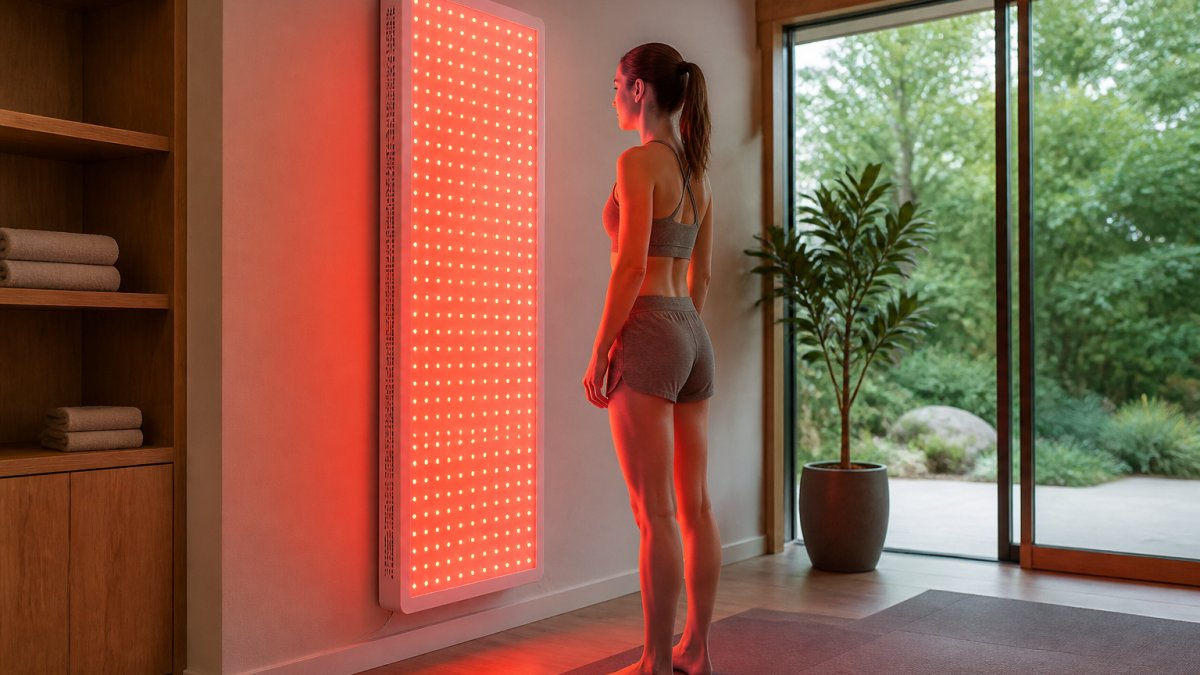
The EXESAS 1216 LED Full Body Red Light Therapy Panel is our top recommendation for maximum therapeutic output and full-body coverage.
The 1216 dual-chip LEDs deliver over 220 mW/cm² irradiance. The 75" × 22" dimensions provide full-body coverage in a single session. Four wavelengths (630nm, 660nm, 810nm, 850nm) let you customize each session.
Independent red and infrared controls, built-in timer, LCD interface, and remote control enable easy operation. Integrated cooling fans manage heat and ensure stable output.
The Large Panel – Full Body Red & Near-Infrared Light Therapy Panel →
At $3,499, this panel suits users treating multiple recovery goals with dedicated space and daily use plans. The 2-year warranty and 100,000-hour LED lifespan reflect professional-grade durability.
EXESAS 1008 LED Panel: Professional-Grade Output in Vertical Design
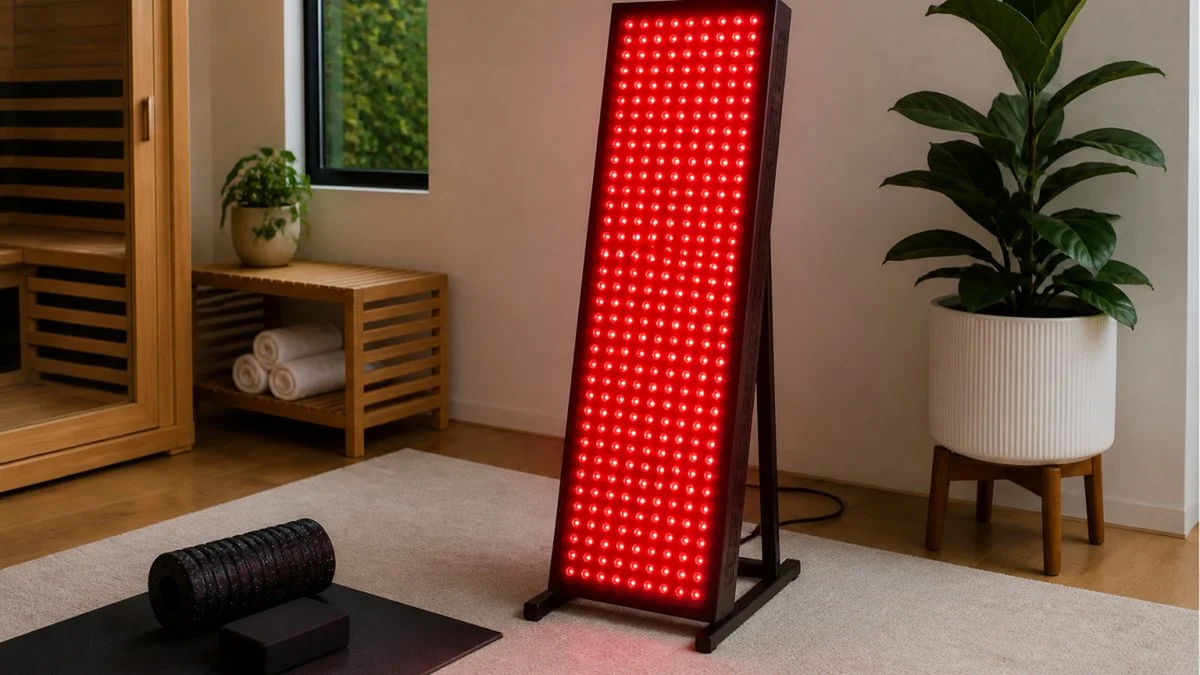
The EXESAS 1008 LED Red Light Therapy Panel delivers nearly identical performance to the 1216 in a compact vertical form factor, ideal for limited space.
The 1008 dual-chip LEDs produce over 198 mW/cm² irradiance. The 73" × 21" vertical design fits bedrooms, offices, or corners better than the wider 1216. Four wavelengths and independent controls provide identical therapeutic flexibility.
The vertical design offers spatial efficiency, fitting easily above standing desks or in bedroom corners.
At $2,799, the 1008 costs $700 less than the 1216 with nearly identical irradiance and wavelengths. The trade-off is slightly less full-body coverage, negligible for most users.
Red Light Panel 1000W: Balanced Performance and Portability
The Red Light Panel 1000W offers strong therapeutic output in an affordable, portable package for users wanting proven results without premium pricing.
This panel delivers powerful red (660nm) and near-infrared (810-850nm) light therapy. It's lighter and more compact than the EXESAS models, making it easier to relocate between rooms, ideal if you're experimenting with red light therapy.
At $2,950, it offers balanced performance between the EXESAS 1008 and EXESAS 200. Sessions may take slightly longer, but results are achievable with consistent use.
This panel suits users with smaller spaces, those new to red light therapy, or anyone valuing flexibility and portability.
EXESAS 200 LED 1000W Panel: Entry-Level Dual-Chip Technology
The EXESAS 200 LED 1000W Panel is our entry point into professional-quality red light therapy, using the same dual-chip LED technology and Meanwell drivers as premium models.
At 36" × 8.5", this compact panel targets specific areas. The 200 dual-chip LEDs deliver over 224 mW/cm² irradiance, competitive with larger panels. Four wavelengths provide the same therapeutic flexibility as premium models.
The package includes mounting hardware, base stand, remote control, and protective eyewear. You can position it on a stand, wall-mount, hang it, or mount it vertically, ideal for small spaces or as a secondary panel.
At $529, this panel is affordable without sacrificing performance. You'll treat smaller body regions and sessions may take 15-20 minutes instead of 10-15, a worthwhile compromise for most users.
The Large Panel: Professional-Grade Design for Home Integration
The Large Panel brings professional-grade light therapy performance with wide coverage and consistent output, engineered for modern wellness spaces.
With preset modes and customizable settings, The Large Panel delivers consistent light exposure. The design balances power and aesthetics. At $2,250, it offers excellent value for users seeking performance and affordability.
The panel fits seamlessly into wellness spaces, bedrooms, or home offices, supporting daily routines and targeted recovery.
How to Choose the Right Panel for Your Space and Goals
Selecting the right 1200w red light and infrared therapy panel depends on your recovery goals, available space, and usage frequency.
For full-body recovery and daily use: Choose a panel with 70"+ width and 200+ mW/cm² irradiance (EXESAS 1216 or 1008).
For targeted recovery or limited space: A smaller panel like the Red Light Panel 1000W or EXESAS 200 works well.
For budget-conscious buyers: The EXESAS 200 LED 1000W Panel delivers professional-grade irradiance at a fraction of premium pricing. Lower price often leads to better long-term adherence.
For space-conscious installations: The EXESAS 1008's vertical design fits modern rooms better than wider panels.
| Panel Model | Price | Irradiance | Best Body Coverage | Session Duration | Best For |
|---|---|---|---|---|---|
| EXESAS 1216 | $3,499 | 220+ mW/cm² | Full body | 10-15 min | Maximum output, full-body recovery |
| EXESAS 1008 | $2,799 | 198+ mW/cm² | Full body (vertical) | 12-18 min | Space-efficient, professional use |
| Red Light Panel 1000W | $2,950 | High output | Upper/mid body | 15-20 min | Balanced performance, portability |
| The Large Panel | $2,250 | Strong output | Wide coverage | Variable | Value-focused, home integration |
| EXESAS 200 LED | $529 | 224+ mW/cm² | Targeted areas | 15-25 min | Budget-conscious, small spaces |
Installation and mounting matter more than many people realize. Panels mounted at eye level or slightly above work well for standing sessions.
Choosing the right 1200w red light and infrared therapy panel requires understanding irradiance, wavelengths, and your specific recovery needs. Whether you're starting with an entry-level panel or investing in professional-grade equipment, we provide the expertise and support to ensure you get results. Explore our complete red light therapy collection and get started on your recovery journey today.

Frequently Asked Questions
Does a 1200W red light therapy panel really work for muscle recovery?
High-output panels like 1200W models deliver therapeutic wavelengths (660nm and 850nm) that penetrate tissue and support cellular energy production. Consistent use at proper irradiance levels (typically 100-200 mW/cm²) supports recovery when paired with appropriate session duration and frequency. Results depend on wavelength combination, distance from skin, and individual consistency, not wattage alone. Dual-chip technology ensures stronger, more uniform light delivery than single-chip alternatives.
What is the difference between 660nm and 850nm wavelengths?
Red light (660nm) primarily affects superficial skin and collagen production, offering visible light therapy benefits for skin health and anti-aging. Near-infrared (850nm) penetrates deeper into muscle and joint tissue, supporting mitochondrial function and recovery. Many clinical-grade panels combine both wavelengths for comprehensive benefits: 660nm for skin and circulation, 850nm for deep tissue repair and joint support. Using them separately or together depends on your specific recovery goals.
Are high-wattage red light panels safe for daily home use?
High-wattage panels are safe when they meet established safety standards: flicker-free performance, low EMF design, and appropriate irradiance levels (typically 100-220 mW/cm² for therapeutic use). Dual-chip LED technology with Meanwell drivers ensures stable, consistent output. Always follow recommended session duration (10-20 minutes) and maintain proper distance from the panel. Protective eyewear is included with professional-grade models. Always consult with a healthcare provider if you take photosensitizing medications.
How many watts should my red light therapy panel be?
Wattage alone doesn't determine effectiveness, irradiance (mW/cm²) and wavelength matter more. A 1000-1200W panel with high irradiance (>200 mW/cm²) delivers stronger therapeutic output than lower-wattage alternatives. For full-body coverage at home, 1000W+ panels with dual-chip technology provide reliable performance. Entry-level 500W panels work for targeted areas; higher wattage supports faster full-body sessions and deeper tissue penetration when combined with proper wavelength selection.
Can you use infrared and red light therapy at the same time?
Yes, most clinical-grade panels include both 660nm (red) and 850nm (near-infrared) wavelengths and allow you to use them separately or combined. Using both simultaneously maximizes benefits: red light addresses skin and superficial circulation, while near-infrared penetrates deeper for muscle and joint recovery. Many users run combined sessions for 15-20 minutes. Some panels feature independent controls so you can customize based on your session goals and recovery needs.

Leave a comment
This site is protected by hCaptcha and the hCaptcha Privacy Policy and Terms of Service apply.