

Create a Serene Personal Retreat at Home: A Complete Guide
Table of Contents
- Define Your Retreat Goals and Intentions
- How to Design a Home Wellness Room for Your Space
- Best Wellness Technology for Home Recovery
- Red Light Therapy Room Ideas for Restorative Spaces
- Create a Digital Detox and Intentional Schedule
- Sensory Environment and Acoustic Comfort
- Maintain Your Personal Retreat for Long-Term Wellness
- Accessibility Considerations for Your Wellness Sanctuary
- Frequently Asked Questions
Last Updated: September 23, 2026
Define Your Retreat Goals and Intentions
Creating a serene personal retreat at home for wellness technology starts with clarity about what you're actually trying to achieve. This foundational step separates retreats that deliver results from those that become expensive decorations collecting dust.
Ask yourself three specific questions: What physical or mental state do you want to experience regularly? What's preventing you from accessing that state now? How will you know the retreat is working?
Your answers shape everything downstream. Someone seeking deep muscle recovery needs different equipment than someone managing chronic stress. An executive recovering from burnout requires a different sensory environment than an athlete optimizing performance. The most successful home wellness retreats are built on this clarity first, technology second.
Write your intentions down. Vague goals like "feel better" don't guide purchasing decisions or space design. Specific ones do: "I want to reduce my cortisol levels enough to sleep through the night" or "I need 30 minutes of complete mental quiet every morning before work" or "I'm recovering from surgery and need to accelerate healing without leaving my home."
How to Design a Home Wellness Room for Your Space
Designing a home wellness room requires honest assessment of what you have and what your space can realistically support. The fantasy version exists in your head. The functional version exists in your actual square footage, electrical capacity, and ventilation reality.
Start by measuring your available space precisely. Infrared saunas, cold plunges, and hyperbaric chambers aren't small. A 2-person infrared sauna occupies roughly 44 inches wide by 36 inches deep by 70 inches tall. That's not a corner, that's a commitment. If you're working with a bedroom or bathroom, you need to know whether that equipment physically fits before you buy it.
Next, assess your infrastructure. Electrical capacity matters more than most people realize. A 2000-watt infrared sauna or hyperbaric chamber demands dedicated circuits. Ventilation becomes critical with saunas and steam-based systems, poor airflow creates moisture problems that damage your home. Cold plunges need drainage solutions. These aren't optional considerations; they're the difference between a functional wellness space and a source of household problems.
Consider the sensory environment you're creating. Lighting affects circadian rhythm and mood. Acoustics impact relaxation. Temperature consistency matters. A wellness room with harsh fluorescent overhead lights and echoing tile floors undermines the restorative purpose, regardless of what equipment you install.
Best Wellness Technology for Home Recovery
The wellness technology landscape offers genuine options for home recovery. Each category serves different recovery goals and fits different spaces and budgets.
Infrared Saunas for Deep Relaxation
Infrared saunas deliver consistent, penetrating heat without the extreme temperatures of traditional saunas. They use near, mid, and far infrared wavelengths to warm your body directly rather than just heating the air around you. The experience feels less intense than conventional saunas while still supporting circulation and relaxation.
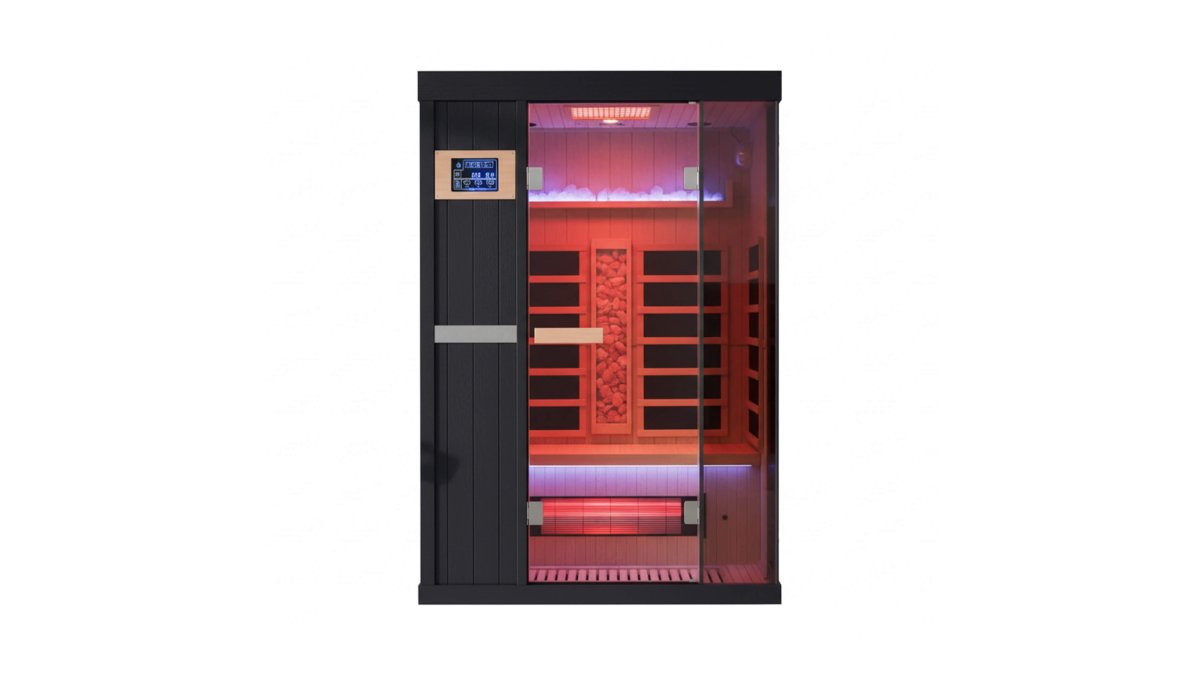
Two-person infrared saunas like the Thermora Pandora ($4,099.97) offer integrated features that enhance the restorative experience. This model combines full-spectrum infrared heat with built-in red light therapy panels and Himalayan salt elements, creating a multi-modal recovery environment in one footprint. The hemlock wood construction provides natural aesthetics while the dual heating system maintains consistent warmth.

For larger households or shared wellness spaces, 4-person options like the Rövia Ember ($5,499.97) accommodate multiple users and create a social wellness ritual. These larger saunas maintain the same infrared technology while offering more interior space and typically include chromotherapy lighting that uses color-based light therapy to support mood and relaxation.
The practical advantage of infrared saunas is consistency. You can use them regularly without the extreme heat exposure of traditional saunas, making them accessible for daily wellness routines rather than occasional indulgences.
Red Light Therapy and Ambient Lighting
Red light therapy uses specific wavelengths of light to support cellular function and recovery. The wavelengths typically range from 600 to 1000 nanometers, penetrating tissue to influence mitochondrial activity. Unlike bright overhead lighting, red light therapy creates an environment that supports relaxation while delivering therapeutic benefit.
Many integrated wellness systems now include red light therapy panels. The Thermora Pandora infrared sauna incorporates a 12" x 12" red light therapy panel directly into the sauna design, eliminating the need for separate equipment. This integration simplifies your wellness room setup while ensuring consistent use, the therapy is built into your regular sauna session rather than requiring separate time commitment.
Ambient lighting design matters as much as therapeutic light. Harsh fluorescent overhead lights trigger stress responses. Warm, dimmable lighting supports your nervous system's shift toward relaxation. Smart home automation can adjust lighting gradually throughout your session, supporting your circadian rhythm and deepening the restorative effect.
Red Light Therapy Room Ideas for Restorative Spaces
A dedicated red light therapy room creates a focused environment for recovery. The space doesn't require massive square footage, even a small bedroom corner or spare bathroom can become a restorative red light therapy space.
Thermora Pandora 2-Person Full-Spectrum →
Design principles for red light therapy rooms emphasize simplicity and sensory control. Soft, warm ambient lighting provides context. Red light therapy panels deliver the therapeutic wavelengths. Minimal visual clutter reduces cognitive load. Many people add comfortable seating or a reclining chair to support extended sessions without physical strain.
Temperature control enhances the experience. A slightly cool room temperature (68-70°F) pairs well with red light therapy, as the light generates subtle warmth without overheating the space. This combination supports deep relaxation without the intensity of sauna heat.
Consider layering your red light therapy with other restorative elements. Quiet background soundscapes or nature sounds support acoustic comfort. Comfortable seating with proper ergonomic support prevents the physical tension that undermines relaxation. Some people add low-level aromatherapy or plants to enhance the biophilic design, the sense of connection to nature that supports psychological restoration.
Create a Digital Detox and Intentional Schedule
A personal retreat at home loses its restorative power if you're constantly checking your phone or email. Digital detox isn't about rejecting technology entirely, it's about creating boundaries that protect your recovery time.
Establish specific retreat windows when devices stay outside the room. This isn't arbitrary restriction; it's infrastructure for your nervous system. Your brain cannot fully shift into parasympathetic activation (the relaxation response) while monitoring notifications. Even the possibility of an alert creates low-level stress.
An intentional schedule transforms your retreat from something you'll "get to eventually" into a consistent practice. Most people who successfully maintain home wellness routines treat them like non-negotiable appointments. Morning sessions before work become stress-prevention tools. Evening sessions support recovery and sleep quality.
Start with realistic frequency. Once weekly beats ambitious plans for daily use that never materialize. Twenty minutes of consistent practice delivers more benefit than sporadic two-hour sessions. Build the habit first, then expand.
Sensory Environment and Acoustic Comfort
Sensory environment design directly impacts how restorative your space becomes. Your nervous system responds to environmental input continuously, whether you're consciously aware of it or not.
Acoustic comfort means addressing sound directly. Hard surfaces like tile or concrete reflect noise and create echo, which triggers alertness.
Maintain Your Personal Retreat for Long-Term Wellness
A home wellness retreat requires maintenance to remain functional and restorative. Equipment needs regular care. Spaces need periodic refreshing. Practices need adjustment as your needs evolve.
Accessibility Considerations for Your Wellness Sanctuary
A truly functional personal retreat at home accommodates your actual physical capabilities, not an idealized version of yourself. Accessibility design benefits everyone, not just people with specific disabilities.
|
Consideration |
Impact on Experience |
Design Solution |
|---|---|---|
|
Physical mobility |
Difficulty entering/exiting equipment |
Lower thresholds, grab bars, modified seating |
|
Sensory sensitivity |
Overwhelm or discomfort |
Adjustable lighting, ventilation, optional enclosure |
|
Cognitive preferences |
Confusion with controls |
Clear labeling, simplified settings, visual guides |
|
Pain or fatigue |
Discomfort undermining relaxation |
Ergonomic support, easy-reach controls, temperature stability |
|
Hearing differences |
Missing audio cues or alerts |
Visual indicators, adjustable volume, captioning |
Frequently Asked Questions
How can I create a personal retreat at home if I have limited space?
Start by identifying a single zone—a corner of your bedroom, spare bathroom, or closet—and design it intentionally. Prioritize one key technology like red light therapy or a compact infrared sauna that fits your dimensions. Add ambient lighting, soft textures, and a digital detox rule for that space. Even 50 square feet can become a restorative sanctuary when designed with clear intention and minimal distractions.
What's the best wellness technology for home recovery if I'm just starting out?
Begin with infrared heat therapy or red light therapy, as both are accessible, space-efficient, and backed by wellness research. A 2-person infrared sauna like the Thermora Pandora ($4,099.97) combines full-spectrum heat, red light, and Himalayan salt elements in one integrated system. Alternatively, dedicated red light therapy panels create restorative spaces with lower upfront investment and flexible placement options.
How do I balance aesthetics and technology in a home wellness room without it feeling clinical?
Choose natural materials—hemlock wood, stone, plants—as your foundation. Integrate technology thoughtfully: embed red light panels into wall designs, use chromotherapy lighting to enhance mood rather than dominate the space, and select equipment with premium finishes. Himalayan salt panels, soft ambient lighting, and biophilic design elements transform clinical equipment into a cohesive wellness sanctuary that feels intentional, not industrial.
What should I do after my wellness retreat session to maintain the benefits?
Extend the restorative effect by hydrating, journaling reflections, and avoiding immediate digital engagement for 15-30 minutes post-session. Establish a consistent schedule so your body anticipates and deepens its recovery response. Track how you feel after sessions to refine your routine. Most importantly, protect that mental clarity by maintaining your digital detox boundaries even after you leave the space—this post-retreat maintenance is where lasting wellness gains happen.


Leave a comment
This site is protected by hCaptcha and the hCaptcha Privacy Policy and Terms of Service apply.