

Hyperbaric Chamber vs Oxygen Concentrator
Table of Contents
- Hyperbaric Chamber vs Oxygen Concentrator: Core Differences
- Benefits of Mild Hyperbaric Oxygen Therapy at Home
- Hyperbaric Oxygen Therapy Session Duration and Frequency
- FDA-Cleared Hyperbaric Chambers for Home Use
- Cost, Space, and Long-Term Maintenance Comparison
- Which Option Matches Your Recovery Goals
- Frequently Asked Questions
Last Updated: September 20, 2026
Hyperbaric Chamber vs Oxygen Concentrator: Core Differences
When choosing in a hyperbaric chamber vs oxygen concentrator comparison for home use, you're making a decision that hinges on one fundamental distinction: how oxygen reaches your body and at what pressure. At Vital Fit Home, we help clients understand this critical difference because it determines not just the therapeutic effect, but also cost, space requirements, and long-term commitment.
A hyperbaric oxygen chamber delivers 100% pure oxygen under increased atmospheric pressure inside a sealed chamber. An oxygen concentrator pulls room air, filters it, and delivers oxygen-enriched air (typically 90-96% concentration) at normal atmospheric pressure through a nasal cannula or mask. This difference isn't semantic, it changes everything about how your body absorbs oxygen and which therapy matches your recovery goals.
The pressure component is where hyperbaric oxygen therapy (HBOT) separates itself. When you're inside a pressurized chamber, the increased atmospheric pressure forces oxygen into your bloodstream at levels impossible to achieve through standard oxygen delivery alone. Your blood oxygen levels rise dramatically, and that pressurized oxygen penetrates tissues that wouldn't normally receive it. An oxygen concentrator, by contrast, simply gives you more oxygen to breathe, but your body absorbs it the same way it absorbs room air, just with a higher oxygen percentage.
How Atmospheric Pressure Changes the Therapy
Mild hyperbaric chambers operate at 1.5 ATA (atmospheres absolute), meaning the pressure inside is 1.5 times normal sea-level pressure. This increased pressure is the mechanism that drives therapeutic benefit. When you breathe 100% oxygen under pressure, the partial pressure of oxygen in your blood increases exponentially compared to breathing oxygen at normal atmospheric pressure.

Here's the practical implication: your tissues saturate with oxygen faster and more completely. Wound healing accelerates because oxygen-starved tissue gets the fuel it needs. Athletes report faster recovery from muscle damage. People managing chronic conditions often see improvements in blood oxygen levels that standard oxygen therapy alone doesn't achieve.
An oxygen concentrator maintains normal atmospheric pressure. It can't create that pressurized environment. What it does do is increase the percentage of oxygen you're breathing, from room air's 21% oxygen concentration up to 90-96%. For people with respiratory conditions, supplemental oxygen at this concentration can be genuinely helpful. But it doesn't replicate the tissue-penetrating effect of hyperbaric pressure.
Oxygen Concentration and Delivery Methods
An oxygen concentrator works by filtering room air through a molecular sieve system. It separates nitrogen from oxygen, compressing the oxygen-rich air and delivering it to you through a nasal cannula, mask, or other delivery device. Flow rates typically range from 5 to 10 liters per minute, depending on the model. The FDA's classification of oxygen concentrators as Class II medical devices reflects their role as reliable respiratory support equipment.
The Olive 5L oxygen concentrator delivers flow rates up to 5 liters per minute with 90-96% oxygen concentration, ideal for individuals needing supplemental oxygen in a compact footprint. For higher flow requirements, the Olive 10L concentrator supplies up to 10 liters per minute, making it suitable for more intensive therapeutic use or dual-user setups.
A hyperbaric chamber, by contrast, doesn't rely on a flow rate. You enter a sealed chamber, the door closes, and air is compressed inside. The chamber itself becomes the delivery mechanism. As pressure increases, every breath you take delivers oxygen at that elevated partial pressure. There's no nasal cannula, no mask, just you breathing the pressurized atmosphere. This is why hyperbaric oxygen therapy creates such a different physiological response.
Benefits of Mild Hyperbaric Oxygen Therapy at Home
Mild hyperbaric oxygen therapy at home addresses recovery needs that standard oxygen supplementation often can't match. The therapeutic benefits stem directly from that pressure component and the way it forces oxygen into tissues.
Wound healing represents one of the benefits. HBOT increases tissue oxygenation dramatically, restarting that process.
Athletic recovery is another area where hyperbaric chambers are used. Muscle damage from intense training creates localized inflammation and temporary oxygen debt in affected tissues. The pressurized oxygen environment supports the repair process, which is why performance-focused athletes and fitness enthusiasts integrate HBOT into their recovery protocols. You're not just resting, you're actively flooding damaged tissue with the oxygen it needs to rebuild.
The convenience factor matters too. A hyperbaric chamber sits in your home, available whenever you need it. You're not scheduling appointments or traveling to a clinical setting. For busy professionals managing high-stress lifestyles, that accessibility changes whether therapy actually happens consistently.
Hyperbaric Oxygen Therapy Session Duration and Frequency
Standard hyperbaric oxygen therapy protocols typically involve sessions lasting 60 to 120 minutes, conducted at 1.5 ATA pressure. Most therapeutic protocols recommend sessions 5 days per week for several weeks, though this varies based on your specific condition and recovery goals.
The session duration matters because it determines how much time your tissues spend under pressure. Longer sessions allow deeper oxygen penetration, but they also require more time commitment. Most people find 90-minute sessions strike a balance, long enough for therapeutic effect, short enough to fit into a realistic schedule.
1.5 ATA Soft-Shell Lying Type →
Frequency is equally important. Sporadic sessions won't produce the same results as consistent, regular therapy. Your body responds to the cumulative effect of repeated exposure to pressurized oxygen. That's why people serious about recovery typically commit to a schedule, treating HBOT like any other wellness practice.
An oxygen concentrator, by comparison, operates on a different timeline. You use it as needed, typically several hours per day if you have a respiratory condition requiring supplemental oxygen. There's no "session" structure. You simply turn it on when you need oxygen support and use it continuously throughout the day.

FDA-Cleared Hyperbaric Chambers for Home Use
Not all hyperbaric chambers are created equal, and regulatory approval matters. The FDA classifies hyperbaric chambers as Class II medical devices. When you're investing in home HBOT equipment, FDA clearance signals that the device meets established safety standards.
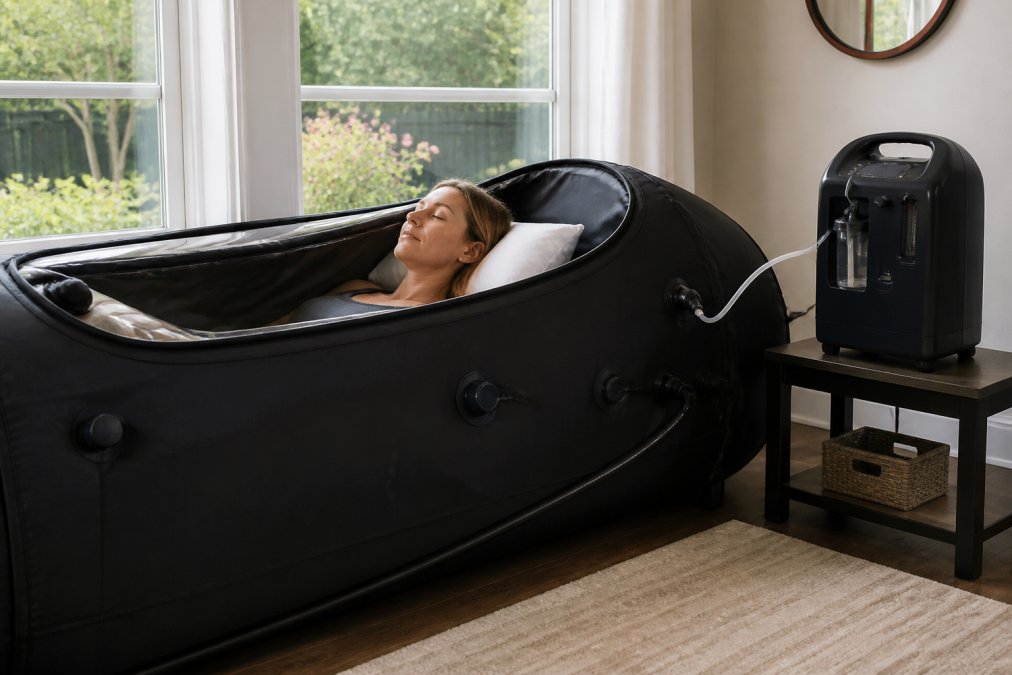
Soft-shell hyperbaric chambers like the 1.5 ATA Soft-Shell Lying Type Hyperbaric Chamber (OLV-RT01) available through Vital Fit Home represent the accessible entry point for home users.
Cost, Space, and Long-Term Maintenance Comparison
The investment difference between these two therapies is substantial, and understanding where that money goes matters for your decision.
Initial Investment and Operating Expenses
An oxygen concentrator is the lower-cost entry point. The Olive 5L concentrator starts at $699, making it accessible for people needing supplemental oxygen therapy. Even the higher-capacity Olive 10L model runs $1,099. These are one-time purchases with minimal ongoing operational costs, mainly electricity to run the unit.

Physical Space Requirements and Installation
An oxygen concentrator occupies minimal space. The Olive 5L model measures 35 × 25 × 67 cm and weighs 23 kg. It sits on the floor or a table, plugs into a standard outlet, and connects to you via tubing. You can move it between rooms easily, both models feature built-in wheels and brakes for mobility.
Maintenance, Safety Protocols, and Contraindications
An oxygen concentrator requires basic maintenance: keeping the intake filter clean, ensuring adequate ventilation around the unit, and periodic professional servicing. The Olive concentrators include safety alarms for low oxygen concentration, power failure, and pressure anomalies. They're designed for continuous operation and are remarkably reliable devices.
| Consideration | Oxygen Concentrator | Hyperbaric Chamber |
|---|---|---|
| Initial Cost | $699-$1,099 | $7,899-$8,499 |
| Space Required | Minimal (fits most rooms) | Dedicated space (2m × 1m) |
| Setup Complexity | Plug and play | Professional installation recommended |
| Ongoing Maintenance | Filter cleaning, basic upkeep | Regular seal checks, pressure monitoring |
| Therapeutic Mechanism | Increased oxygen concentration at normal pressure | 100% oxygen under increased atmospheric pressure |
| Session Structure | Continuous use as needed | Scheduled 60-120 minute sessions |
| Safety Considerations | Minimal; oxygen toxicity rare at normal use | Requires medical clearance; pressure-related risks |
| Best For | Respiratory support, supplemental oxygen | Wound healing, athletic recovery, tissue oxygenation |
Which Option Matches Your Recovery Goals
The choice between these two therapies comes down to what you're actually trying to accomplish.
Frequently Asked Questions
Can an oxygen concentrator be used for hyperbaric therapy?
No. An oxygen concentrator delivers supplemental oxygen at atmospheric pressure (room air), typically through a nasal cannula at 90-96% concentration. Hyperbaric oxygen therapy requires a pressurized chamber that increases atmospheric pressure to 1.5 ATA or higher, forcing oxygen into tissues at the partial pressure needed for therapeutic benefit. While oxygen concentrators support respiratory support and blood oxygen levels, they cannot replicate the pressure-driven mechanism of hyperbaric chambers. Some hyperbaric chambers, like the OLV-RT01, include a built-in oxygen concentrator to supply the chamber with high-purity oxygen.
What are the benefits of mild hyperbaric oxygen therapy?
Mild hyperbaric oxygen therapy at 1.5 ATA increases tissue oxygenation and blood oxygen levels. Benefits include enhanced wound healing, improved tissue repair after exercise, better blood flow, and potential support for recovery. The mild pressure allows for longer, more comfortable sessions, typically 60-90 minutes, making it practical for home use. Many athletes and wellness-focused individuals use mild HBOT for daily recovery and performance optimization.
How long should a hyperbaric oxygen therapy session last?
Hyperbaric oxygen therapy session duration typically ranges from 60 to 120 minutes, depending on the therapeutic goal and chamber pressure. Mild hyperbaric chambers (1.5 ATA) generally support 60-90 minute sessions comfortably, while clinical settings may prescribe 90-120 minute sessions at higher pressures. Sessions usually occur 5-7 days per week for acute conditions or 2-3 times weekly for wellness and recovery. Always follow the prescribed protocol for your specific health goal, as session timing affects oxygen saturation gains and therapeutic outcomes.
Are hyperbaric chambers FDA-cleared for home use?
Yes. Soft-shell hyperbaric chambers rated at 1.5 ATA are classified as Class II medical devices and FDA-cleared for home use when used according to guidelines. Chambers like the OLV-RT01 and OLV-RZ01 are designed specifically for home, wellness center, and personal use. Always verify that your home chamber is FDA-cleared and comes with clear safety protocols, contraindications documentation, and manufacturer support to ensure safe operation.
What is the main difference between an oxygen concentrator and a hyperbaric chamber?
The core difference is pressure and delivery mechanism. An oxygen concentrator filters room air to deliver supplemental oxygen at 90-96% concentration at atmospheric pressure through a nasal cannula or mask. A hyperbaric chamber pressurizes the entire chamber environment to 1.5 ATA or higher, forcing oxygen into tissues at increased partial pressure. This pressure difference allows hyperbaric therapy to achieve tissue oxygenation levels impossible with concentrators alone. Concentrators are ideal for continuous respiratory support; hyperbaric chambers target recovery, wound healing, and performance optimization through pressure-driven oxygen absorption.


Leave a comment
This site is protected by hCaptcha and the hCaptcha Privacy Policy and Terms of Service apply.