


Cold Plunge vs Ice Bath: Recovery Comparison
Table of Contents
- Cold Plunge vs Ice Bath: Core Differences
- Cold Water Immersion Benefits for Muscle Recovery
- Optimal Cold Plunge Duration and Temperature Protocols
- Cold Therapy Recovery Protocols: What the Science Shows
- Risks, Safety Precautions, and When to Avoid Cold Immersion
- Choosing the Right System for Your Home
- Frequently Asked Questions
Last Updated: September 19, 2026
Cold Plunge vs Ice Bath: Core Differences
A cold plunge is a dedicated immersion system with built-in temperature control, filtration, and circulation. An ice bath is traditionally created by filling a standard bathtub with cold water and ice, though modern versions include dedicated tubs with chilling systems.

Cold plunges maintain precise temperatures automatically and filter water continuously, reducing maintenance. Ice baths require manual ice addition and frequent water changes.
The difference between a cold plunge vs ice bath ultimately comes down to convenience, consistency, and long-term usability in a home wellness space.
| Feature | Cold Plunge | Ice Bath |
|---|---|---|
| Temperature Control | Automated, precise | Manual or basic chiller |
| Filtration System | Built-in, continuous | Requires manual maintenance |
| Setup Time | Minimal, plug-and-play | 15-30 minutes per use |
| Water Maintenance | Low (ozone/filtration) | High (frequent changes) |
| Consistency | Reliable session to session | Variable |
| Cost Range | $5,999-$12,599 | $2,000-$8,000 |
| Best For | Daily consistent use | Occasional cold therapy |
Cold Water Immersion Benefits for Muscle Recovery
Cold water immersion triggers vasoconstriction (blood vessels narrow), then vasodilation upon exit (blood vessels expand), flooding muscles with oxygenated blood and clearing metabolic waste.
This circulatory response reduces delayed onset muscle soreness (DOMS) and activates parasympathetic tone, the body's "rest and recovery" mode.
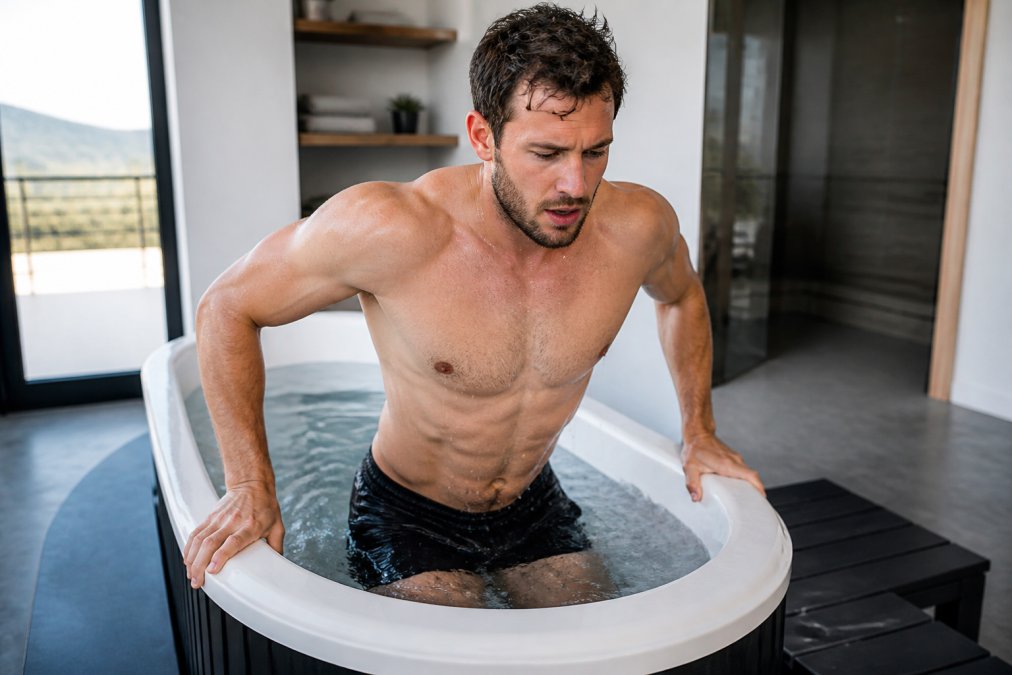
Beyond muscle recovery, cold water immersion influences systemic inflammation. Research from the National Institutes of Health on cold water immersion documents that regular cold exposure modulates inflammatory markers, though the effect varies by individual and protocol. For athletes managing exercise-induced inflammation, cold plunges offer a non-pharmaceutical approach to inflammation management during recovery windows.
Physiological vs. Psychological Benefits: A Critical Distinction
Physiological benefits center on tissue-level recovery: vasoconstriction and vasodilation cycles improve blood flow, reduce inflammatory cytokines, and accelerate lactate clearance. The benefit is primarily local, affecting stressed muscles and tissues.
Psychological benefits operate through the central nervous system. Cold water immersion triggers dopamine release (250% or more), enhancing motivation, focus, and stress resilience. The benefit is systemic, affecting mood and mental clarity independent of muscle recovery.
Endurance athletes should time cold plunges 24-48 hours post-workout for physiological recovery. Strength athletes should avoid immediate post-training cold immersion (which suppresses hypertrophy signals) but may benefit from psychological dopamine boosts on rest days.
Optimal Cold Plunge Duration and Temperature Protocols
Most practitioners recommend starting with 2-3 minute immersions at 50-59°F (10-15°C) for beginners, extending to 5-10 minutes as tolerance improves.
Temperature matters more than duration. Colder temperatures produce faster physiological responses but require shorter exposure times. Warmer cold water (50-59°F) allows longer sessions with less shock to the system. According to research on cold exposure protocols from the Journal of Sports Medicine, the sweet spot for muscle recovery appears to be 50-59°F for 3-5 minutes, repeated 2-3 times weekly.
Most evidence suggests 2-4 sessions per week optimizes recovery without suppressing hypertrophy. Daily cold plunging risks suppressing beneficial inflammatory responses needed for muscle adaptation.
| Protocol | Temperature | Duration | Frequency | Best For |
|---|---|---|---|---|
| Beginner | 50-59°F (10-15°C) | 2-3 min | 1-2x/week | Cold tolerance building |
| Intermediate | 46.4-50°F (8-10°C) | 3-5 min | 2-3x/week | General recovery |
| Advanced | 37.4-46.4°F (3-8°C) | 5-10 min | 2-4x/week | High-intensity training |
| Maintenance | Variable | 3-5 min | 1-2x/week | Wellness, not performance |
The best protocol is one you'll maintain consistently. Vital Fit Home's cold plunge systems allow easy temperature adjustment via smart app control, enabling you to experiment and refine your ideal protocol.

Cold Therapy Recovery Protocols: What the Science Shows
For endurance athletes, cold immersion shows consistent benefits for reducing muscle soreness and accelerating return to training through inflammation reduction and improved blood flow.
Icetubs IceBarrel XL Cold Plunge & Hot →
For strength athletes, aggressive cold therapy immediately post-workout may blunt hypertrophy adaptations. Use cold therapy 24-48 hours post-workout or on non-training days instead.
Risks, Safety Precautions, and When to Avoid Cold Immersion
Individuals with cardiovascular disease, uncontrolled hypertension, or arrhythmias should consult physicians before cold plunging, as the cold shock response elevates heart rate and blood pressure.
Choosing the Right System for Your Home
Selecting a cold plunge system requires balancing budget, space, maintenance tolerance, and usage frequency. Maintenance and hygiene protocols are the primary determinant of long-term usability and total cost of ownership.
Maintenance and Hygiene: The Hidden Complexity
Cold plunge systems fall into two maintenance categories: high-filtration systems (built-in ozone and mechanical filtration) and manual-maintenance systems (requiring frequent water changes and chemical treatment).
- Weekly filter cleaning (5-10 minutes)
- Monthly filter cartridge replacement ($40-80 per cartridge)
- Quarterly ozone system inspection
- Annual deep cleaning and water replacement
Manual-maintenance systems (budget options or traditional ice baths) require:
- Complete water change every 3-7 days (depending on usage frequency)
- Manual scrubbing of tub surfaces to prevent algae and biofilm
- Chemical treatment (chlorine or bromine) if not changing water frequently
- No automated monitoring of water quality
Filtration Technology Comparison
Ozone purification is the gold standard for cold plunges. Ozone (O₃) molecules oxidize contaminants on contact, breaking down bacteria, viruses, and organic compounds. Advantages: no chemical residue, no chlorine smell, effective against biofilm. Disadvantages: ozone generators require electricity and occasional bulb replacement ($150-300 every 2-3 years), and ozone does not provide residual protection (water must be filtered continuously).
System Selection by Usage Pattern
Daily users (5-7 sessions per week): Invest in a high-filtration system with ozone and mechanical filtration. The automation justifies the premium cost. Recommended: RevX X Tub ($7,500) or Icetubs Ice Bath ($12,099.97). These systems handle frequent use without degradation and maintain water quality automatically, eliminating the friction that causes users to abandon cold plunging.
Total Cost of Ownership Framework
When comparing systems, calculate five-year total cost of ownership:
- Initial purchase price
- Annual electricity cost (circulation pump running 4-8 hours daily at 1-2 HP: roughly $200-400/year)
- Annual consumables (filters, ozone bulbs, chemicals: $200-400/year for premium systems, $100-200/year for budget systems)
- Annual labor (time spent on maintenance, valued at your hourly rate)
- Replacement parts and repairs (premium systems typically have lower failure rates)
A $12,000 premium system with $600/year in consumables and electricity, plus 4 hours of annual labor ($100 at $25/hour), costs $12,700 over five years. A $6,000 budget system with $300/year in consumables, plus 30 hours of annual labor ($750 at $25/hour), costs $7,800 over five years, but only if you maintain discipline with water changes and chemical treatment.
Frequently Asked Questions
What is the primary difference between a cold plunge and an ice bath?
A cold plunge is a dedicated tub with built-in chilling technology that maintains precise temperatures (typically 37-50°F), while an ice bath uses manually added ice to cool water. Cold plunges offer consistent, controlled cold water immersion with filtration systems, making them easier to use repeatedly. Ice baths require frequent ice replenishment and lack temperature precision. For regular cold therapy recovery protocols, cold plunges provide superior convenience and reliability.
How long should I stay in a cold plunge for muscle recovery?
Optimal cold plunge duration ranges from 2 to 5 minutes for most people, with 3 minutes being a practical target for muscle recovery benefits. Beginners should start at 1-2 minutes and gradually increase. Water temperature affects duration: at 37-40°F, stay closer to 2-3 minutes; at 50-60°F, you can extend to 4-5 minutes. Longer immersion (beyond 10 minutes) does not increase benefits and raises hypothermia risk. Consistency matters more than duration, regular short sessions outperform occasional long ones.
Does cold water immersion actually reduce muscle soreness and inflammation?
Cold water immersion activates vasoconstriction, narrowing blood vessels to reduce blood flow to inflamed tissues, which temporarily decreases swelling and pain. This provides short-term relief from delayed onset muscle soreness (DOMS). However, research shows the effect is modest and temporary. The real benefit emerges from repeated cold therapy recovery protocols: regular cold exposure improves circulation, supports autonomic nervous system adaptation, and enhances overall recovery kinetics. For serious athletes, cold immersion works best as part of a comprehensive recovery strategy, not as a standalone solution.
Are there reasons to avoid cold immersion immediately after a workout?
Cold immersion within 30 minutes of intense exercise may blunt the inflammatory response your body needs to build muscle and trigger adaptation. Acute inflammation is part of the muscle-building process. Waiting 2-4 hours post-workout allows your body's natural recovery processes to begin before applying cold therapy. Additionally, cold immersion after exercise can increase core body temperature stress and delay recovery if you're already fatigued. For best results, use cold plunges on rest days or several hours after training, not as an immediate post-workout intervention.
What maintenance does a home cold plunge require?
Most modern cold plunges feature ozone or filtration systems that minimize chemical use. Maintenance typically includes replacing filter cartridges every 1-2 months (depending on use frequency), checking water clarity, and ensuring the chiller operates properly. Systems like the Icetubs IceBarrel XL and Kooru Cold Plunge Tub use three-stage filtration and ozone sanitation, reducing manual intervention. Monthly water testing and occasional drain-and-refill (quarterly) keep water fresh. Unlike ice baths, which require constant ice replenishment and manual labor, cold plunges are designed for low-maintenance, consistent use in home wellness spaces.


Leave a comment
This site is protected by hCaptcha and the hCaptcha Privacy Policy and Terms of Service apply.