
How to Set Up a Home Recovery Room for Athletes
Table of Contents
- How to Optimize Recovery Room Layout for Your Space
- Essential Athlete Recovery Equipment You'll Need
- Benefits of Home Hyperbaric Oxygen Therapy for Recovery
- Red Light Therapy for Muscle Recovery and Tissue Repair
- Electrical, Drainage, and Building Code Requirements
- Designing for Comfort: Lighting, Acoustics, and Flooring
- Post-Workout Recovery Protocols and Daily Use
- Frequently Asked Questions
Last Updated: September 19, 2026
How to Optimize Recovery Room Layout for Your Space
Setting up a home recovery room requires careful planning around your available square footage and equipment. The good news: you don't need 150-250 square feet to build an effective recovery room. You need strategy.
Assessing Your Available Space and Constraints
Start by measuring your room dimensions and identifying load-bearing walls, electrical outlets, and water access points. These three factors constrain almost every decision you'll make.
For dedicated rooms (100+ square feet):
For small bedrooms or bathrooms (50-100 square feet): Prioritize which modalities matter most.
Space-Specific Layout Strategies
Basement or Dedicated Room (150-250 sq ft)
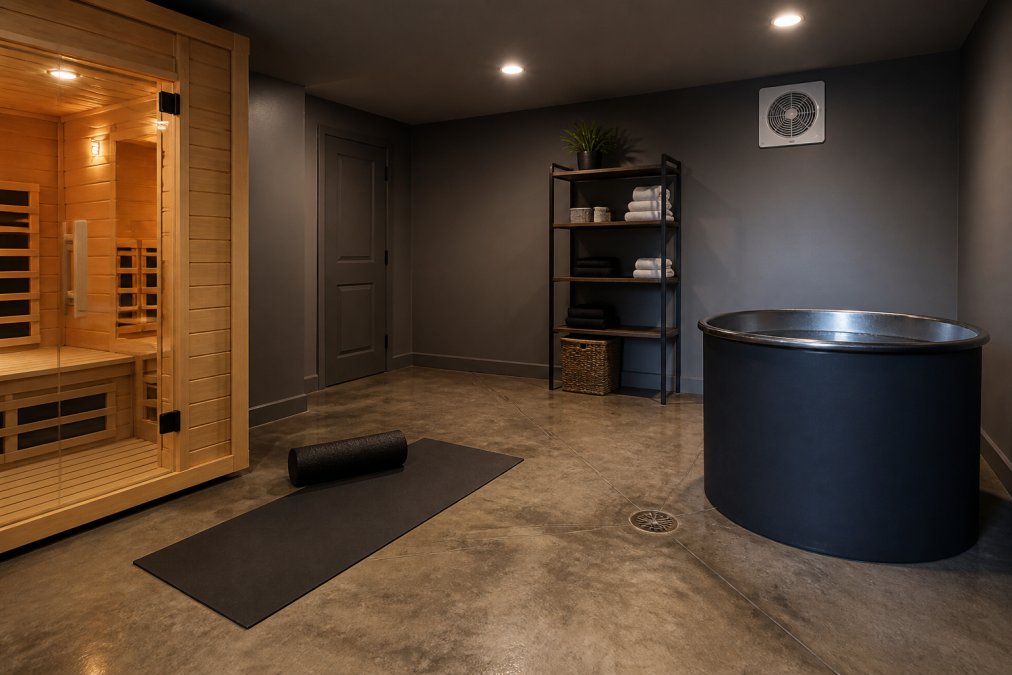
Zoning for different recovery modalities:
-
Contrast therapy zone: Position your cold plunge and infrared sauna on opposite sides of the room if possible, or at least 6 feet apart. Leave 3 feet of clearance on all sides for safe entry and exit.
-
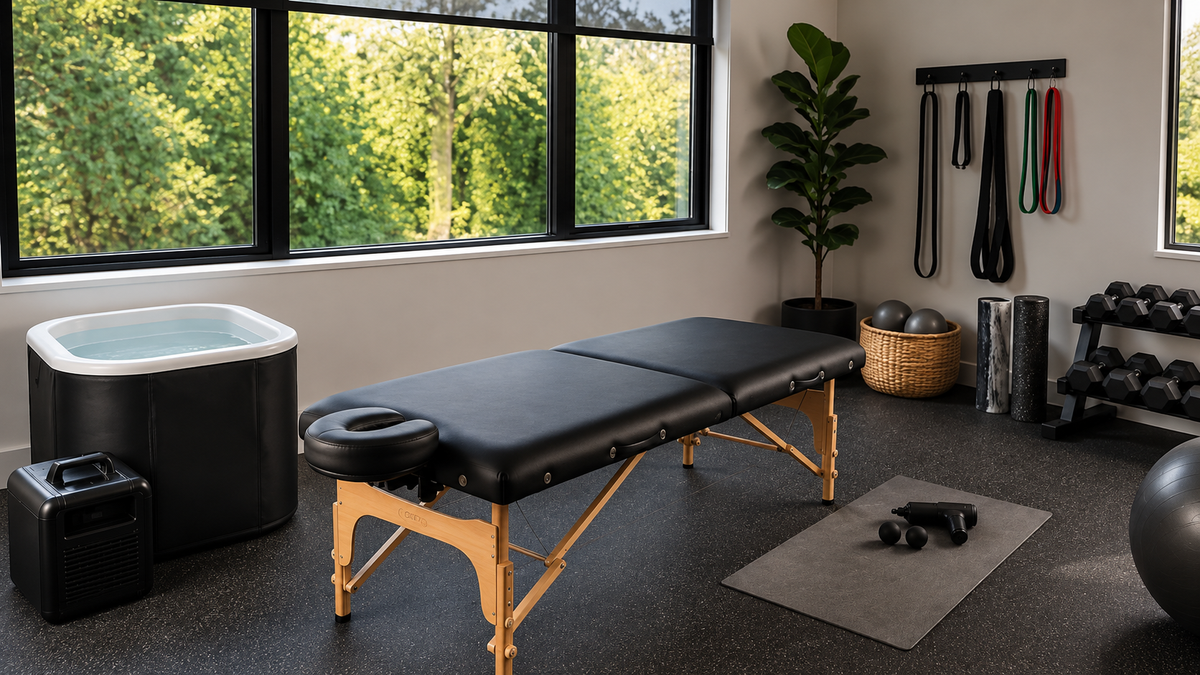
Myofascial release zone: Dedicate 4 feet by 6 feet of floor space for foam rolling, massage guns, and stretching, away from heat-generating equipment. A yoga mat prevents noise and protects your floor.
-
Mobility and stretching zone: Reserve at least 8 feet by 8 feet for dynamic stretching, resistance band work, and breathing exercises.
Small Bedroom or Bathroom (50-100 sq ft)
Prioritize one or two modalities and stack them vertically or use them sequentially:
-
Cold plunge + foam rolling: A compact cold plunge (4 feet by 2 feet) fits in a corner. Use the remaining floor space for a yoga mat and foam roller. After cold immersion, step out and immediately foam roll while your muscles are primed for myofascial work.
-
Infrared sauna + stretching: A 2-person infrared sauna (4 feet by 4 feet) leaves room for a yoga mat. Stretch before entering the sauna to warm up, then use the sauna for deep relaxation and recovery.

Thermora Pandora 2-Person Full-Spectrum Infrared Sauna – Indoor Hemlock Wood Sauna with Red Light Therapy & Himalayan Salt Panels -
Red light therapy + mobility work: Mount red light panels on the wall above your yoga mat. Lie down for 15-20 minutes of red light exposure while performing gentle stretching or breathing exercises.
Apartment with No Dedicated Space
Build a "recovery kit" instead of a room:
-
Portable cold plunge: Inflatable or soft-shell cold plunge tubs fit in a closet or under a bed when not in use. Fill with a hose, drain with a pump.
-
Infrared sauna blanket: Folds into a storage bag. Use it on your bed or floor, then put it away. No installation required.
-
Foam roller and massage gun: Store in a closet. Takes 2 minutes to set up.
-
Red light therapy panels: Mount on a wall or use a portable stand. Takes seconds to position.
-
Yoga mat: Rolls up and stores vertically.
This approach requires no landlord approval or electrical permits. The trade-off: you're not using contrast therapy (cold + sauna together), but you can still recover effectively with myofascial release, red light, and mobility work.
Load Capacity and Utility Placement
For apartments and older homes, verify floor capacity before installing a cold plunge. If your floor won't support the weight, consider a smaller plunge or a portable option.
Essential Athlete Recovery Equipment You'll Need
The best recovery room combines equipment that addresses different recovery mechanisms: temperature contrast, soft tissue work, and active mobility. You don't need everything at once. Start with one or two modalities and expand based on what you actually use.
Contrast Therapy Setup: Sauna and Cold Plunge
Contrast therapy, alternating between hot and cold exposure, triggers cardiovascular adaptation and reduces inflammation.
Myofascial Release and Mobility Tools
Myofascial release addresses muscle tightness and improves tissue quality between workouts. These tools are portable, affordable, and effective.
Icetubs IceBarrel XL Cold Plunge & Hot →
Essential myofascial tools:
- Foam roller (36 inches, medium density)
- Massage gun with multiple attachments
- Lacrosse ball or trigger point ball
- Resistance bands (light, medium, heavy)
- Yoga mat (non-slip, cushioned)
Recovery Equipment Comparison and Pricing
| Equipment Type | Key Benefit | Space Required | Price Range | Best For |
|---|---|---|---|---|
| Cold Plunge | Inflammation reduction, circulation | 8'x4' | $7,000-$15,000 | Serious athletes, daily use |
| Infrared Sauna | Muscle relaxation, detoxification | 4'x4' | $3,000-$6,000 | Recovery consistency |
| Foam Roller | Mobility improvement, cost-effective | 3'x3' | $50-$300 | Daily self-care |
| Massage Gun | Targeted tissue work, convenience | shelf space | $200-$800 | Post-workout recovery |
| Red Light Therapy | Tissue repair, circulation | 4'x6' | $3,000-$8,000 | Injury recovery, muscle repair |
Benefits of Home Hyperbaric Oxygen Therapy for Recovery
Hyperbaric oxygen therapy (HBOT) pressurizes air to increase oxygen absorption in your bloodstream. Athletes use it for faster recovery, reduced inflammation, and improved endurance.
Red Light Therapy for Muscle Recovery and Tissue Repair
Red light therapy (wavelengths 600-700nm) and near-infrared light (700-1100nm) penetrate muscle tissue and stimulate mitochondrial function. This accelerates tissue repair and reduces inflammation at the cellular level.
Electrical, Drainage, and Building Code Requirements
Building departments have specific requirements for equipment that draws significant power, generates moisture, or involves plumbing modifications. Understanding these upfront prevents costly rework and liability issues.
Permit Requirements by Equipment Type
Cold plunges and saunas: Equipment requiring new electrical circuits or plumbing typically requires a permit. Some jurisdictions classify cold plunges as "pools" or "spas," triggering additional safety codes. Check with your local building department before purchase.
The Permit Process: Step-by-Step
-
Pre-purchase consultation: Contact your local building department and describe the equipment you plan to install. Ask specifically: "Does this require a permit?" and "What electrical standards apply?" Get the answer in writing if possible.
-
Electrical plan submission: If a permit is required, you'll need to submit an electrical plan showing circuit layout, amperage, voltage, and equipment specifications. Your electrician typically prepares this. The plan must show that your main panel has available capacity and that new circuits will not overload existing service.
-
Inspection scheduling: Once the permit is issued, the building department schedules an inspection. The inspector verifies that all work meets the National Electrical Code (NEC), local amendments, and equipment manufacturer specifications. For water-based equipment, they check for proper grounding, GFCI protection, and drain safety.
-
Final approval: After passing inspection, you receive a Certificate of Compliance or similar documentation. Keep this for your records, it protects you if you sell the home and proves the work was done legally.
Electrical Load Planning and Panel Capacity
A cold plunge draws 30-50 amps. An infrared sauna draws 30-40 amps. A hyperbaric chamber draws 20-30 amps. These cannot share a single circuit. Each requires its own dedicated 240V line.

Water, Drainage, and Plumbing Compliance
A cold plunge requires either a floor drain or submersible pump. Floor drain installation typically requires a plumbing permit.
Grounding, GFCI Protection, and Safety Standards
All outlets within 6 feet of water sources must be GFCI-protected (Ground Fault Circuit Interrupter). Equipment near water must be properly grounded per National Electrical Code (NEC) Article 680. Your electrician must follow these standards during installation.
Documentation and Future Home Sales
Keep all permits, inspection certificates, and equipment documentation. Unpermitted circuits can kill a sale or require expensive remediation. If you've already installed equipment without permits, contact your building department about a retroactive permit process.
Designing for Comfort: Lighting, Acoustics, and Flooring
A recovery room should feel like a sanctuary, not a utility space. Lighting, sound, and flooring determine whether you'll actually use it daily.
Post-Workout Recovery Protocols and Daily Use
Immediate post-workout (0-30 minutes after training):
- Active recovery: 5-10 minutes light stretching or walking
- Myofascial release: 5-10 minutes foam rolling on tight areas
- Hydration and nutrition
Recovery day protocol (24-48 hours post-workout):
- Red light therapy: 15-20 minutes full-body exposure
- Contrast therapy: 20-30 minutes alternating sauna and cold plunge
- Stretching and mobility: 10-15 minutes focused on movement quality
Weekly hyperbaric oxygen (optional but effective):
- 1-2 sessions per week for general recovery
- 3-5 sessions per week for injury rehabilitation
The most effective recovery room is one you actually use. Start with a simple protocol and expand as you build the habit.
Frequently Asked Questions
What is the minimum space needed for a functional home recovery room?
A dedicated recovery room works best with 150-200 square feet, allowing you to zone distinct areas for contrast therapy, myofascial release, and stretching. Smaller spaces (100 sq ft) can work if you prioritize your most-used modalities. Measure your room length, width, and ceiling height before purchasing equipment like saunas or hyperbaric chambers, as these require specific clearance. Consider whether you'll use contrast therapy (sauna + cold plunge) simultaneously or sequentially, sequential use saves space.
How much does it cost to set up a complete home recovery room?
A basic recovery room with essential equipment ranges from $15,000 to $25,000. The Icetubs IceBarrel XL cold plunge costs $12,599.97, the Thermora Pandora 2-person infrared sauna is $4,099.97, and the 1.5 ATA hyperbaric chamber is $7,899.00. Adding red light therapy (like the EnergyLounger Blanket at $6,500) and smaller tools (foam rollers, resistance bands, yoga mat) increases the total. Budget an additional 10-15% for electrical upgrades, ventilation, and installation support.
What are the key electrical requirements for running multiple recovery systems?
Most home recovery equipment requires 240V dedicated circuits. The Thermora Pandora sauna draws 2000 watts. Cold plunges and red light therapy systems vary by model. Consult a licensed electrician to assess your home's electrical panel capacity and install dedicated circuits for each major system. Avoid daisy-chaining equipment on shared circuits, as simultaneous use can overload them.
Can I fit a home recovery room in a small bathroom or bedroom?
Yes, with careful planning. A master bathroom or spare bedroom (8' x 10' minimum) can accommodate a cold plunge and sauna if you choose compact models or stagger their use. The Icetubs IceBarrel XL measures 62.3" L x 40.2" W x 46.4" H and fits standard bathrooms. Ensure adequate ventilation, saunas and cold plunges generate humidity and require exhaust fans rated for moisture. Consider a wall-mounted or foldable stretching station to maximize floor space. Small-space setups work best when you prioritize your top 2-3 recovery modalities rather than attempting everything.


Leave a comment
This site is protected by hCaptcha and the hCaptcha Privacy Policy and Terms of Service apply.