

Cold Plunge for Athletic Performance: A Science-Backed Guide
Table of Contents
- How Cold Plunge Affects Athletic Performance
- Physiological Mechanisms: What Happens During Cold Water Immersion
- Cold Water Immersion Protocols for Athletes
- Optimal Duration for Ice Baths and Timing Strategies
- The Hypertrophy Trade-Off: When Cold Plunging May Interfere with Muscle Growth
- Home Recovery Equipment for Athletes: Setting Up Your Space
- Risks, Contraindications, and Who Should Avoid Cold Plunging
- Frequently Asked Questions
Last Updated: September 26, 2026
How Cold Plunge Affects Athletic Performance
Cold water immersion has become a cornerstone of athletic recovery protocols, but the science behind how a cold plunge affects athletic performance is more nuanced than most athletes realize. When you step into water below 60°F, your body triggers a cascade of physiological responses designed to protect core temperature and preserve vital organ function. These responses, vasoconstriction, inflammatory modulation, and nervous system activation, create both opportunities and trade-offs for performance optimization.

At Vital Fit Home, we've worked with athletes and fitness enthusiasts exploring how cold plunge therapy fits into their recovery strategy. The key insight: cold water immersion isn't universally beneficial for every training goal. It excels at reducing inflammation and accelerating recovery from high-intensity efforts. But it can also interfere with the muscle-building adaptations you're chasing if timing and duration aren't carefully managed.
This guide breaks down the mechanisms, protocols, and contraindications so you can decide whether cold plunge therapy belongs in your recovery toolkit, and if it does, how to use it effectively.
Physiological Mechanisms: What Happens During Cold Water Immersion
Vasoconstriction and Circulation Response
The moment cold water contacts your skin, your sympathetic nervous system activates. Blood vessels constrict sharply, redirecting blood flow away from the periphery toward your core to maintain central body temperature. This process, called vasoconstriction, is the foundation of how cold plunge athletic performance benefits unfold.
During immersion, your heart rate typically increases by 50-100% as your cardiovascular system works harder to maintain circulation under thermal stress. Skin temperature drops rapidly while core body temperature remains stable due to this protective mechanism. After you exit the water, a rewarming phase begins. Blood vessels dilate (vasodilation), and oxygen-rich blood floods back to muscles and tissues. This post-immersion hyperemia, the rush of nutrient delivery during rewarming, is where many of the recovery benefits occur.
What most guides miss: the real benefit isn't the constriction itself. It's the contrast between constriction and subsequent vasodilation. A single cold plunge creates a temporary circulatory stimulus. Repeated cold exposure over weeks trains your vascular system to respond more efficiently to thermal stress, potentially improving baseline circulation and oxygen delivery during training.
Reducing Delayed Onset Muscle Soreness and Inflammation
Delayed onset muscle soreness (DOMS) peaks 24-72 hours after intense exercise. It results from exercise-induced muscle damage (EIMD), microscopic tears in muscle fibers and the inflammatory cascade that follows. Cold water immersion dampens this inflammatory response by reducing systemic inflammation markers like cytokines and C-reactive protein.
The mechanism is straightforward: cold exposure suppresses inflammatory signaling. Muscle soreness decreases, and athletes report faster return to normal function. For high-volume training blocks or competition schedules where back-to-back efforts are unavoidable, cold plunging can meaningfully reduce discomfort and restore mobility sooner.
However, the trade-off is critical. Inflammation isn't purely harmful, it's part of the adaptive signal that drives strength and hypertrophy gains. By blunting inflammation aggressively, you're also reducing the stimulus for muscle protein synthesis and growth. This trade-off becomes the central tension in how to use cold plunge therapy strategically.
Cold Water Immersion Protocols for Athletes
Effective cold plunge protocols vary based on your training goal. A sprinter recovering from explosive efforts has different needs than a bodybuilder chasing hypertrophy or a distance runner managing cumulative fatigue.
General framework for cold plunge athletic performance protocols:
- Temperature range: 50-59°F is most common; 37-50°F is more aggressive and carries higher risk
- Duration: 3-5 minutes is standard; longer durations don't produce proportionally greater benefits
- Frequency: 1-3 times per week; daily immersion increases injury risk and blunts adaptation
- Timing: Immediately post-workout for acute inflammation reduction; 2-4 hours post-workout if prioritizing muscle growth
The individualized protocol depends on your training phase. During competition or high-intensity blocks where recovery speed matters most, cold plunging 3-5 minutes at 50-59°F immediately post-workout is effective. During hypertrophy phases, either avoid cold plunging entirely or delay it 4+ hours after training to preserve the inflammatory signal driving growth.
Optimal Duration for Ice Baths and Timing Strategies
The optimal duration for ice baths is 3-5 minutes in water between 50-59°F. Durations shorter than 2 minutes produce minimal physiological response. Durations longer than 10 minutes increase risk of afterdrop (dangerous core temperature drop after exiting), don't produce additional benefits, and elevate injury risk.
Timing strategy matters as much as duration. Cold plunge athletic performance benefits depend on when immersion occurs relative to your training session.
Immediate post-workout (0-30 minutes): Best for reducing acute inflammation and DOMS. Ideal if your next training session is within 24-48 hours and you prioritize recovery speed over muscle growth.
Icetubs IceBarrel XL Cold Plunge & Hot →
Delayed immersion (2-4 hours post-workout): Allows the initial inflammatory response to unfold while still providing soreness reduction. Better for athletes balancing recovery and hypertrophy.
Avoid within 6 hours pre-workout: Cold immersion triggers nervous system activation that can persist for hours. If you plan to train hard later the same day, morning cold plunging may compromise afternoon performance.
The Hypertrophy Trade-Off: When Cold Plunging May Interfere with Muscle Growth
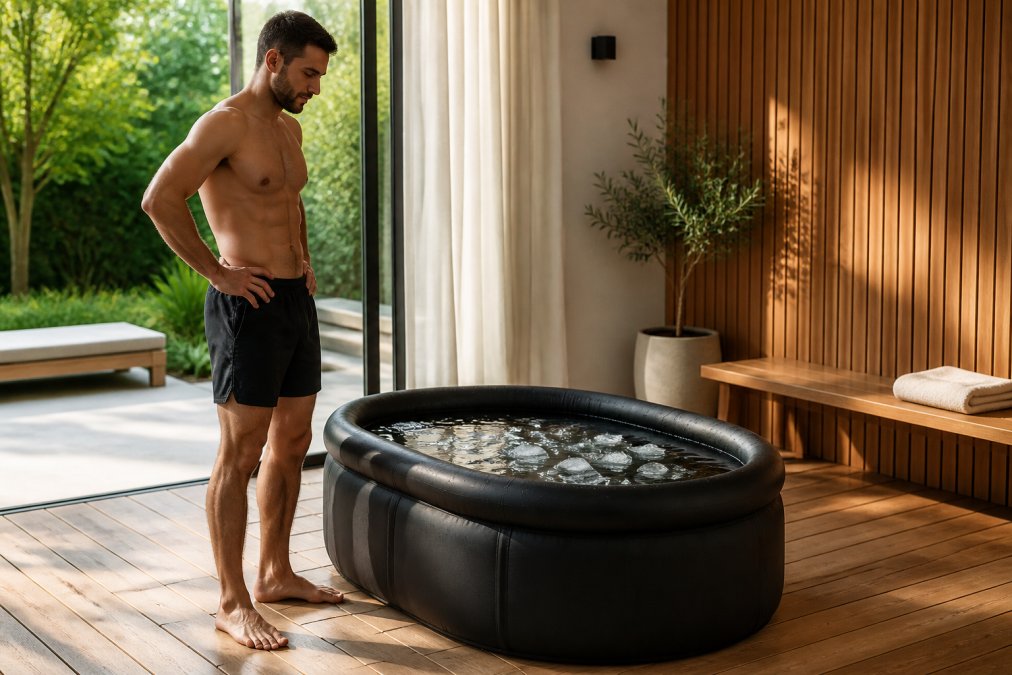
This is where most athletes get cold plunge athletic performance strategy wrong. Cold water immersion blunts the inflammatory response, which sounds beneficial until you understand that inflammation is part of the signal driving muscle protein synthesis and hypertrophy.
Research on cold plunging and muscle growth reveals a clear pattern: acute cold exposure immediately post-workout reduces markers of muscle protein synthesis compared to passive recovery. The mechanism is straightforward, cold suppresses the inflammatory cascade that includes growth factors like IL-6 and TNF-α, which are necessary signals for muscle adaptation.
For athletes whose primary goal is strength or muscle gain, this is a meaningful trade-off. A bodybuilder or strength athlete using cold plunging immediately after every training session may see slower hypertrophy compared to using passive recovery or active recovery methods.
The solution isn't to avoid cold plunging entirely. Instead, use it strategically:
- During competition phases: Cold plunge immediately post-workout to accelerate recovery between events
- During hypertrophy phases: Avoid immediate post-workout cold exposure; use it only for managing excessive soreness
- During deload weeks: Cold plunging can help flush fatigue without compromising the adaptive signal
Home Recovery Equipment for Athletes: Setting Up Your Space
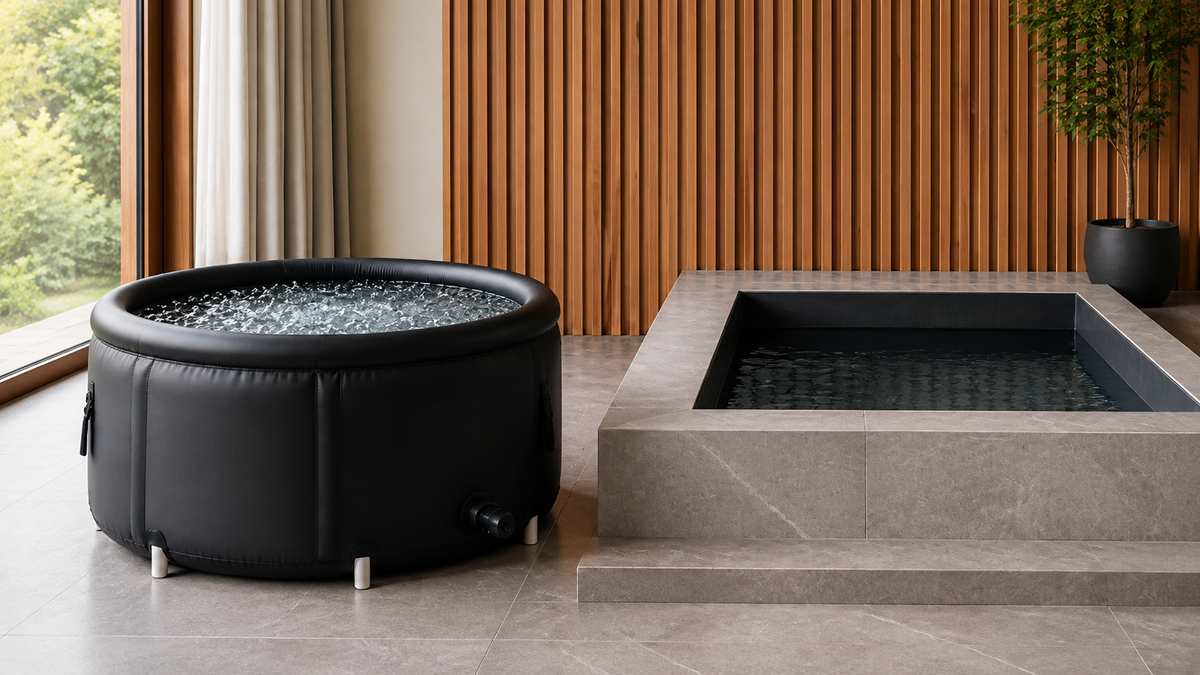
Setting up a dedicated cold plunge at home requires realistic planning around space, electrical requirements, and maintenance. Most athletes underestimate the infrastructure demands until installation begins.
Space requirements: A functional cold plunge tub occupies roughly 8-10 square feet of floor space. The Icetubs IceBarrel XL, for example, measures 62.3" L × 40.2" W × 46.4" H, large enough for full-body immersion but compact enough to fit a dedicated bathroom corner or finished basement area.

Risks, Contraindications, and Who Should Avoid Cold Plunging
Cold water immersion carries real risks if you ignore contraindications or exceed safe exposure parameters. Understanding these limitations is as important as understanding the benefits.
Acute contraindications, avoid cold plunging if you have:
- Active cardiovascular disease or uncontrolled hypertension (cold exposure triggers acute blood pressure elevation)
- Raynaud's phenomenon or other peripheral circulatory disorders
- Recent myocardial infarction or cardiac arrhythmias
- Uncontrolled diabetes (impaired temperature sensation increases injury risk)
- Acute fever or active infection
- Open wounds or severe skin conditions
Chronic considerations:
| Protocol Element | Duration | Frequency | Best For |
|---|---|---|---|
| Temperature | 50-59°F | Per session | General recovery |
| Immersion time | 3-5 minutes | Per session | Optimal benefit window |
| Post-workout delay | Immediate or 2-4 hours | Per session | Immediate = soreness; delayed = hypertrophy balance |
| Weekly frequency | 1-3 sessions | Per week | Avoid daily use |
| Training phase | Competition | During peak | Prioritize recovery speed |
| Training phase | Hypertrophy | During build | Avoid immediate post-workout |
Frequently Asked Questions
How long should athletes stay in a cold plunge?
Most athletes benefit from 2-4 minutes of cold water immersion at temperatures between 50-59°F (10-15°C). Beginners should start with 1-2 minutes and gradually increase duration as tolerance builds. Sessions longer than 5 minutes offer diminishing returns and increase risk of hypothermia. Consistency matters more than duration, regular 3-minute sessions outperform occasional longer exposures. Always listen to your body and exit if you experience uncontrollable shivering or numbness.
What are the main physiological benefits of cold water immersion for muscle recovery?
Cold plunging reduces exercise-induced muscle damage (EIMD) and delayed onset muscle soreness (DOMS) by triggering vasoconstriction, which limits inflammatory fluid accumulation in muscle tissue. The cold exposure activates the parasympathetic nervous system during the rewarming phase, promoting relaxation and recovery. Additionally, cold immersion enhances circulation as your body works to restore core body temperature, delivering oxygen-rich blood and nutrients to damaged muscle fibers more efficiently than passive rest alone.
Is there a downside to cold plunge for muscle building?
Yes, cold plunging immediately post-workout can interfere with hypertrophy (muscle growth). Cold exposure suppresses the acute inflammatory response that triggers muscle protein synthesis, the process your body uses to build larger muscles. If your primary goal is strength and size gains, separate cold plunging from resistance training by at least 4-6 hours, or use it on non-training days. Athletes focused on endurance or recovery may prioritize cold immersion; those prioritizing muscle growth should use it strategically or avoid it after leg and upper-body strength sessions.
Do professional athletes actually use cold plunges?
Yes, elite athletes across multiple sports use cold water immersion as part of their recovery protocols. Professional sports teams, Olympic training centers, and high-performance facilities incorporate cold plunging to manage fatigue and reduce soreness between intense training sessions. However, usage varies by sport and individual goal, endurance athletes and team-sport players tend to use it more frequently than strength-focused athletes. The key is matching cold plunging to your specific performance objective rather than assuming it benefits all training equally.


Leave a comment
This site is protected by hCaptcha and the hCaptcha Privacy Policy and Terms of Service apply.