
Article: Portable vs Stationary Cold Plunge: Which Fits Your Home
Portable vs Stationary Cold Plunge: Which Fits Your Home
Table of Contents
- Portable vs Stationary Cold Plunge: Key Differences at a Glance
- Cold Plunge Water Chiller Requirements: What You Need to Know
- Space, Installation, and Footprint Considerations
- How Long to Cold Plunge for Recovery and Performance
- Cold Plunge Maintenance Tips for Long-Term Durability
- Total Cost of Ownership: Initial Price and Ongoing Expenses
- Which Type Is Right for Your Recovery Goals
- Frequently Asked Questions
Last Updated: September 27, 2026
Portable vs Stationary Cold Plunge: Key Differences at a Glance
When you're ready to invest in cold immersion therapy for home recovery, the choice between a portable cold plunge vs stationary tub shapes everything: where you place it, how you use it, and what you actually pay over time. At Vital Fit Home, we help clients navigate this decision by breaking down the real tradeoffs that matter.

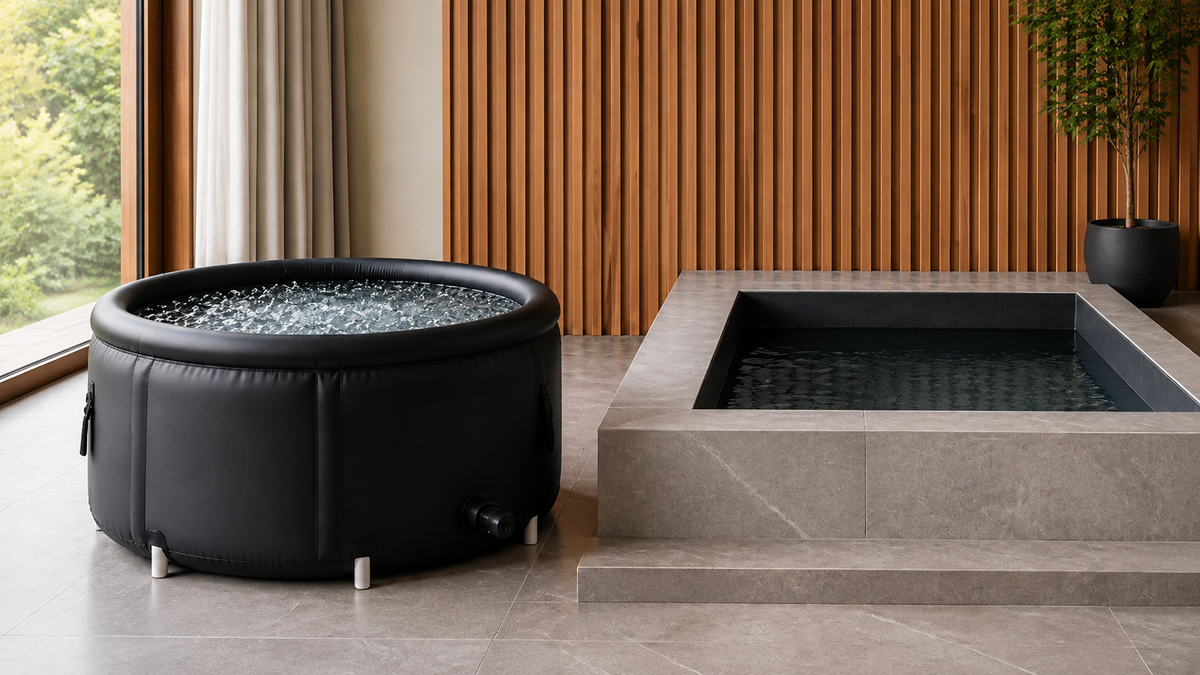
A portable cold plunge is a self-contained unit designed for flexibility. It plugs into a standard outlet, requires no plumbing, and can move between rooms or even to a different home. A stationary tub is built into a fixed location, often integrated into your bathroom or wellness space, and typically offers deeper immersion and larger water capacity. The portable vs stationary cold plunge decision hinges on three factors: available space, budget, and how you plan to use cold therapy long-term.
The core difference comes down to permanence and convenience. Portable units prioritize ease of setup and relocation. Stationary tubs prioritize depth of immersion and a dedicated recovery ritual. Neither is universally better, the right choice depends on your space constraints, recovery goals, and whether you're building a permanent wellness room or testing the practice first.
Cold Plunge Water Chiller Requirements: What You Need to Know
The chiller unit is what separates a cold plunge from a regular tub. This component cools and maintains water temperature, making consistent cold immersion possible without constantly adding ice.
Most home cold plunge systems use either a dedicated external chiller or an integrated chiller built into the tub. Portable units often come with built-in chillers, while stationary tubs may offer separate chiller systems that provide more power and flexibility. The chiller's horsepower (HP) determines how quickly it cools water and how efficiently it maintains temperature during use.
For example, the FrostArc Smart All-In-One integrates a 1 HP chiller directly into the tub, cooling water to approximately 34°F without requiring external equipment. The RevX X Tub pairs a 1.5 HP chiller system that can reach 34°F or heat to 104°F, giving you both cold and warm therapy in one system. Higher HP ratings cool faster and handle larger water volumes more efficiently.

Chiller specifications matter because they affect operating costs and performance consistency. A more powerful chiller reaches target temperatures faster and uses less energy to maintain them. If you plan multiple back-to-back sessions or have a larger tub, a 1.5 HP system delivers better performance.
The filtration system works alongside the chiller. Most quality systems use a three-stage filtration setup combined with ozone sanitation, which breaks down bacteria and contaminants without harsh chemicals. This keeps water clean for weeks between full drains, reducing maintenance burden and water waste.
Space, Installation, and Footprint Considerations
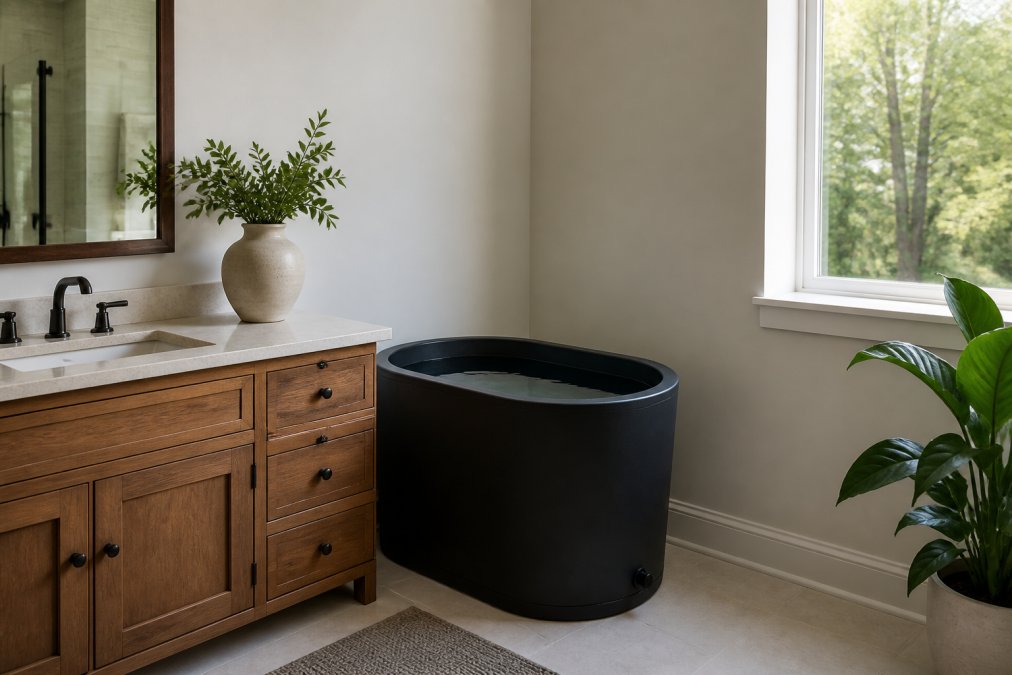
Space availability often determines which type works for your home. Portable units typically measure 60-65 inches long and 34-40 inches wide, fitting into bathrooms, bedrooms, or finished basements. They require only a standard 110V outlet and a floor space roughly the size of a large appliance. No plumbing connections, no structural modifications, no contractor needed.
Stationary tubs demand more planning. They're designed for permanent placement in dedicated wellness rooms, master bathrooms, or outdoor patios. Installation involves selecting the exact location, ensuring proper drainage, and often coordinating with electricians for dedicated circuits. Some stationary models require 220V power, which may need electrical upgrades depending on your home's infrastructure.
The Kooru Premium Shou Sugi Ban Cold Plunge illustrates portable practicality: 64 inches long, 34 inches wide, 35 inches tall, weighing approximately 400 pounds. It operates on standard 110V power and needs only a minimum 33-inch clearance for access. You can position it in a spare bathroom, basement corner, or outdoor covered space. The Icetubs IceBarrel XL stationary model measures 62.3 inches long by 40.2 inches wide by 46.4 inches high, similar footprint, but designed for permanent installation with integrated systems.

Consider your home's layout honestly. A small master bathroom limits you to a compact portable unit. A finished basement with room to spare opens options for both types. If you're renovating or building a dedicated wellness room, stationary tubs create a more integrated, spa-like experience. If you rent or aren't certain you'll stay in your current home, portable units offer flexibility without the sunk cost of permanent installation.
Drainage is another practical consideration. Portable units drain via a gravity-fed hose to a floor drain, basement, or outdoor area. Stationary tubs typically integrate with home plumbing, requiring a drain connection that may need professional installation. This adds complexity and cost upfront but creates a more seamless experience once installed.
How Long to Cold Plunge for Recovery and Performance
The duration of cold immersion directly affects the recovery benefits you receive. Most protocols recommend starting with 1-3 minutes for beginners and gradually working up to 5-10 minutes as your body adapts to cold exposure.
Icetubs IceBarrel XL Cold Plunge & Hot →
Shorter immersions (1-2 minutes) can help reduce inflammation and boost circulation. This duration works well for post-workout recovery. Medium immersions (3-5 minutes) can trigger deeper physiological adaptations, including improved cold tolerance and nervous system regulation. Longer sessions (5-10 minutes) are for experienced users and can deliver maximum adaptation benefits.
The key is consistency over duration. Three 3-minute sessions per week can be more effective than one 10-minute session monthly. Your body adapts to regular cold exposure, meaning the benefits can compound with repeated practice.
Temperature matters as much as duration. Water at 50°F (10°C) feels manageable for most people. Water at 37°F (3°C) triggers rapid cold shock response and demands shorter exposure. The Icetubs systems cool to approximately 37.4°F (3°C), creating an intense but efficient stimulus. The RevX X Tub reaches 34°F for serious cold adaptation work.
Start conservative. A 90-second plunge at 50°F teaches your body the practice without overwhelming your system. After 2-3 weeks of regular exposure, extend to 2-3 minutes.
Cold Plunge Maintenance Tips for Long-Term Durability
A well-maintained cold plunge lasts years with consistent performance. The maintenance burden differs between portable and stationary units, but both require regular attention to filtration and water sanitation.
Total Cost of Ownership: Initial Price and Ongoing Expenses
The initial purchase price represents only part of your investment. Understanding total cost of ownership over 5-10 years reveals the true financial picture.
| Cost Category | Portable Unit | Stationary Unit |
|---|---|---|
| Initial Purchase | $5,999-$12,599 | $7,999-$12,599 |
| Professional Installation | $0 | $800-$3,000 |
| Annual Electricity | $300-$600 | $300-$600 |
| Annual Filters & Water | $150-$300 | $150-$300 |
| 10-Year Total | $10,000-$12,000 | $17,000-$19,000 |
Which Type Is Right for Your Recovery Goals
Your recovery goals and lifestyle determine the best choice. If you're testing whether cold immersion works for your body, start portable. The lower entry cost and zero installation complexity let you experience the practice without major commitment. Spend 2-3 months using it consistently, then decide if you want to upgrade to a stationary system.
Frequently Asked Questions
Can a portable cold plunge provide the same recovery benefits as a stationary tub?
Yes, portable and stationary cold plunges can deliver similar cold immersion therapy benefits for muscle recovery, inflammation reduction, and circulation support when both reach and maintain proper temperatures. The difference lies in consistency and convenience. Stationary tubs with integrated chiller units may maintain temperature more reliably during extended use, while portable models depend on external chiller systems. For serious cold immersion therapy and recovery protocols, a stationary setup with a dedicated chiller unit can provide more stable thermal regulation.
What are the main maintenance differences between portable and stationary cold plunges?
Both require regular water filtration and sanitation. Stationary tubs may have built-in filtration systems that can reduce manual maintenance. Portable models might need more frequent filter changes and water testing. Stationary units with ozone generators and integrated three-stage filtration systems may require less chemical intervention. Regardless of type, filters typically need replacement every 1-2 months depending on usage frequency, and it's advisable to drain and refill water seasonally, and inspect seals and connections regularly to prevent leaks.
How much space do I need for a stationary cold plunge setup?
Stationary cold plunges typically require 60-65 inches in length, 34-40 inches in width, and 35-46 inches in height, depending on the model. Beyond the tub footprint, plan for minimum 33 inches of clearance around the unit for access and maintenance. If your chiller system is separate, allocate additional space nearby for the external unit. For integration into a home gym or wellness room, most stationary models fit comfortably in a dedicated corner or against a wall. Portable models are more compact but still need adequate drainage access and ventilation.
How long should I stay in a cold plunge for recovery benefits?
Most cold immersion therapy protocols suggest 1-3 minutes of exposure for recovery and adaptation. Beginners typically start with 30-60 seconds and gradually increase duration as their cold tolerance builds. Extended sessions beyond 5 minutes may offer diminishing returns and increase risk of cold shock response or hypothermia. The optimal duration depends on water temperature, your fitness level, and recovery goals. Sessions at 37-39°F (3-4°C) are generally considered safe for 2-3 minutes, while slightly warmer temperatures around 50-55°F (10-13°C) can support longer exposures. Consistency can be more important than duration, regular shorter sessions may be more beneficial than occasional long sessions.
Ready to integrate cold immersion therapy into your recovery routine? Vital Fit Home provides premium cold plunge systems with expert guidance to help you choose between portable and stationary options that match your space and goals. Explore our curated selection of cold therapy tubs, and let our wellness design team help you create the recovery sanctuary you deserve. Get started with Vital Fit Home and experience the clarity, resilience, and physical recovery that cold immersion delivers.


Leave a comment
This site is protected by hCaptcha and the hCaptcha Privacy Policy and Terms of Service apply.