
Cold Plunge for Chronic Soreness: Is It Worth It?
Table of Contents
- Understanding Chronic Soreness vs. DOMS
- How Cold Plunge Affects Chronic Soreness
- Cold Plunge Duration for Recovery: How Long Is Enough?
- Cold Plunge vs Heat Therapy for Soreness
- How to Start a Cold Plunge Routine at Home
- Pros and Cons of Cold Plunge for Chronic Soreness
- Safety Guidelines and Home Setup
- Conclusion: Is a Cold Plunge Worth It for You?
- Frequently Asked Questions
Last Updated: September 16, 2026
Understanding Chronic Soreness vs. DOMS
Chronic soreness and delayed-onset muscle soreness (DOMS) are not the same problem, and that distinction decides whether a cold plunge is worth it. Most cold plunge recovery articles blur the two together, which is why so many people buy a tub for the wrong reason. At Vital Fit Home, we see this constantly: someone with months-old hip pain buys a plunge expecting the relief an athlete gets after leg day, and the results do not match.

What DOMS Actually Is
DOMS is exercise-induced muscle damage. It shows up 12 to 24 hours after unfamiliar or intense training, peaks around 24 to 72 hours, and resolves within about five to seven days (Delayed onset muscle soreness: Involvement of neurotrophic factors). Microscopic tears in muscle fibers trigger a localized inflammatory response, producing ache, stiffness, and temporary strength loss. Crucially, DOMS has a clear trigger, a predictable timeline, and a self-limiting course.
What Chronic Soreness Actually Is
Chronic soreness is a different category of problem. It persists for weeks or months, often without a clear training trigger, and frequently overlaps with joint stiffness, nerve irritation, or an underlying inflammatory condition. Common drivers include:
- Osteoarthritis, cartilage breakdown that produces joint pain and stiffness, often worse after inactivity
- Myofascial pain syndrome, trigger points and taut bands in muscle that refer pain to other areas
- Fibromyalgia, widespread musculoskeletal pain with fatigue and sleep disturbance
- Neuropathic pain, nerve irritation from compression, injury, or conditions like sciatica or peripheral neuropathy
- Chronic inflammatory conditions, rheumatoid arthritis, lupus, and similar autoimmune-driven processes
- Tendinopathy, degenerative tendon changes that produce persistent localized pain under load
Why the Difference Matters for Cold Plunge
Cold water immersion is a recovery tool, not a treatment for an undiagnosed condition. Applied to DOMS, it can reduce perceived soreness and tissue swelling. Applied to chronic pain, the evidence is far more mixed, and the risk of masking a real injury is genuine.
A practical decision framework:
| Feature | DOMS | Chronic Soreness |
|---|---|---|
| Onset | 12-24 hours after training | Gradual, no clear trigger |
| Duration | 5-7 days | Weeks to months |
| Location | Muscle belly, symmetrical | Joint, nerve path, or focal point |
| Response to cold | Reliable, short-term relief | Variable; may help or may not |
| Response to heat | Mild help | Often more helpful for stiffness |
| Red flags | None | Night pain, numbness, weakness, weight loss |
The Unique Angle Most Articles Miss
Most cold plunge content treats "soreness" as one thing. It is not. The physiological difference between exercise-induced muscle damage and chronic inflammatory or neuropathic pain determines whether cold water is a useful tool or a distraction. If your soreness has a clear training trigger and predictable timeline, cold plunge is a reasonable recovery aid. If it does not, cold plunge may still help you feel better on a given day, but it should never be the first line of investigation.
How Cold Plunge Affects Chronic Soreness
A cold plunge affects chronic soreness mainly through two mechanisms: vasoconstriction, which reduces blood flow and tissue swelling, and altered nerve conduction, which can temporarily dull pain signals. Neither repairs tissue, but both can make a symptomatic day more manageable, which is why cold plunge works as one part of a broader recovery protocol, not a standalone fix.
Vasoconstriction and Inflammation
Vasoconstriction is the narrowing of blood vessels in response to cold, reducing blood flow to the immersed area and limiting the fluid accumulation behind tissue swelling. For acute, exercise-induced inflammation, this is useful. For chronic inflammatory conditions, the effect is short-lived and the circulatory system rebounds once you warm up. Cold water immersion interrupts a pain-and-swelling cycle; it does not resolve it.
Nerve Conduction and Pain Modulation
Cold slows nerve conduction velocity, raising the threshold at which pain signals register, the same principle behind icing a sprained ankle. The relief is real but temporary, typically lasting minutes to a few hours. Chasing that relief with longer, colder sessions raises hypothermia risk without extending the benefit.
Long-Term vs. Short-Term Efficacy: Does Tolerance Develop?
This is the question most cold plunge articles avoid, and it matters most for chronic soreness. The honest answer: the evidence is mixed and depends on what you mean by "tolerance."
What adapts:
- The cold shock response, the involuntary gasp, heart rate spike, and panic feeling, diminishes with repeated exposure. After 10 to 20 sessions, entering cold water feels manageable rather than shocking. This is a nervous system adaptation, not a loss of therapeutic effect.
- Perceived discomfort during the plunge drops, so you can tolerate colder water or longer sessions without distress.
What does not necessarily adapt:
- The anti-inflammatory and pain-modulating effects do not appear to diminish with consistent use. Vasoconstriction and slowed nerve conduction are physical responses to cold, not learned ones: as long as the water is cold enough and you stay in long enough, the effect occurs.
- Some practitioners report the subjective "relief" feeling becomes less dramatic over time, not because the physiology changed but because baseline pain or soreness has shifted. That is a perception issue, not a tolerance issue.
Integrating Cold Plunge with Other Modalities for Chronic Pain
Cold plunge is most effective for chronic soreness as one node in a broader plan, not the whole plan. A practical integration roadmap:
Icetubs IceBarrel XL Cold Plunge & Hot →
- Physical therapy first. If you have not had a proper assessment, start there. Cold water can manage symptoms while you address the cause, but it cannot substitute for diagnosis and targeted rehab.
- Pair cold with heat. Contrast therapy, alternating cold and heat, is often more effective for chronic stiffness and circulation than cold alone. A common pattern is 3 to 4 rounds of 1 to 3 minutes cold followed by 2 to 3 minutes heat.
- Use cold after activity, heat before. Cold within a few hours of a flare-up or hard session; heat before movement or on rest days when stiffness dominates.
- Add mobility work. Cold plunge does not improve range of motion on its own. Pair it with stretching, foam rolling, or guided mobility work to address the mechanical component of chronic soreness.
- Consider red light or sauna. Both are commonly used alongside cold plunge and have their own evidence base for pain and tissue recovery. They are complements, not replacements.
- Track outcomes over weeks, not days. Chronic pain fluctuates, so a single session tells you little. Log pain, function, and sleep over a 4- to 6-week window to see whether cold plunge is contributing.
What Cold Plunge Cannot Do
Cold plunge cannot reverse osteoarthritis, heal a torn tendon, resolve nerve compression, or treat an autoimmune condition. It can reduce the intensity of a symptomatic day, improve your tolerance for movement, and give you a drug-free tool to pair with treatments that address the cause. That is a meaningful role, but a supporting one, not a starring one.
Cold Plunge Duration for Recovery: How Long Is Enough?
Cold plunge duration for recovery should stay between 2 and 10 minutes at water temperatures of roughly 50 to 59°F for most adults. Beginners should start at 1 to 2 minutes and build gradually. Longer is not better. Once core body temperature starts dropping, you are adding risk, not recovery.
- Beginner: 1 to 2 minutes, 2 to 3 times per week
- Intermediate: 3 to 5 minutes, 3 to 4 times per week
- Experienced: 5 to 10 minutes, up to 5 times per week
- Temperature: 50 to 59°F for recovery; colder is not automatically better
- Timing: After training or in the evening, not immediately before a strength session
Cold Plunge vs Heat Therapy for Soreness
Cold plunge and heat therapy for soreness solve different problems, and the choice comes down to what the soreness actually is. Cold constricts blood vessels and reduces swelling and nerve sensitivity, suiting acute, inflamed, or post-exercise soreness. Heat dilates blood vessels and relaxes muscle tissue, suiting stiffness, chronic tightness, and joint mobility work. Many people with long-running soreness do better alternating the two, contrast therapy.
| Approach | Best For | Typical Session | Main Effect |
|---|---|---|---|
| Cold plunge | Acute soreness, swelling, post-workout | 2-10 min at 50-59°F | Vasoconstriction, pain modulation |
| Heat therapy | Stiffness, chronic tightness, mobility | 15-20 min | Blood flow, muscle relaxation |
| Contrast therapy | Persistent soreness, circulation | Alternating 3-4 rounds | Repeated vascular flushing |
How to Start a Cold Plunge Routine at Home
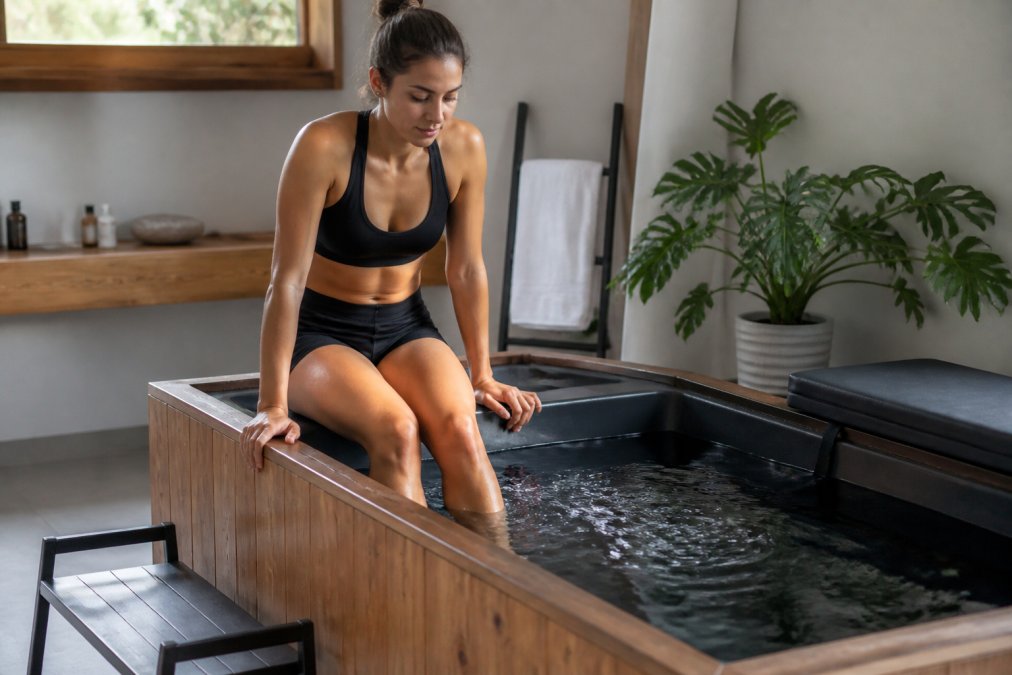
Starting a cold plunge routine at home is simpler than most people expect, provided you plan the setup before the first plunge. Most people establish the sequence below as a habit within two to four weeks.
- Get medical clearance if you have heart conditions, uncontrolled blood pressure, or Raynaud's.
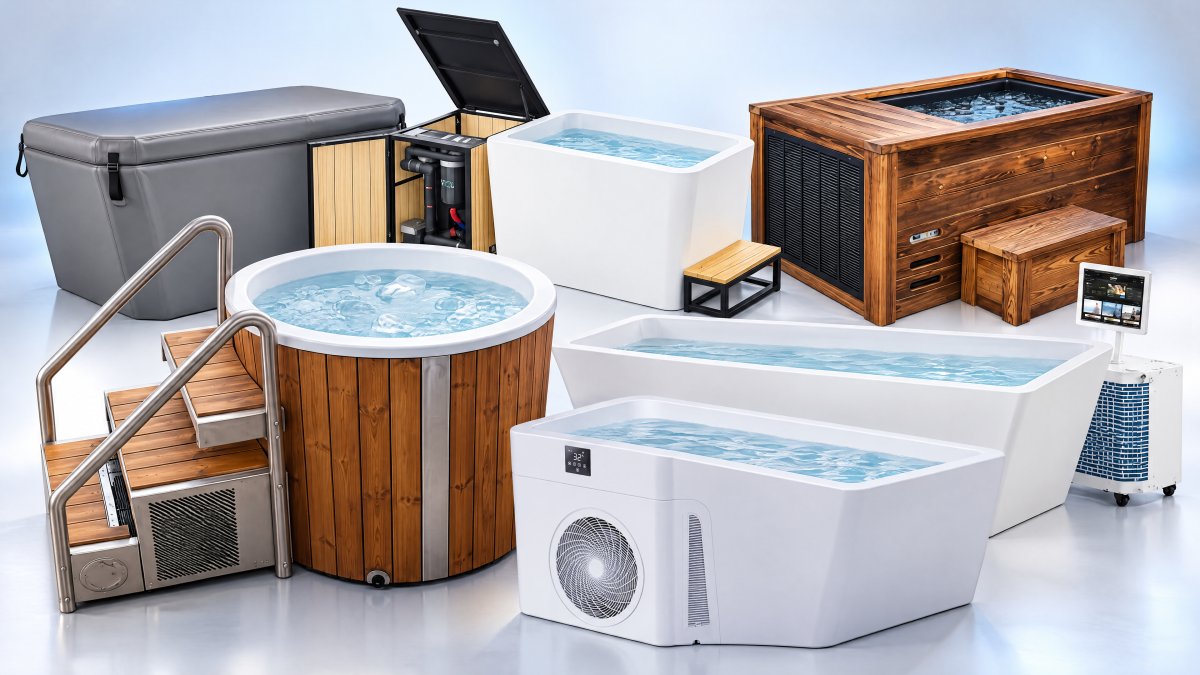
- Choose your setup. A dedicated tub with built-in cooling and filtration removes the daily ice-and-drain chore that kills most routines.
- Set your temperature between 50 and 59°F and hold it there for the first two weeks.
- Start at 1 minute and add 30 seconds every few sessions.
- Breathe through the cold shock response rather than fighting it.
- Log how you feel 2 hours later, not during the plunge. That is the number that matters.
- Pair it with a heat source so you can move into contrast work once cold alone plateaus.
Pros and Cons of Cold Plunge for Chronic Soreness
Cold plunge has real upsides and real limits for chronic soreness. Here is the honest ledger.
Pros:
- Fast, drug-free reduction in perceived soreness and swelling
- Raises pain tolerance and improves perceived exertion during subsequent training
- Supports post-exercise recovery and joint mobility when used consistently
- Pairs well with heat, red light therapy, and sauna work as part of a recovery protocol
Cons:
- Relief is temporary; it does not address the cause of chronic pain
- Can mask an acute injury or an underlying condition that needs diagnosis
- Carries hypothermia risk if sessions run long or temperatures drop too low
- Requires genuine consistency to produce any cumulative effect
Safety Guidelines and Home Setup
Safety guidelines for home cold plunge come down to four things: temperature control, session limits, supervision, and a clean water system. Never plunge alone if you are new to cold exposure. Keep sessions under 10 minutes. Exit immediately if you start shivering uncontrollably, feel dizzy, or lose the ability to speak clearly.
- Precise temperature control so you are not guessing at the water temperature each session
- Filtration and sanitation to prevent bacterial growth between uses
- Non-slip access and a clear exit path
- A warm layer and towel within arm's reach
- No alcohol or sedatives before a session
Conclusion: Is a Cold Plunge Worth It for You?
A cold plunge is worth it for chronic soreness when the soreness is mechanical or inflammatory and you will use it consistently alongside other modalities. It is not worth it if you hope to treat an undiagnosed condition with cold water alone.
Frequently Asked Questions
Should you cold plunge if muscles are sore?
It depends on the type of soreness. For delayed-onset muscle soreness (DOMS) after exercise, cold water immersion can reduce tissue swelling and calm nerve conduction, easing discomfort. For chronic soreness tied to an ongoing condition like arthritis or fibromyalgia, the response varies. Cold plunge may help with pain modulation and inflammation, but it is not a substitute for medical care. Talk to your doctor before using a cold plunge for chronic pain.
Are cold plunges good for chronic pain?
Cold plunge can support chronic pain management by reducing inflammation and altering pain signaling through the autonomic nervous system. The vasoconstriction triggered by cold water narrows blood vessels, which may limit tissue swelling and calm overactive nerves. However, chronic pain has many causes, and cold plunge works best as part of a broader plan that includes movement, heat therapy, and professional guidance. Start with short sessions and monitor how your body responds.
Do ice baths actually help muscle soreness?
Research on cold water immersion shows it can reduce perceived soreness after intense exercise. The cold shock response triggers vasoconstriction, which limits blood flow to inflamed tissue and reduces swelling. A typical session lasts between 2 and 10 minutes at 50 to 59°F. For chronic soreness, the effect may be shorter-lived because the underlying cause is not acute exercise damage. Consistency and proper duration matter more than intensity.
Is cold plunge therapy safe for everyone with chronic pain?
No. Cold plunge is not safe for everyone. People with cardiovascular conditions, Raynaud's disease, or open wounds should avoid it. The cold shock response raises heart rate and blood pressure, which can be dangerous for those with heart conditions. Pregnant women and anyone with nerve damage should consult a doctor first. Home-based safety protocols include checking water temperature, limiting sessions to under 10 minutes, and never plunging alone.

Leave a comment
This site is protected by hCaptcha and the hCaptcha Privacy Policy and Terms of Service apply.