

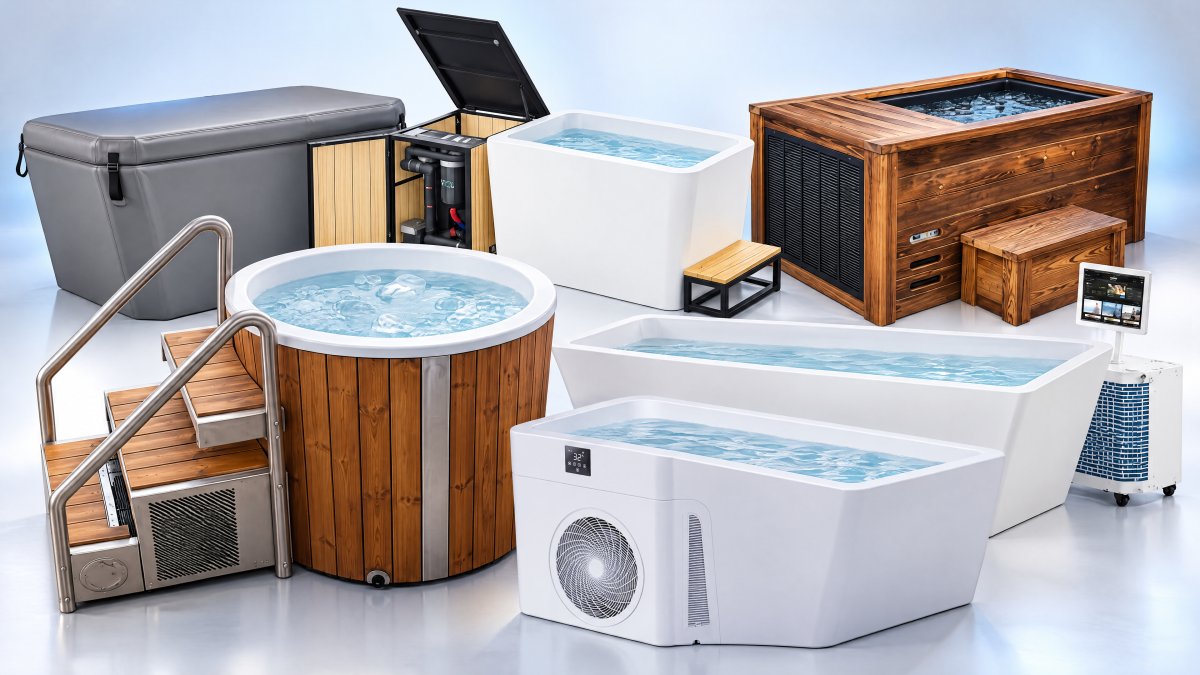
6 Best Cold Plunge Tubs for Home Recovery in 2026
Table of Contents
- How We Evaluated These Cold Plunge Tubs
- Quick Comparison: 6 Best Cold Plunge Tubs for Home Recovery
- 1. Icetubs IceBarrel XL: Best Overall Hot and Cold Immersion Barrel
- 2. RevX X Tub with LUX Chiller: Best for Deep Full-Body Submersion
- 3. Kooru Premium Shou Sugi Ban Tub: Best Handcrafted Wood Design
- 4. FrostArc Smart All-In-One Tub: Best Quiet All-In-One System
- 5. Blizzard Cold Plunge Package: Best for Guided Recovery Sessions
- 6. Tundra Inflatable Cold Plunge Package: Best Budget and Portable Option
- How Long Should You Cold Plunge for Recovery?
- What to Know Before You Buy
- Frequently Asked Questions
Last Updated: September 17, 2026
How We Evaluated These Cold Plunge Tubs
Choosing a cold plunge tub for home recovery comes down to four things: how cold it actually gets, how well it holds that temperature, what it costs to run and maintain, and whether it fits your space and routine. Cold plunge tubs are immersion systems that circulate and chill water to a set temperature, letting you practice cold water immersion without hauling bags of ice.
At Vital Fit Home, we compared each model on cooling capacity, insulation efficiency, water filtration, footprint, and long-term ownership costs. We prioritized systems with built-in chillers, ozone sanitation, and clear maintenance schedules over bare tubs that depend on you restocking ice. We also weighed noise output and warranty coverage, two specs most buyer guides skip.
Cleveland Clinic overview of cold water immersion benefits
Quick Comparison: 6 Best Cold Plunge Tubs for Home Recovery
Model |
Price |
Best For |
Chiller |
|---|---|---|---|
Icetubs IceBarrel XL |
$12,599.97 |
Hot and cold versatility |
Built-in |
RevX X Tub + LUX |
$7,500.00 |
Full-body submersion |
1.5 HP |
Kooru Shou Sugi Ban |
$7,999.00 |
Handcrafted wood design |
1/4 HP |
FrostArc Smart All-In-One |
$5,999.97 |
Quiet operation |
1 HP |
Blizzard Cold Plunge |
$5,695.00 |
Guided sessions |
Built-in |
Tundra Inflatable |
$3,395.00 |
Budget and portability |
Premium chiller |
1. Icetubs IceBarrel XL: Best Overall Hot and Cold Immersion Barrel
The IceBarrel XL earns the top spot because it does something most tubs in this range cannot: it heats as well as it chills. The smart app-based temperature control ranges from roughly 37.4°F for cold plunges up to 100.4°F for warm soaks, so one unit covers your entire recovery protocol.

The Thermowood exterior and fiberglass interior hold up indoors or outdoors, and the three-stage filtration system paired with a built-in ozonator keeps water clean without harsh chemicals. No plumbing is required, which matters if you are converting a bathroom or spare room.
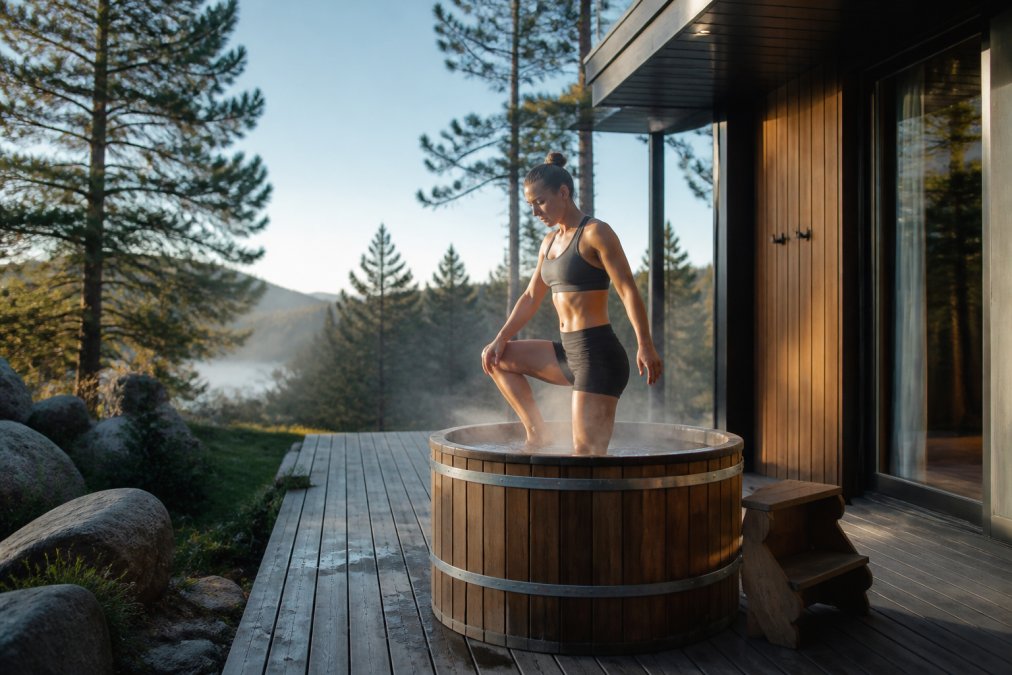
2. RevX X Tub with LUX Chiller: Best for Deep Full-Body Submersion
If shoulder-deep immersion is your priority, the RevX X Tub is the deepest acrylic option here at over 34 inches tall. That height lets you submerge above the shoulders while staying upright, which most inflatable tubs cannot match.

The LUX chiller runs at 1.5 horsepower and cools water to 34°F or heats it to 104°F. Three-inch foam-insulated walls slow heat gain, and adjustable flow jets break your thermal barrier so the cold hits faster. It costs more than the budget picks, but the cooling capacity justifies it for daily users.
3. Kooru Premium Shou Sugi Ban Tub: Best Handcrafted Wood Design
The Kooru is for the buyer who wants the tub to look like furniture. Each unit is built from sustainably sourced redwood and finished with the traditional Shou Sugi Ban burning technique, which hardens the surface and pulls out the natural grain.

It runs on a standard 110V outlet with a 1/4 HP pump and consumes roughly 350-500W, so energy draw stays modest. The ozone purification system handles sanitation without chemicals, and the replaceable filter lasts one to two months depending on use. Water capacity is about 60 gallons.
4. FrostArc Smart All-In-One Tub: Best Quiet All-In-One System
Noise is the spec nobody lists, and it is the reason most people stop using a plunge tub in a bedroom or home gym. The FrostArc Smart All-In-One addresses that directly with a whisper-quiet motor and a built-in 1HP chiller.
5. Blizzard Cold Plunge Package: Best for Guided Recovery Sessions
Most tubs give you cold water and nothing else. The Blizzard adds a 21.5" touchscreen running PrimalOS, which turns each session into a guided experience with coaching, breathing exercises, yoga, and meditation.
Mayo Clinic guidance on recovery and muscle soreness
6. Tundra Inflatable Cold Plunge Package: Best Budget and Portable Option
The Tundra is the pick for renters, small spaces, and anyone testing cold water immersion before committing to a permanent install. It is an inflatable, reclined plunge with UV-resistant, air-insulated walls and a premium chiller.
Icetubs IceBarrel XL Cold Plunge & Hot →
How Long Should You Cold Plunge for Recovery?
Most recovery protocols call for two to three minutes per session at a water temperature between 50°F and 59°F. Beginners should start shorter, around 30 to 60 seconds, and build tolerance over several weeks. A practical progression is to add 15 to 30 seconds every few sessions rather than jumping straight to the full three minutes, and to hold temperature steady while you extend duration, changing both variables at once makes it hard to tell what your body is actually adapting to.
Timing It Around Training
A common pattern is to plunge within an hour or two after a hard session, once your heart rate has settled, rather than immediately after you rack the weight. Some athletes prefer cold in the morning to sharpen alertness and save warmer water for evening wind-down. There is no single correct slot; consistency matters more than timing. If you are training for strength or muscle gain, keep in mind that post-workout cold exposure may blunt some of the inflammatory signaling that supports adaptation, so many lifters reserve plunges for rest days or deload weeks.
Stacking Cold With Other Recovery Modalities
Cold water immersion is rarely used alone. A typical recovery room pairs it with red light therapy, infrared sauna, or compression, sequenced so the vasoconstriction of cold and the vasodilation of heat do not cancel each other out. A simple rule: separate hot and cold sessions by at least an hour, and finish with whichever state you want to carry into the rest of your day.
Consistency beats intensity. Three moderate sessions a week you actually complete will do more for recovery than one brutal plunge you dread.
What to Know Before You Buy
Setup time varies more than the spec sheets suggest. Plug-and-play models like the Kooru and FrostArc need only a standard outlet and a fill, while systems with external chillers require more planning around placement and drainage. Before delivery day, confirm three things: the doorway and stair clearance on the path to the install spot, a level surface that can carry a filled tub's weight, and a dedicated outlet within cord reach.
The Long-Term Ownership Costs Most Guides Skip
The purchase price is the smallest number in the equation. A chiller that runs around the clock draws real power, and insulation rating drives that cost more than any other spec: better-insulated tubs hold temperature longer and cycle the compressor less. As a rule of thumb, a well-insulated hard-sided tub with a 1 HP chiller draws roughly 300-600 watts while actively chilling, and far less once it reaches setpoint and idles.
Noise: The Spec Nobody Prints
Acoustic footprint is the reason many indoor plunge tubs get abandoned. Compressor noise typically lands in the 45-60 decibel range at a few feet, comparable to a quiet conversation up to a running dishwasher, and it is continuous, not intermittent. If the tub shares a wall with a bedroom or a home office, ask the manufacturer for a decibel rating at one meter before you buy, and consider a vibration-isolating mat under the unit.
Warranty and Support: Read the Fine Print
These are high-ticket purchases, and post-purchase support quality varies widely. Look for a warranty that explicitly covers the chiller and compressor separately from the tub shell, since the chiller is the component most likely to fail and the most expensive to replace. A common pattern among owners is that shell and structural coverage runs longer than electronics coverage, so check both clocks.
Frequently Asked Questions
What is the best cold plunge tub for home use?
The best cold plunge tub depends on your space and recovery goals. The Icetubs IceBarrel XL suits buyers who want both cold and hot therapy with smart app control. For deeper full-body submersion, the RevX X Tub with LUX Chiller reaches 34°F. Budget-conscious buyers can start with the Tundra Inflatable Cold Plunge Package, which pairs a premium chiller with a portable tub.
How long should you cold plunge for recovery?
Most recovery protocols call for 2 to 10 minutes in water between 50°F and 59°F. Beginners should start with 1 to 2 minutes and build up gradually. The key is consistency, not duration. A shorter daily plunge at a stable temperature, like the 37.4°F to 100.4°F range on Icetubs models, often works better than occasional long sessions.
Can combining cold plunges with hydrogen therapy for inflammation enhance recovery?
Cold water immersion and hydrogen therapy work through different pathways. Cold triggers vasoconstriction to reduce swelling and muscle soreness, while hydrogen therapy targets oxidative stress. Many home recovery setups now pair a cold plunge tub with a hydrogen inhalation system so users can address inflammation from two directions in one session block.
How do I maintain water hygiene in a home cold plunge tub?
Most modern tubs use a combination of filtration and ozone sanitation. The Kooru Cold Plunge Tub, for example, uses ozone water purification with a replaceable filter every 1 to 2 months. The FrostArc Smart All-In-One Tub uses dual filtration with filter cartridge replacement monthly for home users. Replace filters on schedule and keep the cover on between sessions.
What space requirements should I consider for a home cold plunge?
Measure your space before buying. The Kooru Tub needs a minimum 33 inches of clearance for installation access and measures 64 inches long by 34 inches wide. Inflatable options like the Tundra take up less permanent space and can be stored when not in use. Indoor placement needs ventilation and a ground fault circuit interrupter outlet near the chiller.

Leave a comment
This site is protected by hCaptcha and the hCaptcha Privacy Policy and Terms of Service apply.