

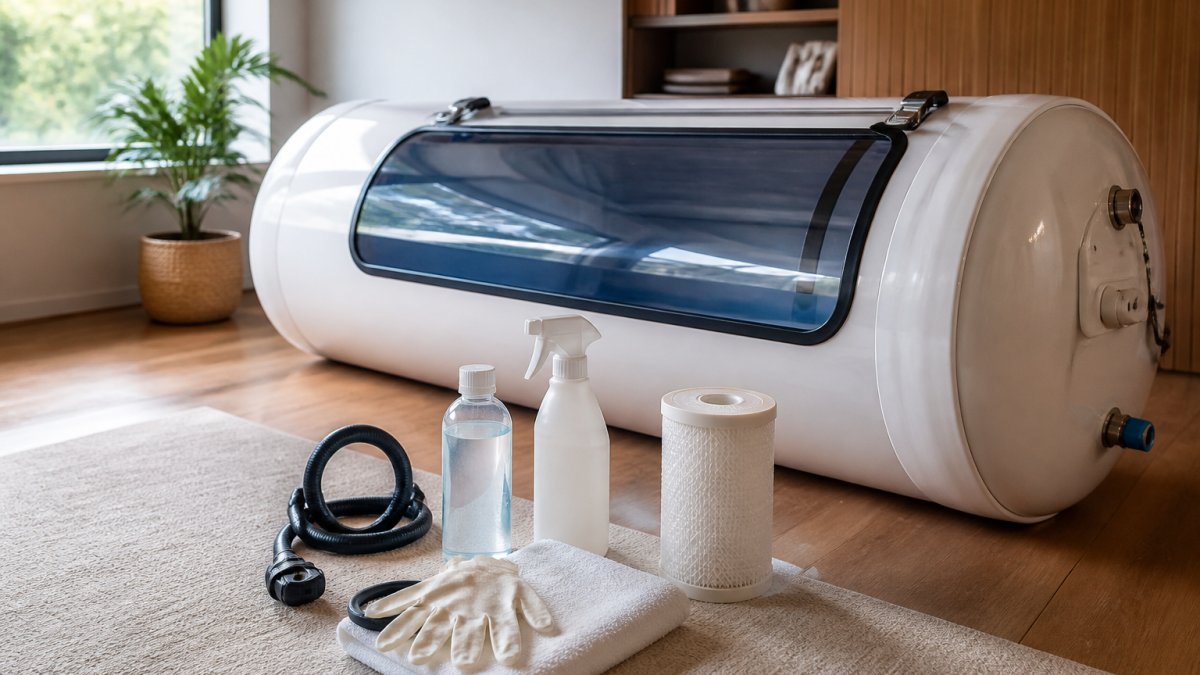
How to Maintain a Home Hyperbaric Chamber
Last Updated: October 22, 2026
Quick Summary
How to maintain a home hyperbaric chamber involves daily safety checks before each session, monthly cleaning and inspection of seals and filters, and annual professional servicing. Perform two-minute pre-session inspections of door seals and emergency valves, clean interior surfaces and oxygen hoses monthly, replace air intake filters every three to six months, and have a qualified technician recalibrate pressure gauges and test for leaks annually.
- Inspect door seals, zipper, and emergency release valve before every treatment session
- Replace air intake filters every three to six months depending on your environment
- Clean oxygen delivery hoses monthly by soaking in warm soapy water and drying completely
- Lubricate soft-shell chamber zippers monthly with silicone-based lubricant only
- Schedule annual professional servicing for pressure gauge recalibration and leak testing
Table of Contents
- Understanding Your Home Hyperbaric Chamber
- Daily Safety Checks Before and After Each Session
- Home Hyperbaric Chamber Cleaning and Disinfection
- Hyperbaric Chamber Maintenance Checklist for Monthly Tasks
- Hyperbaric Chamber Annual Maintenance and Professional Servicing
- Home Hyperbaric Chamber Troubleshooting Guide
- Maintenance Records and Warranty Compliance
- Conclusion
- Frequently Asked Questions
Understanding Your Home Hyperbaric Chamber
A home hyperbaric chamber is a pressurized vessel that delivers oxygen-enriched air to support wellness and recovery.
Your chamber contains several critical components that require regular attention. The compressor delivers pressurized air. The oxygen concentrator supplies enriched oxygen. Seals, zippers, and acrylic components need cleaning and care.
Think of maintenance like caring for a car. You wouldn't skip oil changes and expect the engine to last. The same principle applies here.
Hard-Shell vs. Soft-Shell Chambers
Hard-shell chambers are built from steel or aluminum alloy. They're durable, hold pressure reliably, and typically last longer. Soft-shell chambers use flexible TPU (thermoplastic polyurethane) material.
Hard-shell maintenance focuses on metal surfaces, electrical connections, and rigid seals. Soft-shell maintenance emphasizes fabric care, zipper protection, and seal integrity on flexible materials.
The OxyAir OLV-YZD01 2.0 ATA hard-shell chamber and OxyAir OLV-RT01 soft-shell chamber from our catalog require slightly different approaches. Hard-shell models tolerate more aggressive cleaning.

Key Components That Need Attention
Every chamber has parts that wear or accumulate debris. The air intake filter traps dust and contaminants. The compressor pressurizes incoming air. The oxygen delivery system (BIBS or mask) carries oxygen to you. The zipper (on soft-shell models) creates an airtight seal. The acrylic viewport lets you see inside. The pressure gauge shows current atmospheric pressure.
These components work together. If one fails, the whole system underperforms. Regular inspection catches problems early.
Daily Safety Checks Before and After Each Session
Never start a treatment without verifying your chamber is safe to use.
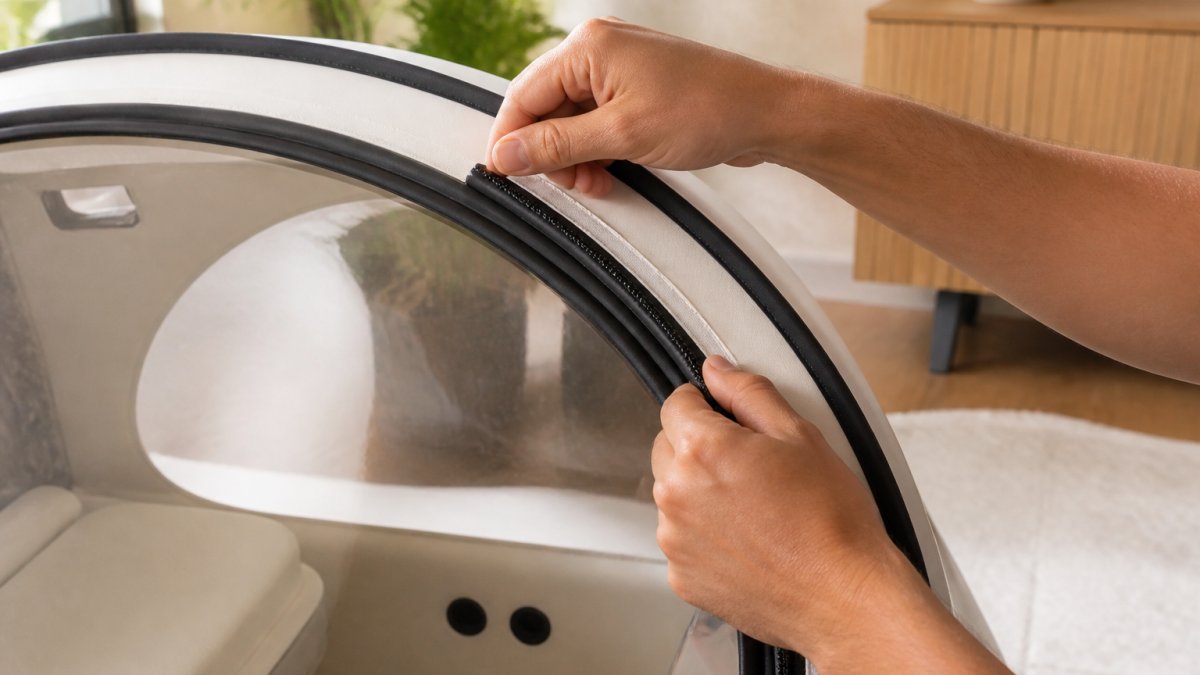
Before pressurizing, check the door seal. Run your finger along the rubber gasket. Look for cracks, hardening, or gaps.
Press the emergency release valve. It should respond immediately and release pressure smoothly. A stuck valve is a safety hazard.
After each session, document your treatment time and any observations. Note pressure levels, oxygen concentration, and how you felt.
Home Hyperbaric Chamber Cleaning and Disinfection
Moisture and bacteria accumulate inside your chamber. Regular cleaning prevents infection and extends equipment life. Use only approved cleaning products. Harsh chemicals damage acrylic, rubber, and fabric.
Cleaning the Interior and Acrylic Components
Start with a soft, lint-free cloth. Wipe the interior walls after each session while the chamber is still slightly warm.
For deeper cleaning, mix warm water with a mild, non-abrasive soap. Use a microfiber cloth.
Never use bleach, ammonia, or alcohol-based cleaners on acrylic. These substances cloud the material and create cracks. Avoid high-pressure sprayers.
Clean the oxygen delivery hose monthly. Disconnect it from the oxygen concentrator. Soak it in warm, soapy water for 15 minutes.
Zipper Care and Lubrication
Soft-shell chambers depend on zippers to maintain pressure. A stuck or damaged zipper can render the chamber unusable.
Clean the zipper weekly with a soft brush. Remove lint and debris caught in the teeth.
Slide the zipper slowly along its full length several times. This distributes the lubricant evenly. Wipe away excess with a dry cloth.
Avoid forcing the zipper. If it catches, stop immediately. Forcing it can break teeth and damage the seal.
Hyperbaric Chamber Maintenance Checklist for Monthly Tasks
Monthly maintenance catches problems before they affect your treatments. Set a calendar reminder so you don't skip these steps.
- Inspect door seals and gaskets for cracks or hardening
- Test the emergency release valve for smooth operation
- Clean the oxygen delivery hose and mask
- Wipe interior surfaces with a damp microfiber cloth
- Lubricate zipper (soft-shell models) with silicone spray
- Check pressure gauges for accuracy and responsiveness
- Inspect acrylic viewport for cloudiness or cracks
- Verify all electrical connections are tight and dry
- Document treatment sessions and any performance changes
- Listen for unusual sounds during pressurization
Air Intake Filter Inspection and Replacement
Your compressor pulls air from the room. That air carries dust, pollen, and particles. The air intake filter traps these contaminants before they enter the chamber and your lungs.
Inspect the filter monthly. If it looks gray or clogged, replace it. A clogged filter forces the compressor to work harder, reducing efficiency and shortening its lifespan.
Most filters need replacement every three to six months, depending on your environment. If you live in a dusty area or have pets, replace it every three months. Consult your chamber's manual for the exact filter model and replacement procedure.
Keep spare filters on hand. They're inexpensive and easy to swap. A filter change takes five minutes.
Compressor and Air Supply Verification
The compressor is the heart of your system. It pressurizes incoming air to the chamber's rated atmosphere level (usually 1.5 to 2.0 ATA).
OxyAir OLV-YZD01 2.0 ATA Single-Seat Hard-Shell Hyperbaric Chamber →
Monthly, listen to the compressor during startup. It should run smoothly without grinding, squealing, or rattling.
Verify pressure builds normally. From startup to full pressure should take 15-20 minutes for most models.
Check the compressor's air intake. It should pull from a clean, dry area. Never place the intake near dust, smoke, or chemical fumes.
Hyperbaric Chamber Annual Maintenance and Professional Servicing
Once yearly, your chamber needs professional attention. Annual servicing ensures all systems meet manufacturer specifications and maintains warranty coverage.
When to Contact a Qualified Technician
Stop using your chamber immediately if:
- Pressure won't build or drops unexpectedly during treatment
- The emergency release valve sticks or won't release pressure
- You notice visible cracks in acrylic or metal
- Electrical connections show corrosion or water damage
- The compressor makes grinding or squealing sounds
- Oxygen delivery is weak or inconsistent
- The zipper tears or won't seal (soft-shell models)
- You smell burning, chemical fumes, or mold inside the chamber
A qualified technician has specialized tools and training. They can diagnose problems you can't see or hear. They perform repairs that void warranties if done incorrectly.
Many chamber manufacturers maintain lists of authorized service centers. Using an authorized technician protects your warranty and ensures repairs meet safety standards.
Recalibration and Pressure Testing
Pressure gauges drift over time. Annual recalibration ensures they read accurately.
A technician uses certified pressure testing equipment. They compare your chamber's gauges against a known standard.
Pressure testing also checks for slow leaks. The technician pressurizes the chamber and monitors pressure over 30 minutes. Pressure should remain stable.
Your manufacturer's guidelines specify the exact recalibration procedure. Some models require annual testing. Others need testing every two years.
Home Hyperbaric Chamber Troubleshooting Guide
Problems often have simple fixes. Before calling a technician, try these troubleshooting steps.
Chamber Won't Pressurize
If pressure builds slowly or won't reach target level, start here:
- Check the air intake filter. A clogged filter starves the compressor of air. Replace it and try again.
- Verify the door seal is fully seated. An open seal bleeds pressure. Close the door completely and ensure the latch is tight.
- Inspect all hoses and connections. Loose fittings leak air. Hand-tighten all connections.
- Listen to the compressor. If it's not running, check the power cord and outlet. Try a different outlet to rule out a tripped breaker.
- Check the pressure relief valve. If it's stuck open, pressure escapes. A technician must service this.
If pressure still won't build after these checks, the compressor or pressure vessel likely has an internal problem. Contact a qualified technician.
Leaks, Seal Issues, and Decompression Problems
A leak wastes time and energy. To locate a leak:
- Pressurize the chamber to operating level.
- Mix a spray bottle with soapy water.
- Spray the entire exterior, starting at seals and connections.
- Watch for bubbles. Bubbles indicate escaping air.
- Mark leaking areas with a marker.
Small leaks at connection points often tighten with a wrench. Turn the fitting clockwise a quarter turn and retest. Never over-tighten, this damages threads.
Leaks in the door seal or zipper require replacement parts. Contact your manufacturer for seal kits.
Decompression that's too fast stresses your body. Most chambers decompress over 10-15 minutes. If your chamber depressurizes in seconds, the relief valve is malfunctioning. Stop using it immediately and contact a technician.
Oxygen Delivery and Air Purification Concerns
Weak oxygen delivery means the BIBS (built-in breathing system) or mask isn't working properly.
- Disconnect the oxygen hose from the concentrator.
- Turn on the concentrator. Air should flow from the hose opening.
- If no air flows, the concentrator isn't running. Check the power and control panel.
- If air flows weakly, the concentrator filter needs replacement.
- Reconnect the hose and check the mask seal. A loose mask wastes oxygen.
Moldy or stale air inside the chamber suggests poor ventilation or moisture buildup.
- After each session, crack the door open slightly for 10 minutes to release humidity.
- Never seal the chamber immediately after use while it's still warm.
- If you notice mold spots, clean with a soft cloth and mild soap. Rinse thoroughly and dry completely.
- Run the chamber empty (pressurized but unoccupied) for 30 minutes weekly to circulate air and reduce moisture.
Maintenance Records and Warranty Compliance
Your warranty depends on documented maintenance. Keep detailed records of every service, repair, and replacement.
Create a simple log with these columns:
| Date | Task | Duration | Pressure Level | Notes |
|---|---|---|---|---|
| 10/15/2026 | Filter replacement | 5 min | 2.0 ATA | OxyAir filter model OLV-F02 |
| 10/18/2026 | Monthly inspection | 10 min | 2.0 ATA | Zipper lubricated, all seals intact |
| 11/01/2026 | Hose cleaning | 15 min | N/A | Soaked in warm soapy water, dried completely |
Store records digitally and on paper. Take photos of any repairs or parts replaced. Include the date, part number, and technician name if applicable.
Manufacturers require proof of maintenance to honor warranties. Missing records can void coverage for defects caused by neglect. Detailed logs protect you and the manufacturer.
Conclusion
Learning how to maintain a home hyperbaric chamber is straightforward when you follow a consistent routine. Daily safety checks take two minutes. Monthly tasks take 30 minutes. Annual professional servicing keeps everything running reliably.
At Vital Fit Home, we recommend starting with a quality chamber like the OxyAir OLV-YZD01 2.0 ATA hard-shell model or the OxyAir OLV-RT01 soft-shell chamber, both designed for home use with accessible maintenance. These systems feature durable construction, clear manufacturer guidelines, and reliable pressure control.

Frequently Asked Questions
How often should you clean a home hyperbaric chamber?
Clean the interior and acrylic viewport after every 5-10 treatment sessions using a soft, lint-free cloth and mild disinfectant. Perform a deeper disinfection monthly. The zipper and seals require weekly inspection and lubrication with silicone-based lubricant to prevent sticking and maintain an airtight seal. Hard-shell chambers with UV sterilization systems can reduce manual cleaning frequency, but regular inspection is still essential for safety.
What should you use to clean a hyperbaric chamber?
Use only mild soap, distilled water, and non-abrasive cloths for interior surfaces. For disinfection, 70% isopropyl alcohol or approved medical-grade disinfectants are safe for most chamber materials. Avoid harsh chemicals, bleach, or acetone, which can damage acrylic viewports and TPU construction on soft-shell models. For zippers, apply only silicone-based lubricants designed for hyperbaric use. Always consult your manufacturer's guidelines for approved cleaning products specific to your chamber model.
How often does a home hyperbaric chamber need professional maintenance?
Professional servicing is recommended annually at minimum, or every 200-300 treatment hours. During professional maintenance, technicians perform pressure testing, recalibration, seal inspection, compressor evaluation, and electrical component checks. More frequent professional servicing may be needed if you use the chamber daily or notice performance changes. Keeping detailed service records ensures warranty compliance and extends equipment lifespan.
What should you inspect before using a home hyperbaric chamber?
Before each session, check the door seal and zipper for visible damage or debris, verify the acrylic viewport is clear and undamaged, confirm the air intake filter is clean, test the pressure gauge for normal readings, and ensure all electrical connections are secure. Listen for unusual compressor sounds during pressurization. If you notice leaks, abnormal pressure behavior, or electrical issues, stop use immediately and contact a qualified technician before resuming treatment.


Leave a comment
This site is protected by hCaptcha and the hCaptcha Privacy Policy and Terms of Service apply.