

Article: Infrared Sauna vs Steam Room for Circulation
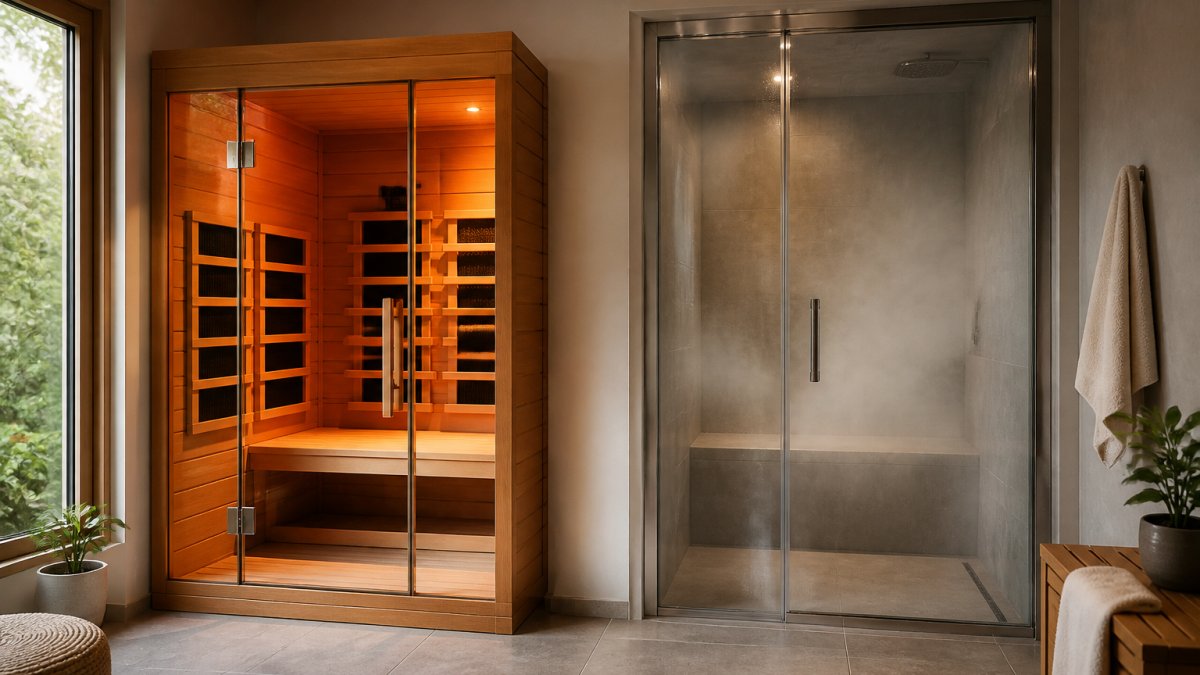
Infrared Sauna vs Steam Room for Circulation
Last Updated: October 24, 2026
Quick Summary
Infrared sauna vs steam room for circulation differs primarily in heat delivery: infrared saunas use penetrating far-infrared rays that produce gradual, sustained vasodilation over 30-45 minutes, while steam rooms create intense, acute cardiovascular response in 15-20 minutes. Infrared's slower heat profile is generally gentler and allows longer sessions, making it the more conservative choice for circulation support, especially for those with cardiovascular concerns.
- Infrared saunas operate at 120-150°F with gradual vasodilation; steam rooms reach 110-120°F but feel hotter due to 100% humidity and produce sharper blood pressure spikes.
- Infrared sessions last 30-45 minutes with sustained circulation stimulus, while steam sessions typically last only 15-20 minutes due to intense heat and humidity.
- Infrared heat is absorbed by skin and builds gradually, giving your cardiovascular system time to adjust; steam is convective and immediate, producing a sharper initial spike in heart rate.
- For people with well-controlled blood pressure, infrared is the more conservative starting point; those with uncontrolled hypertension, arrhythmias, or recent cardiac events should avoid both without cardiology clearance.
- Regular infrared sauna use 3-4 times per week supports adaptation and consistent circulation stimulus, while steam room use 2-3 times per week is more common due to intensity limits.
Table of Contents
- How Infrared Saunas Work for Circulation
- How Steam Rooms Work for Circulation
- Infrared Sauna Benefits for Circulation
- Steam Room Benefits for Circulation
- Heat Exposure, Blood Vessels, and Cardiovascular Response
- How Long to Stay in an Infrared Sauna and Steam Room
- Sauna and Blood Pressure: What You Should Know
- Comparison Table: Infrared Sauna vs Steam Room
- Frequently Asked Questions
How Infrared Saunas Work for Circulation
Infrared saunas use far-infrared heat to warm your body directly, penetrating deeper than traditional saunas.
Infrared rays trigger vasodilation, widening blood vessels and increasing blood flow. Your heart works harder to pump blood to the skin's surface, where heat dissipates.
Infrared saunas typically operate between 120°F and 150°F, lower than traditional saunas but still effective at stimulating circulation. The lower temperature lets you stay inside longer without overheating, giving your cardiovascular system sustained but manageable work.
How Steam Rooms Work for Circulation
Steam rooms heat the air itself, filling the space with moisture-laden warmth. Ambient temperature typically reaches 110°F to 120°F, but humidity (often 100%) makes it feel much hotter, triggering a rapid cardiovascular response.
In a steam room, moisture-saturated air prevents sweat from evaporating efficiently, trapping heat against your skin and forcing your heart to pump harder to move blood to the surface.
Steam's moist heat also opens airways, complementing circulation benefits.
Infrared Sauna Benefits for Circulation
The primary circulation benefit of infrared saunas is sustained vasodilation over an extended session.
Infrared heat also promotes nitric oxide production, helping blood vessels relax and stay flexible. You can explore how red light therapy complements heat exposure for enhanced cardiovascular and circulatory benefits.
For a home wellness space, consider premium options like the Thermora Pandora 2-Person Full-Spectrum Infrared Sauna with Red Light Therapy & Himalayan Salt Panels, which combines infrared heat with red light therapy.

The lower operating temperature means less thermal stress. If you have mild cardiovascular concerns or are new to sauna therapy, infrared is often the gentler entry point.
Steam Room Benefits for Circulation
Steam rooms create an acute cardiovascular challenge some people find beneficial.
The moist heat also promotes deeper sweating, which some users believe supports detoxification.
Steam rooms excel at opening sinuses and airways, and the humidity feels less harsh on skin and airways than dry heat, making them more comfortable for people with sensitive respiratory systems.
However, the intense ambient temperature means steam sessions are typically shorter.
Heat Exposure, Blood Vessels, and Cardiovascular Response
Your cardiovascular system responds to heat through vasodilation, widening blood vessels to increase blood flow to the skin. Entering an infrared sauna or steam room, thermoreceptors signal the hypothalamus, triggering cutaneous vasodilation and a rise in heart rate, more blood near the surface for heat dissipation, and a heart working harder to move it there.

What is actually measurable
The measurable short-term responses are heart rate, blood pressure, skin and core temperature, sweat rate, and, in research settings, flow-mediated dilation and skin blood flow. What is not directly measurable from a sauna session is "improved circulation" in the long-term, disease-modifying sense.
A single session produces an acute, reversible cardiovascular response. Repeated sessions may produce adaptation, but its quality depends on the population studied, the heat dose, and the outcome measured.
How infrared and steam differ physiologically
Infrared heat is radiant energy absorbed by the skin, so the skin-to-core gradient builds gradually. Steam heat is convective and humid: the air is hot, and at near-100% humidity sweat cannot evaporate, trapping heat against the skin.
The two exposures are not interchangeable. A 15-minute steam session and a 40-minute infrared session may both raise heart rate, but the time course, thermal load, and perceived exertion differ. Comparing them as the same dose of heat is a common error.
Durasage 2-Person Carbon Infrared Sauna - Canadian Hemlock Wooden Sauna - 1700 →
What the evidence does and does not show
Research on heat exposure and vascular function is real but limited. Finnish sauna studies report associations between frequent use and lower cardiovascular risk, but observational data cannot prove cause and effect, and populations studied are specific (pubmed.ncbi.nlm.nih.gov).
American Heart Association guidance on sauna and cardiovascular safety
A fair summary: heat exposure reliably produces acute vasodilation and a modest heart-rate increase. Whether regular use produces durable improvements in circulation, blood pressure, or vascular function is plausible but not established, and published effect sizes are modest.
Why the speed of the response matters
Infrared heat builds gradually, giving your cardiovascular system time to adjust; steam is immediate and intense, producing a sharper initial spike in heart rate and blood pressure. For most healthy people, the gradual infrared response is easier to sustain over a longer session, while steam is more concentrated but shorter. Neither is inherently "better", they are different dose profiles, and the right choice depends on heat tolerance, session time, and cardiovascular health.
How Long to Stay in an Infrared Sauna and Steam Room
Infrared sauna sessions typically last 30-45 minutes; the lower temperature allows longer exposure without excessive thermal stress.
Steam room sessions are much shorter, typically 15-20 minutes. The intense heat and humidity make longer exposure uncomfortable and risky; even experienced users rarely exceed 20-25 minutes.
Frequency matters as much as duration.
Watch out: Never stay in either environment past the point of comfort. Pushing through dizziness, nausea, or extreme fatigue can lead to dehydration or heat exhaustion.
Sauna and Blood Pressure: What You Should Know
Heat exposure changes blood pressure in two phases. During the session, blood pressure typically rises modestly as heart rate increases and blood shunts to the skin; with steam's more intense heat, the rise can be sharper. After you exit, blood pressure commonly falls below baseline for a period, a temporary post-session dip generally well tolerated in healthy people. Neither phase substitutes for medical management of hypertension.
Who should be cautious
The cautious framing is not "saunas are dangerous" or "saunas are fine", it is that risk depends on your specific cardiovascular profile. A reasonable framework:
- Well-controlled hypertension: Occasional sauna or steam use is generally considered safe for many people, but the acute pressure rise during steam exposure is sharper than with infrared, so infrared may be the gentler starting point. Confirm with your clinician.
- Uncontrolled or labile hypertension: Avoid until your blood pressure is stabilized and your clinician clears you. The intra-session pressure spike is the concern.
- Heart failure, recent cardiac event, or arrhythmia: Avoid sauna and steam until cleared by a cardiologist. Heat stress increases cardiac demand, and in susceptible people it can provoke symptoms or arrhythmias.
Medications and dehydration
Diuretics increase fluid loss, and combined with sauna sweating they raise dehydration risk. Some blood pressure medications blunt the normal heart-rate response to heat; others increase dizziness on standing after a session. Hydrate before, during, and after, keep sessions shorter on these medications, and stand up slowly when exiting.
A practical decision guide for circulation goals
If your goal is circulation support and you have any cardiovascular concern, use this order of operations:
- Get clearance first. A conversation with your clinician, ideally one who knows your blood pressure, medications, and cardiac history, is the single most useful step.
- Start with infrared, shorter and cooler. The gradual heat profile is easier to tolerate, and a 15-20 minute beginner session at the lower end of the temperature range is a reasonable starting dose.
- Hydrate and avoid alcohol. Alcohol before heat exposure increases dehydration and orthostatic risk.
- Exit on symptoms, not on the clock. Dizziness, nausea, palpitations, chest discomfort, or unusual fatigue are stop signals, not challenges to push through.
- Track your response. If you monitor blood pressure at home, note readings before and after sessions to understand your own pattern, but do not adjust medications based on sauna readings.
What this means for the infrared-versus-steam choice
For people with well-controlled blood pressure, both options can fit with sensible precautions, but steam's sharper intra-session pressure rise makes infrared the more conservative starting choice. For uncontrolled hypertension, arrhythmias, or recent cardiac events, neither is appropriate without cardiology clearance, guidance most sauna-versus-steam articles skip.
Comparison Table: Infrared Sauna vs Steam Room
| Feature | Infrared Sauna | Steam Room |
|---|---|---|
| Operating Temperature | 120-150°F | 110-120°F (feels hotter due to humidity) |
| Heat Type | Far-infrared rays (penetrating) | Moist ambient heat |
| Session Duration | 30-45 minutes typical | 15-20 minutes typical |
| Cardiovascular Response | Gradual, sustained vasodilation | Acute, intense spike |
| Blood Pressure Impact | Moderate, gradual rise | Sharper, more intense rise |
| Circulation Benefit | Sustained over full session | Concentrated, shorter duration |
| Respiratory Comfort | Good (dry heat) | Excellent (moist, opens airways) |
| Dehydration Risk | Moderate | Higher (intense sweating) |
| Best For | Sustained circulation, muscle recovery | Intense cardiovascular stimulus, sinus relief |
| Skip If | Severe hypertension or arrhythmias | Uncontrolled blood pressure, heat sensitivity |
For most people seeking circulation benefits at home, infrared saunas offer longer, more comfortable sessions. You can explore other thermal recovery comparisons to deepen your understanding of different heat-based wellness modalities. For a dedicated wellness space, the Blisspod Milano Full Spectrum Infrared Sauna delivers full-spectrum heat with ultra-low EMF design in a 2-person format.

Steam rooms suit those who prefer intensity over duration or value respiratory benefits alongside circulation work. But steam requires more infrastructure (plumbing, ventilation, waterproofing) than infrared, making infrared the more practical choice for most home installations.
The choice between infrared sauna vs steam room for circulation depends on your heat tolerance, available session time, and cardiovascular health. Infrared saunas offer gentler, longer-duration benefits ideal for recovery and daily wellness; steam rooms deliver acute cardiovascular stimulus in shorter bursts.
Frequently Asked Questions
Which is better for circulation, an infrared sauna or a steam room?
Both increase circulation through different mechanisms. Infrared saunas use penetrating far-infrared heat to warm tissue directly, causing vasodilation and increased blood flow. Steam rooms use moist heat and ambient temperature to trigger similar vascular responses. Infrared saunas typically allow deeper heat penetration and longer comfortable sessions, while steam rooms may feel more immediately accessible. For sustained circulation benefits, infrared saunas offer more control over session duration and intensity.
Does an infrared sauna improve circulation?
Yes. Far-infrared heat causes blood vessels to dilate (vasodilation), increasing blood flow to the skin and muscles. This response is measurable in the short term through elevated heart rate and increased sweating. Regular infrared sauna use may support cardiovascular adaptation, though long-term studies on lasting circulation improvements are still limited. Sessions of 20-30 minutes at comfortable temperatures produce the most reliable acute circulation response without overheating risk.
How long should you stay in an infrared sauna or steam room?
For infrared saunas, most people tolerate 20-30 minutes comfortably, with temperatures typically set between 120-140°F. Steam rooms are generally used for 15-20 minutes due to the intensity of moist heat. Beginners should start with 10-15 minute sessions and gradually extend as heat tolerance improves. Always listen to your body, exit if you feel dizzy or uncomfortable, and hydrate well before and after. Frequency of 2-4 times per week is typical for circulation support without overuse.
Can heat exposure temporarily affect blood pressure?
Yes, heat exposure temporarily affects blood pressure. Initially, vasodilation lowers blood pressure as blood vessels relax and expand. Heart rate increases to compensate, which is a normal cardiovascular response. After a session, blood pressure typically returns to baseline. However, people with hypertension, heart conditions, or those taking blood pressure medications should consult their doctor before using saunas or steam rooms regularly. Always stay hydrated and avoid extreme heat if you have cardiovascular concerns.
What is the difference between a regular sauna and an infrared sauna?
Traditional saunas heat the air to 160-200°F, warming your body indirectly through ambient temperature. Infrared saunas use far-infrared radiation to warm tissue directly at lower air temperatures (120-140°F), allowing longer, more comfortable sessions. Infrared saunas penetrate deeper into muscle and connective tissue, while traditional saunas rely on convection. Both increase circulation and sweating, but infrared saunas offer more precise temperature control and are easier for beginners to tolerate for extended periods.


Leave a comment
This site is protected by hCaptcha and the hCaptcha Privacy Policy and Terms of Service apply.