

Article: Do the Benefits of Molecular Hydrogen Therapy for Recovery Add Up?

Do the Benefits of Molecular Hydrogen Therapy for Recovery Add Up?
Last Updated: October 27, 2026
Quick Summary
Molecular hydrogen therapy may reduce post-exercise soreness and perceived fatigue, but human evidence is small, inconsistent, and mostly unblinded. It is best framed as a low-risk adjunct with plausible but unproven recovery benefits, not a replacement for sleep, protein intake, and progressive loading.
- Soreness and perceived fatigue have the most human data, but results are inconsistent.
- Blood lactate findings are mixed and indirect, so treat them as mechanistic hints.
- Creatine kinase and inflammatory marker evidence is thin and mixed; be most cautious here.
- No human trial has shown hydrogen therapy speeds return to full training or competition.
- Human trials typically use 0.5 to 1.6 mg/L hydrogen-rich water or 1 to 4 percent inhaled gas.
Table of Contents
- What Molecular Hydrogen Therapy Actually Does in the Body
- Molecular Hydrogen for Exercise Recovery: What Human Trials Measure
- Hydrogen Water vs Hydrogen Inhalation: Which Delivery Method Fits Recovery
- How Long Does Hydrogen Therapy Take to Work?
- Molecular Hydrogen Therapy Research: Grading the Evidence and Its Limits
- Dose, Timing, Safety, and What to Check Before Buying a Device
- Building a Hydrogen Recovery Setup at Home
- Frequently Asked Questions
What Molecular Hydrogen Therapy Actually Does in the Body
Molecular hydrogen therapy is the practice of introducing hydrogen gas (H₂) into the body through inhaled gas or hydrogen-rich water, where it acts as a selective antioxidant rather than a broad-spectrum one. That distinction matters for recovery, because not all oxidative stress is bad.
Why Reactive Oxygen Species Matter for Recovery
Hard training generates reactive oxygen species, or ROS. Some ROS drive adaptation, the signal that tells muscle to rebuild stronger. Too much, sustained too long, tips into oxidative damage and slows recovery. Hydrogen's appeal is selectivity: preclinical research suggests it neutralizes the hydroxyl radical, a particularly aggressive ROS, without wiping out the signaling ROS your body needs (pubmed.ncbi.nlm.nih.gov). That is a hypothesis, not a settled finding, and human data remain limited.
Molecular Hydrogen for Exercise Recovery: What Human Trials Measure
Most human trials on molecular hydrogen for exercise recovery are small, often a few dozen participants, frequently trained males in their twenties, and rarely replicated. They also measure a narrow set of outcomes. Rather than treat "recovery" as one thing, it helps to grade the evidence outcome by outcome, because the strength of the signal is not the same across soreness, fatigue, strength, inflammation markers, and return to performance.
Muscle Soreness and Perceived Fatigue
Delayed-onset muscle soreness (DOMS) is the most commonly studied recovery outcome. A typical design gives hydrogen-rich water before or after a damaging session, often eccentric resistance exercise or sprint work, and asks participants to rate soreness on a visual analog scale over the following 24 to 72 hours. Some trials report lower soreness ratings in the hydrogen group; others find differences so small they fall within the noise of subjective ratings. Perceived fatigue tends to move in the same direction as soreness, which is expected because the two are correlated. The honest read: soreness and fatigue are the outcomes with the most human data, but the data are inconsistent and mostly unblinded or single-site.
Blood Lactate and Metabolic Markers
Blood lactate is easy to measure, which is why so many small trials report it. Several studies show lower post-exercise lactate or faster lactate clearance with hydrogen-rich water; others show no meaningful difference. Lactate is a marker of exercise intensity and clearance, not a direct measure of muscle damage or recovery quality, so a favorable lactate result should not be read as proof of faster recovery. Treat lactate findings as mechanistic hints, not outcome proof.
Creatine Kinase and Inflammatory Markers
Creatine kinase (CK) is the standard blood marker of muscle damage, and C-reactive protein (CRP) and interleukin-6 (IL-6) are common inflammation markers. Here the human literature is thinner and more mixed than the marketing suggests. A handful of small trials report attenuated CK or inflammatory marker rises after damaging exercise; a comparable number find no significant between-group difference. Sample sizes are usually too small to detect modest effects, and baseline training status varies widely between studies. This is the outcome category where readers should be most cautious about strong claims.
Strength, Power, and Return to Performance
Direct performance outcomes, peak torque, countermovement jump, sprint time, time to exhaustion, are the least studied and the most relevant to athletes. Where they are measured, effects are typically small and inconsistent, and many trials are not powered to detect them. No human trial has demonstrated that hydrogen therapy accelerates return to full training or competition in a way that would change clinical or coaching practice. That is a genuine evidence gap, not a hidden benefit.
Human Trials vs. Animal and Mechanistic Research
A large share of the mechanistic support, selective hydroxyl radical scavenging, reduced oxidative damage in muscle tissue, modulated inflammatory signaling, comes from cell and rodent studies. Those findings are biologically plausible and worth following, but they do not establish recovery benefits in people. When you see a recovery claim, ask three questions: was it a human trial, how many participants, and was it controlled and blinded? If the answer to any of those is unclear, the claim is ahead of the evidence.
National Institutes of Health PubMed database of molecular hydrogen studies
Hydrogen Water vs Hydrogen Inhalation: Which Delivery Method Fits Recovery
The two delivery methods differ in speed and convenience. Neither is clearly superior in the published literature.
| Method | Onset | Best Fit | Practical Note |
|---|---|---|---|
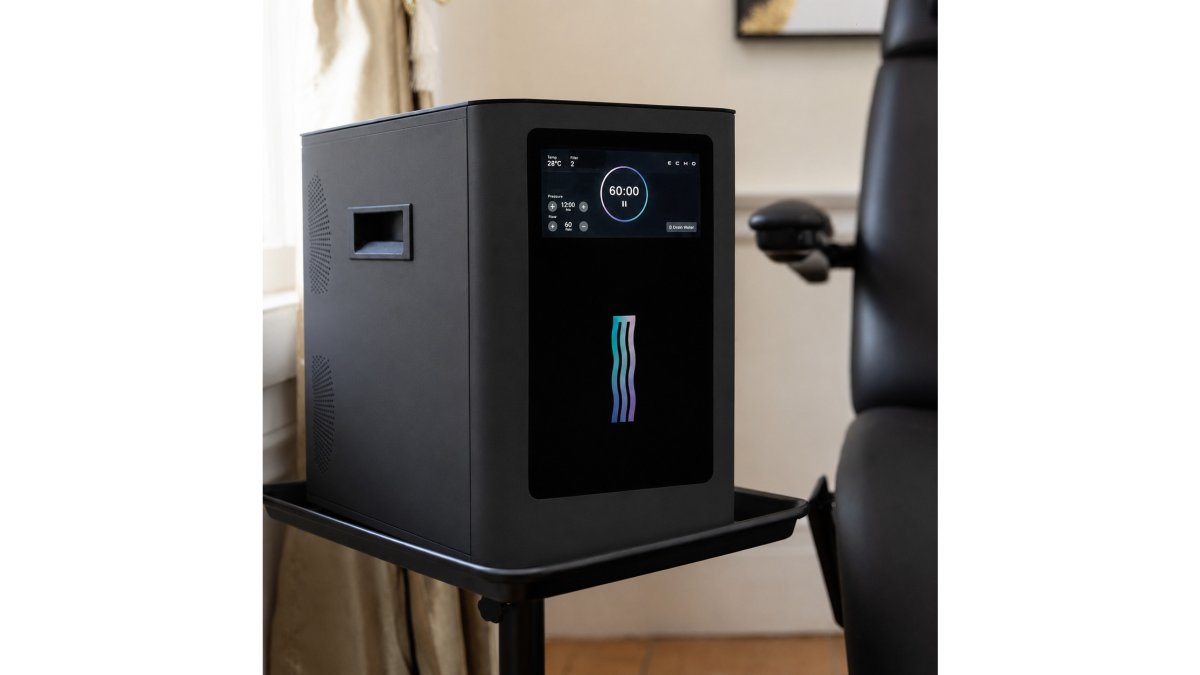
For readers weighing inhalation, the ECHO Refresh Hydrogen Inhalation Machine is the device to look at. Readers leaning toward water can view the Echo Ultimate™ Hydrogen Water Machine.


How Long Does Hydrogen Therapy Take to Work?
Most people asking how long hydrogen therapy takes to work are really asking two questions: how fast does it act, and how long before results accumulate. There is no established protocol, so treat any timeline as a personal experiment, not a guarantee.
Molecular Hydrogen Therapy Research: Grading the Evidence and Its Limits
Molecular hydrogen therapy research splits cleanly into preclinical work and human trials, and the gap between them is the story. Animal and cell studies are numerous and often promising. Human trials are fewer, smaller, and mixed. That is not a reason to dismiss the field, but it is a reason to read claims carefully.
ECHO Refresh Hydrogen Inhalation Machine →
- Strongest evidence: preclinical studies on oxidative stress and inflammation markers
- Moderate evidence: small human trials on post-exercise soreness and lactate
- Weakest evidence: long-term health outcomes, metabolic health, and neurodegenerative disease claims
Watch out: marketing pages that cite a single small trial as proof of a broad health benefit are overstating what the research shows. Ask for the study size and whether it was controlled.
Cochrane Handbook guidance on grading evidence quality
Dose, Timing, Safety, and What to Check Before Buying a Device
Recovery guidance lives or dies on specifics: how much, when, and for how long. The honest problem is that no consensus protocol exists. Studied concentrations, session lengths, and timing vary widely between trials, and most studies do not report dissolved hydrogen concentration in a way that maps cleanly onto consumer devices. What follows is a practical account of what has been studied and where the uncertainty sits, not a prescription.
Dose: What the Literature Actually Reports
Human trials typically use hydrogen-rich water in the range of roughly 0.5 to 1.6 mg/L of dissolved hydrogen, or inhalation of hydrogen gas at low concentrations (commonly around 1 to 4 percent by volume) for sessions lasting from about 15 to 60 minutes. These ranges are broad because the field has not standardized dosing, and device output claims are often stated differently from how studies report exposure. A device that advertises a concentration number is more useful than one that does not, but the number alone does not tell you how much hydrogen reaches tissue.
Timing Around Exercise
Two timing patterns dominate the literature: pre-exercise loading (hydrogen-rich water consumed in the hours before a session) and post-exercise use (water or inhalation within the first hour or two after training). Some protocols combine both. There is no strong evidence that one timing window is superior, and no trial has established an optimal schedule for recovery. A reasonable approach is to pick one consistent timing pattern, hold it for several weeks, and track your own soreness and sleep data rather than switching protocols frequently.
Duration and Accumulation
Perceived benefits, where they appear, are generally reported over weeks of consistent use rather than after a single session. Inhaled hydrogen reaches the bloodstream within seconds, but that is pharmacokinetics, not proof of a recovery effect. Because no established protocol exists, treat any timeline as a personal experiment with explicit caveats, not a guarantee.
Safety, Tolerability, and Who Should Consult a Clinician
Anyone who is pregnant, managing a serious medical condition, taking prescription medication, or considering hydrogen inhalation for a child should consult a clinician before starting.
Device Safety Checklist
Before buying any hydrogen-generating or inhalation device, check:
- Stated output: Does the manufacturer document hydrogen output concentration or production rate, and is the method of measurement disclosed?
- Materials and electrical certification: Are wetted materials food- or medical-grade, and does the unit carry a recognized electrical safety certification?
- Ventilation and ignition guidance: For inhalation units, does the manual specify room ventilation and clear warnings about flammability?
- Maintenance and consumables: Are filter or membrane replacement intervals and costs documented?
- Post-sale support: Is there a warranty, a service path, and responsive support?
Anyone about to buy should read our guide on how to safely use hydrogen therapy at home first.
Building a Hydrogen Recovery Setup at Home
Start with one device matched to how you will actually use it, then expand. For a portable option that travels from kitchen to gym bag, the ECHO Flask Hydrogen Water Bottle produces dissolved hydrogen in a bottle format. If you are outfitting a dedicated space, our guide to setting up a home recovery room for athletes covers the broader layout.

- Choose inhalation for post-training or water for daily hydration
- Fix a consistent time of day and stick to it for several weeks
- Log soreness and sleep so you have your own data
- Add other modalities only after the first is a habit
Frequently Asked Questions
Is hydrogen water good for recovery?
Hydrogen water is one option to consider as part of a personal wellness routine.
How long does molecular hydrogen take to work?
The time it takes to notice any personal effects is not established here.
Is hydrogen inhalation different from drinking hydrogen water?
Yes. The ECHO Refresh enables you to inhale hydrogen gas, while the ECHO Flask is a hydrogen water bottle. The choice depends on which product format fits your preferences.
Are there risks or side effects of molecular hydrogen therapy?
For questions about whether a product is appropriate for you, consult a healthcare professional.
The hard part of hydrogen therapy is not understanding it. It is building a routine you will actually keep, with equipment that fits your space and your goals. That is where Vital Fit Home comes in: we carry hydrogen inhalation systems and hydrogen water machines, offer wellness design guidance to match a device to your room and routine, and support you after the sale with installation questions. Get started with Vital Fit Home and build a recovery setup you will use every day.



Leave a comment
This site is protected by hCaptcha and the hCaptcha Privacy Policy and Terms of Service apply.