
How to Use Red Light Therapy Panels Safely at Home
Table of Contents
- How Red Light Therapy Panels Work: A Simple Explanation for Beginners
- Choosing a Safe Setup for Your Red Light Therapy Panel at Home
- Red Light Therapy Session Duration: How Long and How Often
- Essential Red Light Therapy Safety Precautions: Eye Protection and More
- Red Light Therapy Contraindications: Who Should Be Cautious
- Common Mistakes to Avoid and Signs to Stop or Reduce Use
- Your Step-by-Step Red Light Therapy Safety Checklist
- Frequently Asked Questions
Last Updated: October 13, 2026
How Red Light Therapy Panels Work: A Simple Explanation for Beginners
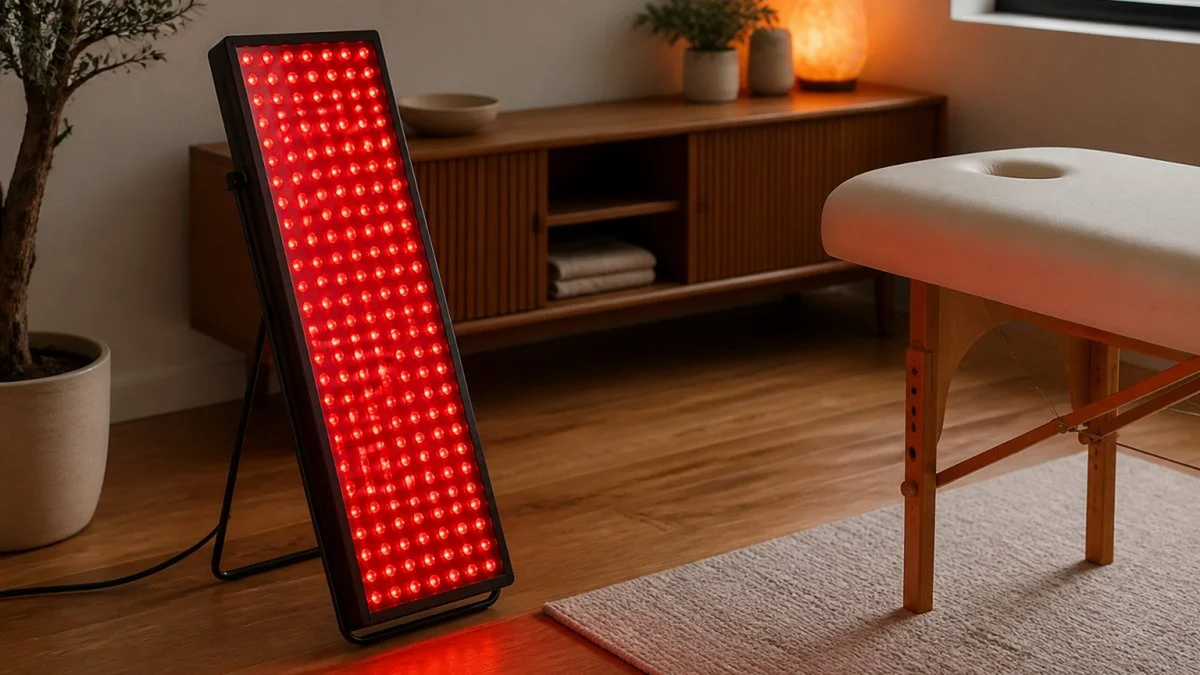
Red light therapy is the practice of shining specific wavelengths of red and near-infrared light onto the skin to support the body's natural recovery processes.

Here is the short version. Your cells contain tiny power plants called mitochondria, which convert fuel into ATP, the energy currency your body runs on.
In practice, the benefits people report are modest and gradual: better sleep, easier recovery after workouts, and skin that looks a little fresher over time. Red light therapy is a supporting habit, not a cure.
Two numbers matter most: wavelength and dose. Wavelength, measured in nanometers (nm), decides how deep the light reaches. Dose is the total light energy your skin absorbs in one session.
Red Light vs. Near-Infrared Light: What's the Difference?
Red light and near-infrared light are close cousins, and most quality panels emit both. The difference is penetration depth.
- Red light sits around 630 to 660 nm. It absorbs mostly in the upper layers of skin.
- Near-infrared light sits around 810 to 850 nm. It reaches deeper into muscle and joint tissue.
- Visible glow: red light looks bright red. Near-infrared light looks dim or invisible to the eye.
That last point surprises people: a panel can run near-infrared at full power and look almost dark. This is exactly why eye protection matters even when the panel seems dim.
A quality panel will list its wavelengths on the label. The FDA guidance on light-emitting products is a useful starting point for understanding how these devices are classified. If a panel does not state its wavelengths, treat that as a warning sign.
Choosing a Safe Setup for Your Red Light Therapy Panel at Home
A safe setup starts with three things: a dedicated space, the right distance, and a clean treatment area. Most problems come from rushing one of those three.
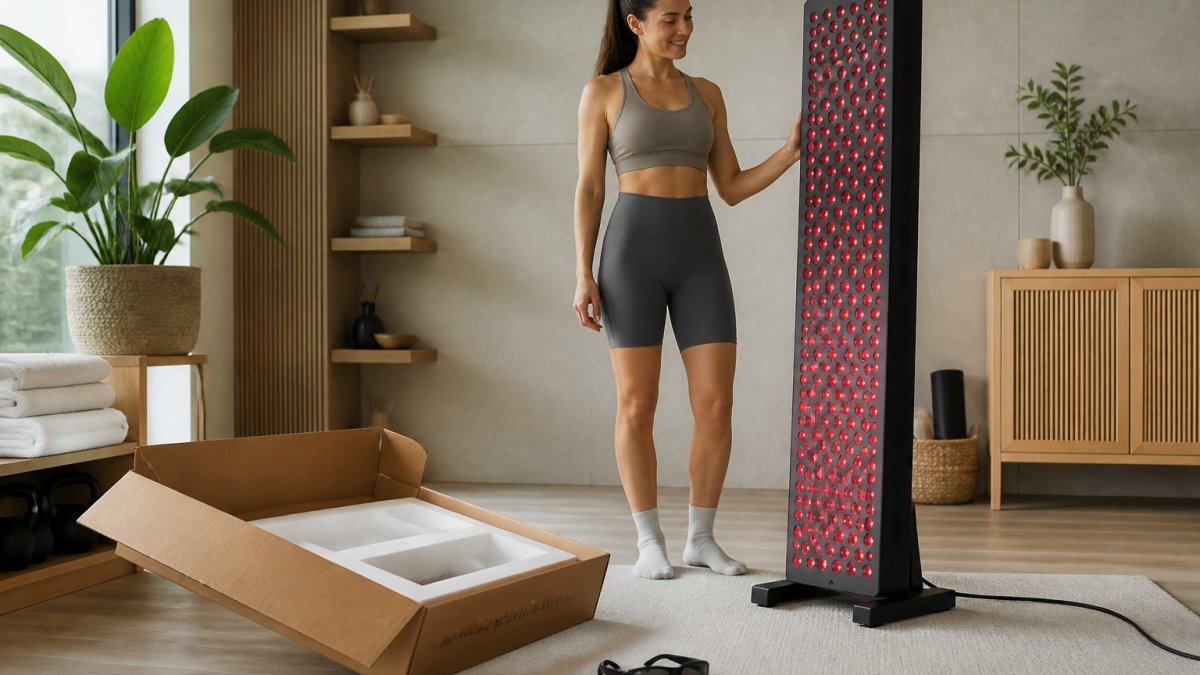
Place your panel in a room where you can stand or sit comfortably for 10 to 20 minutes without interruption. A home gym, spare bedroom, or wellness corner works well.
A few setup basics:
- Keep the panel on a stable stand or wall mount. Never lean a panel against furniture.
- Leave room to move back. Distance is your main dose control.
- Avoid placing the panel where pets or children can knock it over.
- Check that cords are not a trip hazard in the dark.
Skin Preparation and Cleanliness Before Your Session
Clean, dry skin absorbs light better than skin covered in product. Wash your face and treatment area with a gentle cleanser, then pat dry.
Skip lotions, oils, and makeup before a session. Some ingredients block light; others may make skin more sensitive. If you use a topical medication, ask your doctor or pharmacist whether it increases light sensitivity before combining it with a panel.
Remove jewelry and anything reflective from the treatment area, metal can bounce light in ways you did not plan for.
How Far Away Should You Sit From the Panel?
Distance controls dose: closer is stronger, farther is weaker. Most manufacturers publish a recommended distance, and that number should be your starting point.
As a general rule, many panels are designed for use from roughly 6 to 12 inches away for targeted treatment, and farther back for full-body coverage. The exact figure depends on the panel's power density and how large an area you want to cover.
If your skin feels hot during a session, you are too close or staying too long. Red light therapy should feel warm at most, never hot. Step back a few inches and see how that feels.
Red Light Therapy Session Duration: How Long and How Often
Most beginners do well with 5 to 10 minutes per treatment area, three to five times per week. That is general guidance only.
Start shorter than you think you need: try 5 minutes per area for the first week. More is not better with light therapy, and overdoing it can leave you sore or flushed.
The Large Panel – Full Body Red & Near-Infrared Light Therapy Panel →
The concept that matters here is the therapeutic window: there is a range of dose where light therapy may help, and pushing past the top of that range can cancel out the benefit. Consistency beats intensity.
| Experience Level | Session Length | Frequency | Distance |
|---|---|---|---|
| First week | 3-5 minutes per area | Every other day | Manufacturer's stated distance |
| Weeks 2-4 | 5-10 minutes per area | 3-4 times per week | Same, adjust if skin feels hot |
| Ongoing | 10-15 minutes per area | 3-5 times per week | Same, based on comfort |
Track your sessions for the first month. A simple note on your phone is enough: date, minutes, distance, and how your skin felt afterward. Patterns show up fast.
Essential Red Light Therapy Safety Precautions: Eye Protection and More
Eye protection is the single most important safety habit with a red light therapy panel. Near-infrared light is invisible, so your blink reflex will not protect you the way it does with bright visible light.
Wear the protective goggles that come with your panel. If yours did not include any, buy a pair rated for the wavelengths your device emits. Do not stare into the LEDs, and do not treat the face with your eyes open, even briefly.
Other precautions worth building into your routine:
- Never fall asleep in front of a panel. Sessions are short for a reason.
- Do not use a panel on broken, sunburned, or irritated skin.
- Keep sessions to one per day per area unless your manual says otherwise.
- Stop using any device with a damaged cord, cracked housing, or flickering LEDs.
If you take medications known to cause photosensitivity, talk to your doctor first. Common examples include certain antibiotics, acne treatments, and some diuretics. This is not a complete list, which is why a pharmacist is worth asking.
Red Light Therapy Contraindications: Who Should Be Cautious
Red light therapy is generally well tolerated, but some people should talk to a doctor before starting. This is not a complete medical list and does not replace professional advice.
Talk to your doctor first if any of these apply to you:
- Pregnancy. Safety data for panel use during pregnancy is limited. Ask your doctor before using one.
- Photosensitivity. Some people react to light more easily than others, whether from a condition or a medication.
- Light-sensitizing medications. Antibiotics, acne drugs, and some other prescriptions can make your skin react to light.
- Active skin conditions. Eczema, psoriasis, and similar conditions need a doctor's input on timing and dose.
- Eye conditions. A history of cataracts, macular issues, or retinal problems means you should get clearance first.
- Recent surgery or active infection. Let your doctor decide when it is safe to resume.
- Certain cancers or a history of skin cancer. Ask your oncologist or dermatologist before using any light device.
If you are unsure whether you fall into one of these groups, ask. A five-minute conversation with your doctor is cheaper than a problem you did not see coming. The American Academy of Dermatology publishes plain-language guidance on light-based treatments that can help you frame the question.
Common Mistakes to Avoid and Signs to Stop or Reduce Use
The mistakes beginners make are predictable, and most come from enthusiasm rather than carelessness.
- Going too long, too soon. Start at the low end and build up.
- Skipping eye protection. Covered above, and worth repeating.
- Using the panel every day at high dose. Recovery time matters.
- Standing too close. Heat on the skin is your signal to back up.
- Treating it as a replacement for medical care. It is not.
- Ignoring the manual. Manufacturers know their device better than any blog does.
Your skin may feel warm and slightly pink for a short while. That is normal. What is not normal is redness that lasts into the next day, tenderness, a headache, or feeling wired when you are trying to sleep. If any of those show up, cut your session length and frequency, then build back up slowly.
Post-session care is simple: drink water, let your skin cool down naturally, and apply moisturizer if skin feels dry. Some people find earlier-in-the-day use suits them better than evening use, since bright light close to bedtime may affect sleep for some users.
Your Step-by-Step Red Light Therapy Safety Checklist
Run through this list before every session. It takes about a minute once it becomes habit.
- Read your panel's manual and note the recommended distance and session length
- Clean and dry the treatment area, and remove lotions, oils, and makeup
- Put on protective goggles before the panel is switched on
- Position yourself at the manufacturer's stated distance
- Set a timer so you do not lose track of minutes
- Start at the low end of your session range for the first week
- Check in with your skin midway through: warm is fine, hot is not
- Switch off the panel and remove goggles only after it is off
- Note the date, duration, and distance in a simple log
- Skip the session if your skin is irritated, sunburned, or still pink from last time
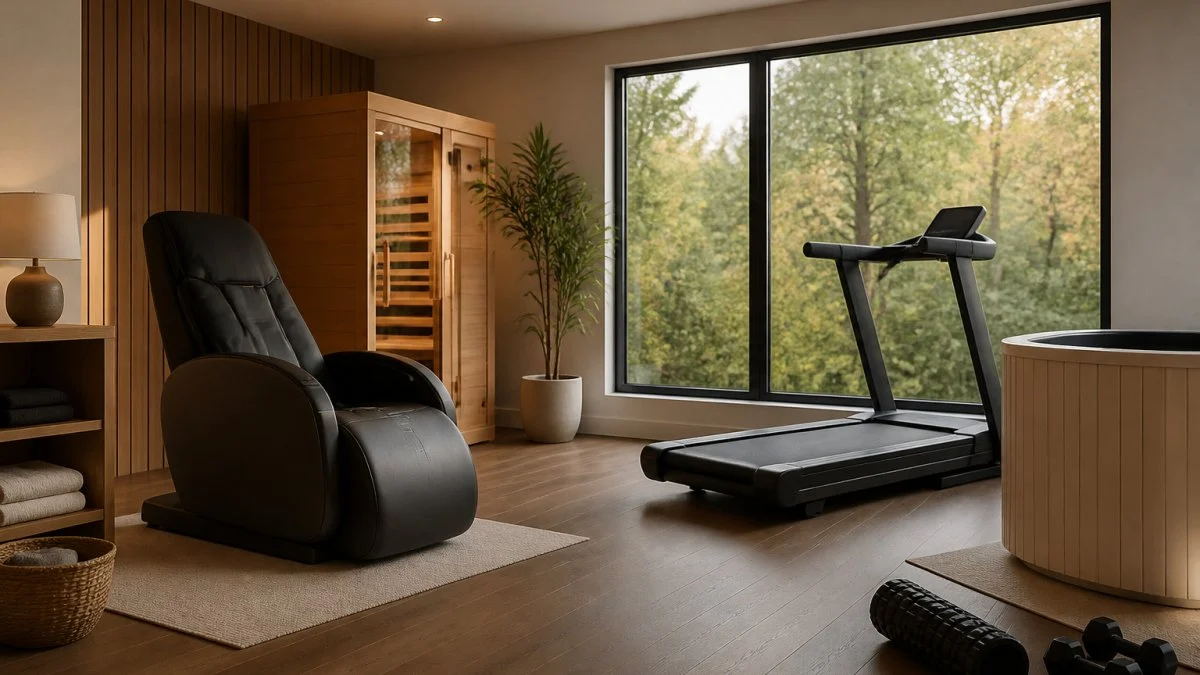
If you want a panel that fits a dedicated recovery space, our team at Vital Fit Home carries full-body and targeted red and near-infrared systems, and our wellness design service can help you plan where a panel fits in your room before you buy.

Red light therapy rewards patience and punishes enthusiasm. The people who get the most out of a panel start short, stay consistent, and treat the manufacturer's instructions as the final word.
Frequently Asked Questions
How long should you use red light therapy at home?
Most at-home red light therapy panels are used for sessions lasting 5 to 20 minutes per treatment area. The right duration depends on your panel's power density and the distance you stand from it. Always start with the shorter end of the manufacturer's recommended range to see how your skin responds, then adjust gradually. Following the instructions that come with your specific device is the safest approach, since output varies widely between panels.
Do you need eye protection for red light therapy panels?
Yes, protective goggles are recommended, especially with high-output panels. While red and near-infrared light are generally considered low-risk for the skin, bright light exposure can be uncomfortable for your eyes and near-infrared light penetrates deeper into tissue. If your panel did not come with goggles, pick up a pair designed for light therapy before your first session.
Who should avoid using red light therapy?
People who are pregnant, taking light-sensitizing medications, or have photosensitivity conditions should consult a doctor before using red light therapy. Those with active skin conditions, eye conditions, or a history of skin cancer should also check with a healthcare provider first. Red light therapy contraindications are not absolute for everyone, but a quick conversation with your doctor removes the guesswork and helps you decide whether at-home use is appropriate for your situation.
Can you use red light therapy every day?
Many people use red light therapy daily or several times per week without issues, but frequency depends on your device and your goals. Some manufacturers recommend once daily, while others suggest every other day to give skin time to respond. Start with three to four sessions per week and increase gradually. If you notice redness, irritation, or unusual sensitivity, reduce frequency. Consistency over weeks matters more than intensity in any single session.


Leave a comment
This site is protected by hCaptcha and the hCaptcha Privacy Policy and Terms of Service apply.