

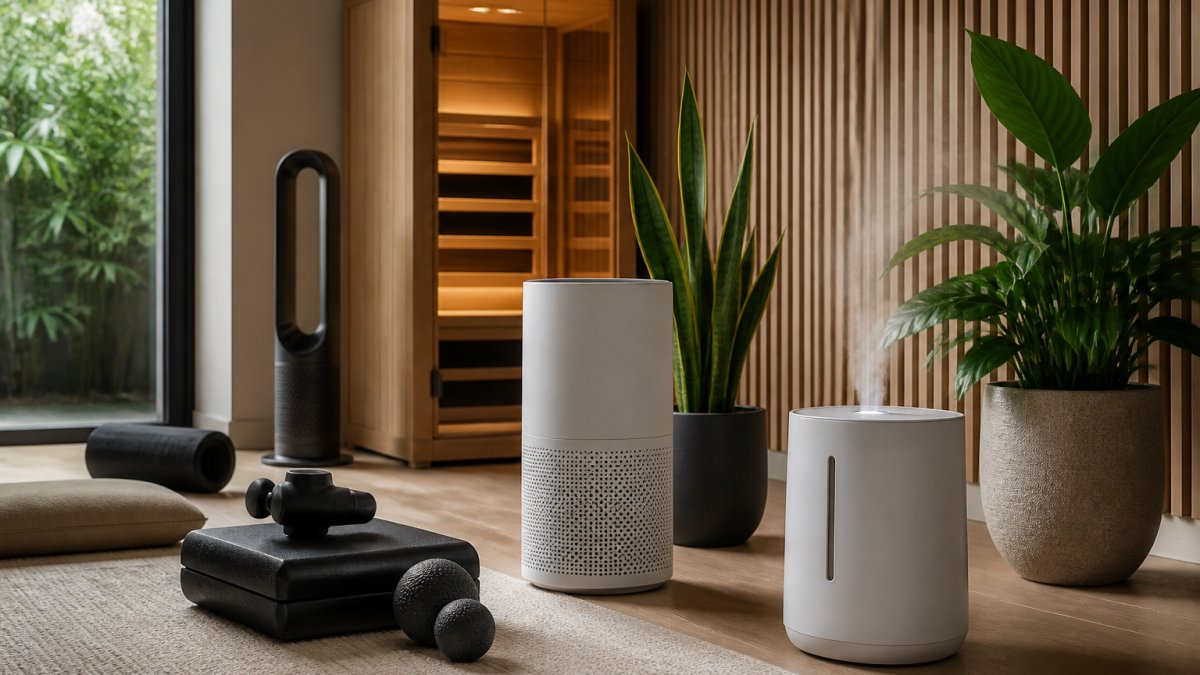
5 Ways to Improve Air Quality in Wellness Rooms
Table of Contents
- Why Indoor Air Quality Matters in Your Wellness Room
- 1. Optimize Wellness Room Ventilation and Fresh Air Exchange
- 2. Install and Maintain the Best Air Purifier for a Wellness Room
- 3. Replace HVAC Filters at the Right Intervals
- 4. Monitor and Manage Humidity and Airborne Contaminants
- 5. Track Air Quality with an Indoor Air Quality Monitor
- Creating a Complete Wellness Environment: Air Quality and Aesthetics
- Conclusion
- Frequently Asked Questions
Last Updated: October 20, 2026
Why Indoor Air Quality Matters in Your Wellness Room
Indoor air quality directly impacts your wellness room's effectiveness. When you're investing in recovery technologies like saunas, cold plunges, or hyperbaric chambers, the air you're breathing matters as much as the equipment itself.
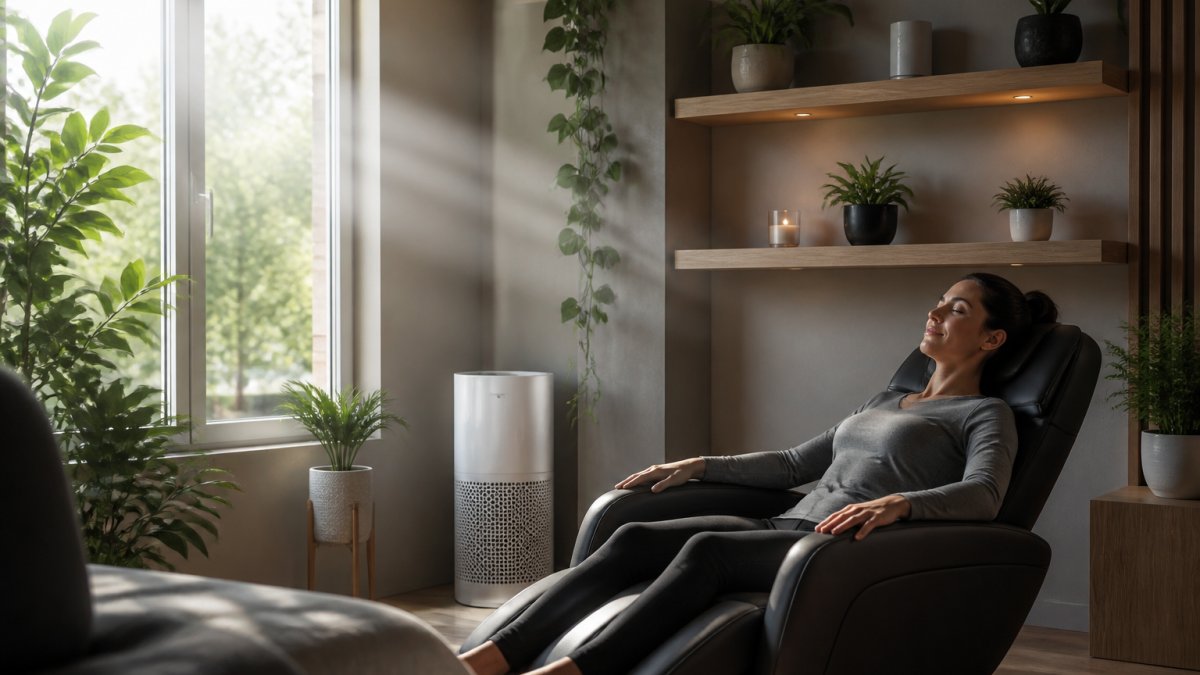
At Vital Fit Home, we help clients design complete wellness spaces, and air quality is consistently one of the most overlooked factors.
When you're spending time in a dedicated wellness space, you're typically there for 30 minutes to an hour at a time. That concentrated exposure means the air quality in that specific room has outsized impact on your experience and results.
1. Optimize Wellness Room Ventilation and Fresh Air Exchange
The single most effective way to improve air quality is to bring in fresh outdoor air and remove stale indoor air. Ventilation is your first line of defense against indoor air quality problems. Many wellness rooms are built in basements, spare bedrooms, or enclosed spaces where natural air exchange is limited. Without intentional ventilation, carbon dioxide levels rise, humidity builds, and indoor pollutants accumulate.
Natural ventilation versus mechanical systems
Natural ventilation, opening windows and doors, works when weather permits, but it's unreliable for a dedicated wellness room. You can't control when fresh air enters, and in winter or humid months, it may actually make conditions worse.
For most wellness rooms, a combination approach works best. If your space has windows, crack them during non-recovery hours to allow air exchange. During active use, when you're in a sauna or hyperbaric chamber, mechanical ventilation takes over to maintain consistent air quality without temperature loss or humidity spikes.
Ventilation rates for different wellness activities
Different wellness activities create different air quality demands. A sauna session generates significant heat and moisture, requiring higher ventilation rates to prevent humidity buildup and mold risk. A meditation or yoga space needs gentler, continuous air exchange. A cold plunge room needs rapid moisture removal after sessions.
Industry guidance suggests wellness rooms should achieve 4-6 complete air changes per hour during active use. That means all the air in the room gets replaced 4 to 6 times every 60 minutes. Your HVAC contractor can calculate the exact requirement based on room size, activities, and occupancy.
2. Install and Maintain the Best Air Purifier for a Wellness Room
An air purifier acts as a secondary defense, capturing particles and contaminants that ventilation alone might miss. Even with good ventilation, an air purifier reduces dust, allergens, pollen, and particulate matter circulating in your wellness room. For wellness spaces where you're breathing deeply and your body is in a relaxed state, air purifier quality matters.
High-efficiency filtration and CADR ratings
Not all air purifiers perform equally. The Clean Air Delivery Rate (CADR) tells you how many cubic feet of clean air the unit produces per minute. A higher CADR means faster particulate removal. For a wellness room, look for a purifier with a CADR of at least 300 for particulate matter.
HEPA filters (High-Efficiency Particulate Air) capture 99.97% of particles 0.3 micrometers or larger. This includes dust, pollen, mold spores, and many allergens. Some purifiers add activated carbon filters to reduce odors and volatile organic compounds (VOCs) from cleaning products or off-gassing materials.
Placement and sizing for wellness spaces
Size matters. An air purifier rated for a 300-square-foot room won't effectively clean a 500-square-foot space. Calculate your room's square footage and match it to the purifier's coverage area.
Run your air purifier continuously when the room is in use and for 30 minutes after each session. Many modern purifiers include air quality sensors that automatically adjust fan speed based on detected particulate levels, reducing energy use during low-pollution periods.
3. Replace HVAC Filters at the Right Intervals
Your HVAC system's air filter is doing constant work, trapping dust, allergens, and particulate matter before air circulates through your wellness room. A clogged filter reduces airflow, strains your system, and allows more contaminants to bypass the filter. Regular replacement is one of the simplest, most overlooked steps in maintaining indoor air quality.
Filter types and replacement schedules
Standard fiberglass filters (MERV 4-6) trap large particles but allow smaller allergens through. They're inexpensive but less effective for air quality-conscious spaces. Pleated filters (MERV 8-11) capture smaller particles and last longer. High-efficiency filters (MERV 13-16) remove dust, pollen, mold spores, and many allergens.
Replace standard filters every 1-3 months. Pleated filters last 2-3 months. High-efficiency filters may last 3-6 months, but check your system's documentation. If you have pets, run your air purifier frequently, or live in a dusty area, replace filters on the shorter end of that range. A clogged filter loses effectiveness quickly.
Wellness room-specific filter considerations
Wellness rooms often have higher filter demands than typical living spaces. Heat and humidity from saunas accelerate filter clogging. Cold plunge rooms create moisture that can degrade filters faster. Infrared sauna rooms generate heat that can warp lower-quality filters. Check your filters monthly in a wellness room environment. If they look gray or dark after 4 weeks, replace them early.
4. Monitor and Manage Humidity and Airborne Contaminants
Humidity and particulate matter are the two biggest air quality threats in wellness rooms. Humidity above 60% creates conditions for mold and dust mites. Humidity below 30% causes dry skin and respiratory irritation. Airborne contaminants, dust, allergens, and chemical off-gassing, reduce air quality and can trigger respiratory discomfort during relaxation sessions.
Controlling moisture and mold prevention
Saunas and cold plunges generate significant moisture. After a session, humidity can spike to 80% or higher in an enclosed room. Without ventilation and dehumidification, mold can develop within days. Run your ventilation system aggressively after hot-water activities. If your HVAC system includes a dehumidifier, set it to maintain 40-50% humidity.
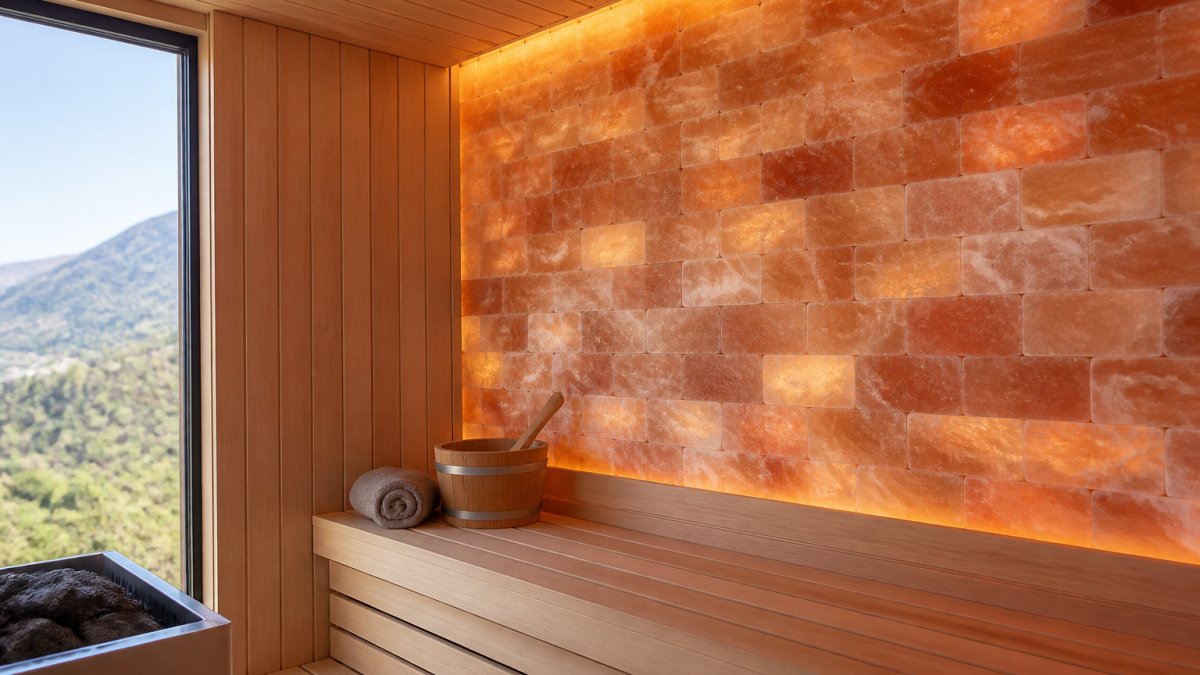
Himalayan Pink Salt Bricks Kit – 256 Sq Ft Total Coverage | Bulk Wall Tiles →
For rooms without built-in dehumidification, a portable dehumidifier removes excess moisture. An Energy Star-certified dehumidifier removes 50+ pints of moisture per day and includes a humidistat to maintain target humidity automatically. Place it in the room during and for 30 minutes after high-moisture activities.
Reducing dust, allergens, and particulate matter
Dust accumulates faster in wellness rooms because of air circulation from ventilation and air purifiers. Vacuum your wellness room weekly with a HEPA-filter vacuum. Damp-wipe surfaces, shelves, equipment, walls, to capture dust before it becomes airborne. Avoid fabric-heavy furnishings; use wipeable surfaces instead. Minimize scented products, air fresheners, and cleaning chemicals that off-gas volatile organic compounds.
Houseplants like spider plants and peace lilies absorb some indoor pollutants, but they're not a substitute for ventilation and filtration. They do improve the aesthetics and create a calming environment, which supports the wellness purpose of the room.
5. Track Air Quality with an Indoor Air Quality Monitor
You can't improve what you don't measure. An indoor air quality monitor tracks carbon dioxide, particulate matter, humidity, and temperature in real time. This data tells you whether your ventilation and filtration strategies are working or if adjustments are needed.
Understanding air quality metrics and targets
Carbon dioxide (CO₂) levels indicate air freshness. Outdoor air is around 400 ppm. Indoor air above 1,000 ppm signals poor ventilation. In a wellness room, keep CO₂ below 800 ppm during use. Particulate matter (PM2.5 and PM10) measures dust and allergens. The EPA recommends PM2.5 below 35 micrograms per cubic meter for 24-hour exposure.
Humidity should stay between 40-60% for comfort and mold prevention. Temperature isn't an air quality metric, but monitors that include it help you track whether your HVAC system is maintaining comfort during recovery sessions.
Using data to adjust ventilation and filtration
Most modern air quality monitors sync with your phone or display readings on a wall-mounted screen. Check your monitor weekly. If CO₂ is consistently above 800 ppm, increase ventilation time or upgrade your HVAC system's capacity. If particulate matter remains high despite your air purifier, replace filters more frequently or upgrade to a higher-CADR unit.
This data-driven approach prevents guesswork. You'll know exactly what's working and what needs adjustment, making your wellness room investment more effective.
Creating a Complete Wellness Environment: Air Quality and Aesthetics
Air quality and room design work together. A wellness room with perfect ventilation but harsh lighting, cold surfaces, and industrial equipment won't feel restorative. Similarly, a beautifully designed space with poor air quality undermines the entire experience.
Vital Fit Home helps clients integrate air quality infrastructure into thoughtfully designed wellness rooms. A Himalayan Pink Salt Bricks Kit - 16 Sq Ft Total Coverage ($1,160) transforms a standard room into a therapeutic space while complementing your air quality systems.

Conceal ventilation ducts, air purifiers, and dehumidifiers behind design elements or in corners where they don't dominate the visual space. Position your air quality monitor where you can check readings without it being a focal point.
Conclusion
Improving air quality in your wellness room requires attention to five core areas: ventilation, air filtration, HVAC maintenance, humidity control, and monitoring. Each step builds on the others. Ventilation removes stale air. Air purifiers capture particles. Regular filter replacement maintains system efficiency. Humidity and dehumidification prevent mold.
The investment in air quality infrastructure, ventilation upgrades, a quality air purifier, a dehumidifier, and an air quality monitor, depends on room size and existing systems. That's modest compared to the cost of your wellness equipment and the value of creating a truly restorative space.
At Vital Fit Home, we believe air quality is as essential as the recovery technologies themselves. EPA Indoor Air Quality guidelines provide additional resources for maintaining healthy indoor environments, and ASHRAE ventilation standards for residential spaces offer technical guidance for HVAC design. For wellness-specific air quality concerns, consult with your HVAC contractor and the American Academy of Allergy, Asthma & Immunology on indoor air quality for evidence-based recommendations.
Frequently Asked Questions
How often should I replace an HVAC filter in a wellness room?
Most HVAC filters need replacement every 1-3 months, depending on filter type and usage. Wellness rooms with high activity, humidity, or dust generation may require more frequent changes. Check your filter monthly and replace it when visibly clogged or following your system manufacturer's recommendations. Higher-MERV-rated filters trap more particles but may need more frequent replacement to maintain airflow.
What indoor air quality readings should I target in my wellness room?
Aim for CO2 levels below 1,000 ppm, particulate matter (PM2.5) under 35 micrograms per cubic meter, and humidity between 30-50%. An indoor air quality monitor displays these metrics in real time. If CO2 rises above 1,200 ppm, increase ventilation immediately. For humidity above 60%, run a dehumidifier; below 30%, use a humidifier to prevent respiratory irritation and maintain comfort during recovery sessions.
Can I improve air quality in a wellness room without opening windows?
Yes. Mechanical ventilation through HVAC systems, dedicated exhaust fans, and high-quality air purifiers all improve indoor air without opening windows. Source control, reducing dust, moisture, and chemical off-gassing from materials, is equally important. Regular vacuuming with HEPA filters, maintaining humidity, and choosing low-emission furnishings all reduce airborne contaminants. An air purifier with HEPA and activated carbon filtration handles particles and odors effectively.
What makes the best air purifier for a wellness room?
Look for HEPA filtration (captures 99.97% of particles 0.3 microns and larger), activated carbon for odor and off-gas removal, and a CADR (Clean Air Delivery Rate) matched to your room size. For a 200-300 sq ft wellness room, choose a purifier with CADR of at least 200-300. Quiet operation (under 50 decibels) is essential for relaxation spaces. Placement 3-5 feet from walls and away from doors maximizes effectiveness.
How does wellness room ventilation differ from standard home ventilation?
Wellness rooms often generate humidity, heat, and chemical off-gassing from equipment or salt therapy installations. Dedicated exhaust fans, supply vents for fresh air, and humidity-controlled ventilation prevent moisture buildup and maintain comfort. Ventilation should be balanced: fresh air in, stale air out, to prevent negative pressure.

Leave a comment
This site is protected by hCaptcha and the hCaptcha Privacy Policy and Terms of Service apply.